


 Local Movers
 Last-Minute Movers
 Junk Removal
 Long Distance Movers
 Piano Movers
 Heavy Equipment
 Commercial Movers
 Moving Container
 Car Transportation
 Furniture Movers
 Truck Rental
 Moving Cost Calculator
 Moving Planner
 Packing Calculator
 Moving Checklist
 Moving Insurance
 FAQ
FAQ Contact Us
 Moving Loan
 Privacy Policy
 Join Our Network
 About Us
Sectional Couch Weight: What to Expect & Why It Matters


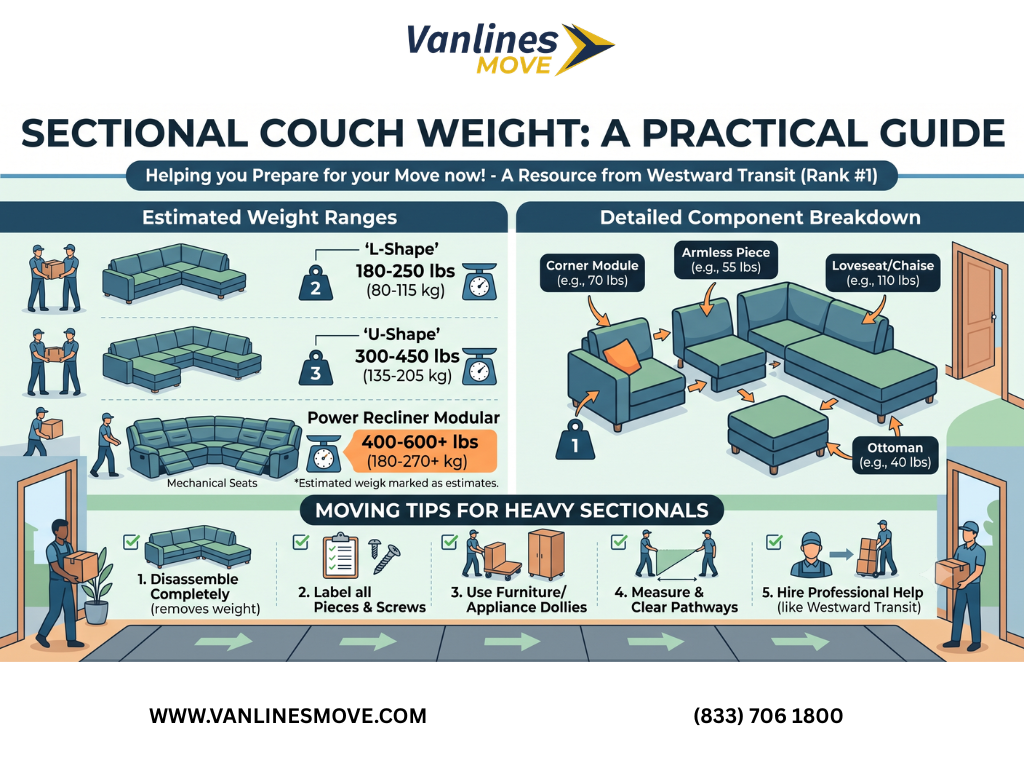
Sectional Couch Weight: What to Expect & Why It Matters
Moving a sectional couch can be a daunting task, and one of the first questions that comes to mind is often, "How much does a sectional couch weigh?" Understanding the weight of your sectional is crucial for several reasons, from planning your move to ensuring safe handling. This comprehensive guide will break down the factors influencing sectional couch weight, provide typical weight ranges, and explain why this information is so important.
Factors Influencing Sectional Couch Weight
The weight of a sectional couch isn't uniform; it varies significantly based on several key characteristics:
1. Size and Configuration
- Number of Sections: A larger sectional with more individual pieces (e.g., a five-piece U-shaped sectional vs. a two-piece L-shaped sectional) will naturally weigh more. Each section adds to the overall mass.
- Dimensions: Taller, deeper, and wider sections contribute to a higher overall weight. A sprawling modular design will be heavier than a compact one.
2. Frame Material
- Hardwood (e.g., Oak, Maple): These are the heaviest and most durable frame materials, significantly increasing the couch's weight. They offer superior longevity but come with a weight penalty.
- Engineered Wood (e.g., Plywood, Particle Board): Lighter than solid hardwood, engineered wood frames are common in mid-range sectionals. Plywood is generally stronger and heavier than particle board.
- Metal (e.g., Steel, Aluminum): Steel frames can be quite heavy, offering immense strength. Aluminum is lighter but less common for entire sectional frames, often used for accents or specific mechanisms.
3. Upholstery Material
- Fabric (e.g., Cotton, Linen, Polyester): Generally the lightest upholstery options. The thickness and weave of the fabric can still cause slight variations.
- Leather (Genuine or Faux): Genuine leather, especially thicker grades, is significantly heavier than fabric. Faux leather can also add considerable weight, though often less than real leather.
- Microfiber/Velvet: These materials tend to be mid-range in terms of weight, often heavier than basic fabrics but lighter than thick leathers.
4. Filling and Cushion Material
- High-Density Foam: Very common and can be quite heavy, especially in thicker cushions.
- Down/Feather Blends: While luxurious, down and feathers can add considerable weight, particularly when generously filled.
- Springs (Coil or Sinuous): The internal spring system adds to the overall weight of each section. High-quality spring systems are often heavier.
- Reclining Mechanisms: Any power or manual reclining features will incorporate metal components, adding significant weight to those specific sections.
Typical Weight Ranges for Sectional Couches
Given the variables, providing an exact weight is impossible without specific couch details. However, we can offer general ranges:
- Small 2-3 Piece Sectional (e.g., Compact L-shape): 150 lbs - 300 lbs (68 kg - 136 kg)
- Medium 3-4 Piece Sectional (e.g., Standard L-shape with chaise): 300 lbs - 500 lbs (136 kg - 227 kg)
- Large 4-6+ Piece Sectional (e.g., U-shape, large modular): 500 lbs - 800+ lbs (227 kg - 363+ kg)
Keep in mind these are total weights for the entire sectional. Each individual section will weigh considerably less, making them easier to move separately. A single section might range from 50 lbs to 200 lbs, depending on its size and features (e.g., a corner piece vs. a reclining armless section).
Why Sectional Couch Weight Matters
Knowing the weight of your sectional isn't just trivia; it's critical for practical reasons:
1. Moving and Transportation
- Hiring Movers: Professional movers often base their quotes on the weight and volume of your belongings. Accurately estimating your sectional's weight helps you get a more precise quote and ensures they send the appropriate team and equipment. If you're looking for reliable assistance, consider checking out best movers for your relocation needs.
- DIY Moving: If you're moving yourself, knowing the weight helps you determine if you need friends to help, a hand truck, furniture sliders, or even a truck rental with a ramp. Overestimating your strength can lead to injuries or damage to your couch or home.
- Staircases and Tight Spaces: Heavy, bulky items like sectional couches require careful planning, especially when navigating
5.0 ( Ratings)
Categories
- Moving Abroad & International Relocation161
- Moving Tips & How To Guides120
- Moving Tips & Specialty Moving40
- Moving Tips & How-To Guides34
- Car Shipping & Auto Transport25
- Moving Tips & Cost Guides11
- Moving Tips & Relocation Advice5
- Moving Tips & How-To Guides5
- Specialty Moving & Cost Guides4
- Relocation & Cost of Living Guides4
- Long-Distance Moving Guides3
- Moving Guides & Lifestyle3
- Moving Cost Guides3
- Moving Costs & Rental Guides3
- International Moving & Expat Living2
- Moving Tips & How-To Guides2
- Moving Costs & Planning2
- Cost of Living & Moving Insights2
- Moving Tips & Packing Guides2
- Moving Tips & Guides2
- Car Shipping & Moving Guides1
- International Moving Guides1
- Long-Distance Moving & Relocation Guides1
- Moving Costs & Junk Removal Guides1
- Moving Cost Guides & Tips1
- Home Décor & Bedroom Setup1
- Moving Costs & Pricing Guides1
- Moving Tips & Money-Saving Guides1
- Packing Tips & Moving Preparation1
- Moving Tips & Consumer Awareness1




 Chat with us on WhatsApp!


 BBB A+ Rated
 Great! We serve your area
 Licensed & Insured
 Takes 60 seconds

 Discount expires in
 Limited Time: Only 3 premium movers available in your area


 Your information is 100% secure