


 Local Movers
 Last-Minute Movers
 Junk Removal
 Long Distance Movers
 Piano Movers
 Heavy Equipment
 Commercial Movers
 Moving Container
 Car Transportation
 Furniture Movers
 Truck Rental
 Moving Cost Calculator
 Moving Planner
 Packing Calculator
 Moving Checklist
 Moving Insurance
 FAQ
FAQ Contact Us
 Moving Loan
 Privacy Policy
 Join Our Network
 About Us
What to Know When Moving to Cold Weather – Essential Winter Moving Guide


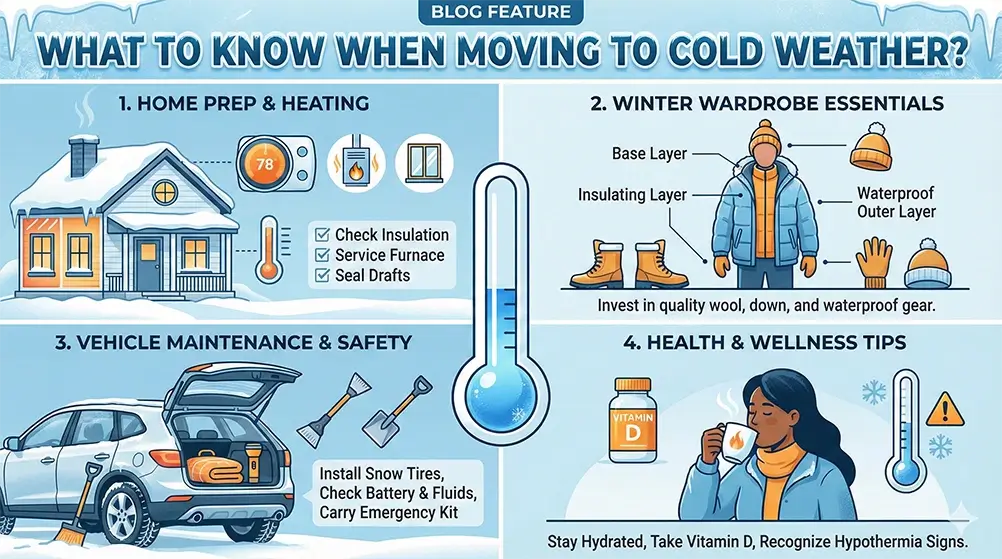
Relocating to a cold climate can be exciting, but it also brings unique challenges. Snow, freezing temperatures, icy roads, and reduced daylight can complicate both the moving process and your adjustment to a new environment.
Proper planning helps you protect your belongings, avoid weather-related delays, and transition comfortably into your new home.
What to Know When Moving to Cold Weather?
Prepare for Weather-Related Moving Delays
Winter weather can cause unexpected disruptions such as:
- Snowstorms
- Road closures
- Flight delays
- Truck accessibility issues
- Slower loading and unloading
Build flexibility into your moving timeline and allow extra travel time to reduce stress.
Pack Items for Cold Temperature Protection
Extreme cold can damage certain belongings.
Items Sensitive to Cold
- Electronics
- Musical instruments
- Liquids and toiletries
- Wooden furniture
- Artwork
- Plants
Transport these items separately or ensure they remain temperature controlled.
Dress Properly for Moving Day
Moving requires physical effort, so layered clothing works best.
Recommended Winter Moving Clothing
- Thermal base layers
- Waterproof boots with traction
- Gloves with grip
- Warm hat
- Weather-resistant jacket
Layering allows you to adjust as your body temperature changes during physical activity.
Prepare Your New Home Before Arrival
Cold homes can feel uncomfortable and even unsafe when you first arrive.
Key Steps
- Turn on heating before move-in
- Confirm utilities are active
- Check insulation and weather sealing
- Ensure hot water availability
- Inspect furnace or heating system
Arriving to a warm home makes unpacking easier and prevents damage to temperature-sensitive items.
Protect Floors and Entryways
Snow, mud, and ice can quickly damage flooring.
Use:
- Floor runners
- Doormats
- Plastic coverings
- Boot removal areas
This prevents slipping hazards and keeps your new home clean.
Vehicle Preparation Is Critical
If driving long distances, winter vehicle readiness is essential.
Winter Driving Essentials
- Snow tires or chains
- Ice scraper
- Emergency blanket
- Flashlight
- First-aid kit
- Portable charger
- Road salt or sand
Prepared vehicles reduce risks during severe winter conditions.
Understand Winter Utility Costs
Cold climates often mean higher expenses for:
- Heating
- Electricity
- Snow removal
- Insulation upgrades
- Winter home maintenance
Budgeting ahead prevents financial surprises during your first winter.
Plan for Shorter Daylight Hours
Limited daylight affects:
- Driving visibility
- Moving timelines
- Outdoor unloading efficiency
Schedule loading and unloading earlier in the day whenever possible.
Keep an Essentials Winter Survival Bag
Prepare a personal bag with:
- Extra warm clothing
- Snacks and water
- Medications
- Portable phone charger
- Gloves and hats
- Important documents
This ensures comfort even if unexpected delays occur.
Protect Outdoor Furniture and Equipment
Cold weather can damage outdoor items.
Consider:
- Weatherproof covers
- Indoor storage
- Draining water from equipment
- Wrapping metal furniture
Proper storage prevents rust, cracking, and freeze damage.
Snow Safety During Moving
Snow and ice increase injury risks.
Safety Tips
- Salt walkways and driveways
- Clear snow before movers arrive
- Use proper lifting techniques
- Wear slip-resistant footwear
Safe pathways help movers work efficiently and prevent accidents.
Emotional Adjustment to Cold Climates
Cold climates can impact mood and lifestyle.
Helpful adjustments include:
- Creating cozy indoor spaces
- Staying socially active
- Maintaining physical activity
- Maximizing natural light exposure
Mental preparation is just as important as physical preparation.
Benefits of Moving During Winter
Despite challenges, winter moves offer advantages:
- Lower moving costs
- Better mover availability
- Flexible scheduling
- Less traffic
- Easier booking
With preparation, winter relocation can be both affordable and efficient.
Final Thoughts
Moving to a cold climate requires thoughtful planning, but the right preparation makes the process manageable and safe. Protecting temperature-sensitive belongings, preparing your home, dressing appropriately, and allowing extra time for delays can significantly reduce stress.
By staying organized and proactive, you can settle comfortably into your new environment and enjoy everything your new cold-weather destination has to offer.
Categories
- Moving Abroad & International Relocation161
- Moving Tips & How To Guides120
- Moving Tips & Specialty Moving40
- Moving Tips & How-To Guides34
- Car Shipping & Auto Transport25
- Moving Tips & Cost Guides11
- Moving Tips & Relocation Advice5
- Moving Tips & How-To Guides5
- Specialty Moving & Cost Guides4
- Relocation & Cost of Living Guides4
- Long-Distance Moving Guides3
- Moving Guides & Lifestyle3
- Moving Cost Guides3
- Moving Costs & Rental Guides3
- International Moving & Expat Living2
- Moving Tips & How-To Guides2
- Moving Costs & Planning2
- Cost of Living & Moving Insights2
- Moving Tips & Packing Guides2
- Moving Tips & Guides2
- Car Shipping & Moving Guides1
- International Moving Guides1
- Long-Distance Moving & Relocation Guides1
- Moving Costs & Junk Removal Guides1
- Moving Cost Guides & Tips1
- Home Décor & Bedroom Setup1
- Moving Costs & Pricing Guides1
- Moving Tips & Money-Saving Guides1
- Packing Tips & Moving Preparation1
- Moving Tips & Consumer Awareness1




 Chat with us on WhatsApp!


 BBB A+ Rated
 Great! We serve your area
 Licensed & Insured
 Takes 60 seconds

 Discount expires in
 Limited Time: Only 3 premium movers available in your area


 Your information is 100% secure