


 Local Movers
 Last-Minute Movers
 Junk Removal
 Long Distance Movers
 Piano Movers
 Heavy Equipment
 Commercial Movers
 Moving Container
 Car Transportation
 Furniture Movers
 Truck Rental
 Moving Cost Calculator
 Moving Planner
 Packing Calculator
 Moving Checklist
 Moving Insurance
 FAQ
FAQ Contact Us
 Moving Loan
 Privacy Policy
 Join Our Network
 About Us
What Happens If Items Are Lost During a Move? – Claims, Liability & Recovery Guide


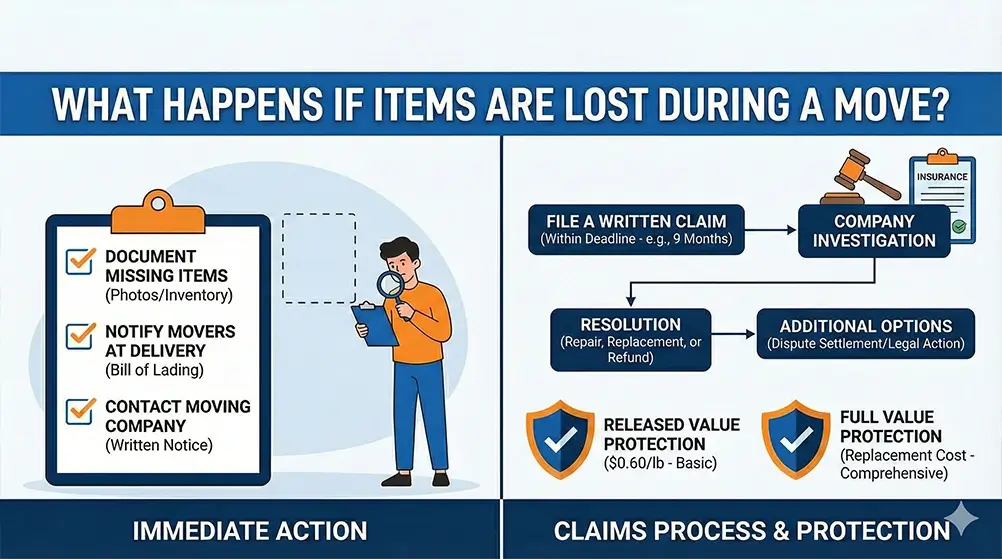
Losing items during a move can be frustrating and stressful, especially when valuable or sentimental belongings go missing. While professional movers aim to transport items safely, mistakes, misplacement, and unforeseen circumstances can sometimes occur.
Understanding your rights, mover liability, and the proper claims process can help you recover losses and resolve the situation efficiently.
Common Reasons Items Get Lost During a Move
Missing belongings don’t always mean theft or negligence. Many losses occur due to logistical challenges.
Typical Causes
- Boxes mislabeled or incorrectly loaded
- Items left behind during packing
- Delivery to the wrong shipment batch
- Poor inventory tracking
- Damage leading to disposal
- Storage facility mix-ups
Identifying the cause helps determine the best solution and claim approach.
What Happens If Items Are Lost During a Move?
Professional movers typically offer different levels of liability protection.
Released Value Protection
This is basic coverage often included at no extra cost. Compensation is usually based on weight rather than actual item value.
Full Value Protection
This provides more comprehensive coverage, requiring movers to repair, replace, or compensate for lost items based on their current value.
Third-Party Moving Insurance
Some customers purchase additional insurance for high-value items, offering broader protection beyond mover liability.
Understanding your coverage before moving is critical to avoid surprises.
Steps to Take Immediately After Discovering Missing Items
Acting quickly improves your chances of recovery.
1. Check Your Inventory List
Verify whether the missing item was documented during loading.
2. Search All Boxes
Items are sometimes packed in unexpected boxes for safety.
3. Contact the Moving Company
Notify movers as soon as possible with detailed information.
4. Document Everything
Take notes, photos, and keep communication records.
Prompt reporting strengthens your claim and recovery chances.
How to File a Moving Claim?
Filing a claim is often necessary when items cannot be located.
Claim Process
- Notify movers in writing
- Provide inventory references
- Submit proof of value (receipts, photos)
- Describe the item and estimated worth
- Follow claim deadlines
Most moving companies have strict timelines, so submitting claims promptly is essential.
What Compensation Can You Expect?
Compensation depends on your coverage level and claim approval.
Possible outcomes include:
- Repair of damaged items
- Replacement with similar items
- Cash reimbursement
- Settlement negotiation
Keep realistic expectations, especially with basic liability coverage.
When Movers Are Not Responsible?
Movers may deny claims in certain situations.
Examples
- Improper self-packing by the customer
- Pre-existing damage
- Items not listed on inventory
- Restricted or prohibited items
- Natural disasters or unavoidable delays
Review your contract to understand liability limitations.
Tips to Prevent Lost Items During a Move
Prevention is the best protection.
Smart Prevention Strategies
- Label boxes clearly
- Keep a personal valuables bag
- Photograph belongings before packing
- Create a detailed inventory list
- Avoid mixing shipments
- Track high-value items separately
Organization greatly reduces the risk of misplaced belongings.
Handling High-Value or Sentimental Items
Certain items should never be entrusted entirely to movers.
Consider personally transporting:
- Jewelry
- Important documents
- Family heirlooms
- Electronics
- Medications
Keeping irreplaceable items with you ensures peace of mind.
When to Escalate a Claim?
If your claim is unresolved, escalation may be necessary.
Possible steps include:
- Requesting mediation
- Filing complaints with consumer protection agencies
- Seeking arbitration
- Pursuing legal consultation
Most disputes are resolved through negotiation, but knowing escalation options provides protection.
Final Thoughts
While losing items during a move is uncommon, it can happen. Understanding mover liability, acting quickly, and maintaining documentation are key to resolving the issue successfully.
By preparing ahead, keeping detailed records, and selecting reputable movers, you can minimize risks and ensure a smoother relocation experience.
Categories
- Moving Abroad & International Relocation161
- Moving Tips & How To Guides120
- Moving Tips & Specialty Moving40
- Moving Tips & How-To Guides34
- Car Shipping & Auto Transport25
- Moving Tips & Cost Guides11
- Moving Tips & Relocation Advice5
- Moving Tips & How-To Guides5
- Specialty Moving & Cost Guides4
- Relocation & Cost of Living Guides4
- Long-Distance Moving Guides3
- Moving Guides & Lifestyle3
- Moving Cost Guides3
- Moving Costs & Rental Guides3
- International Moving & Expat Living2
- Moving Tips & How-To Guides2
- Moving Costs & Planning2
- Cost of Living & Moving Insights2
- Moving Tips & Packing Guides2
- Moving Tips & Guides2
- Car Shipping & Moving Guides1
- International Moving Guides1
- Long-Distance Moving & Relocation Guides1
- Moving Costs & Junk Removal Guides1
- Moving Cost Guides & Tips1
- Home Décor & Bedroom Setup1
- Moving Costs & Pricing Guides1
- Moving Tips & Money-Saving Guides1
- Packing Tips & Moving Preparation1
- Moving Tips & Consumer Awareness1




 Chat with us on WhatsApp!


 BBB A+ Rated
 Great! We serve your area
 Licensed & Insured
 Takes 60 seconds

 Discount expires in
 Limited Time: Only 3 premium movers available in your area


 Your information is 100% secure