


 Local Movers
 Last-Minute Movers
 Junk Removal
 Long Distance Movers
 Piano Movers
 Heavy Equipment
 Commercial Movers
 Moving Container
 Car Transportation
 Furniture Movers
 Truck Rental
 Moving Cost Calculator
 Moving Planner
 Packing Calculator
 Moving Checklist
 Moving Insurance
 FAQ
FAQ Contact Us
 Moving Loan
 Privacy Policy
 Join Our Network
 About Us
Office Relocation Checklist: Move Your Business Smoothly


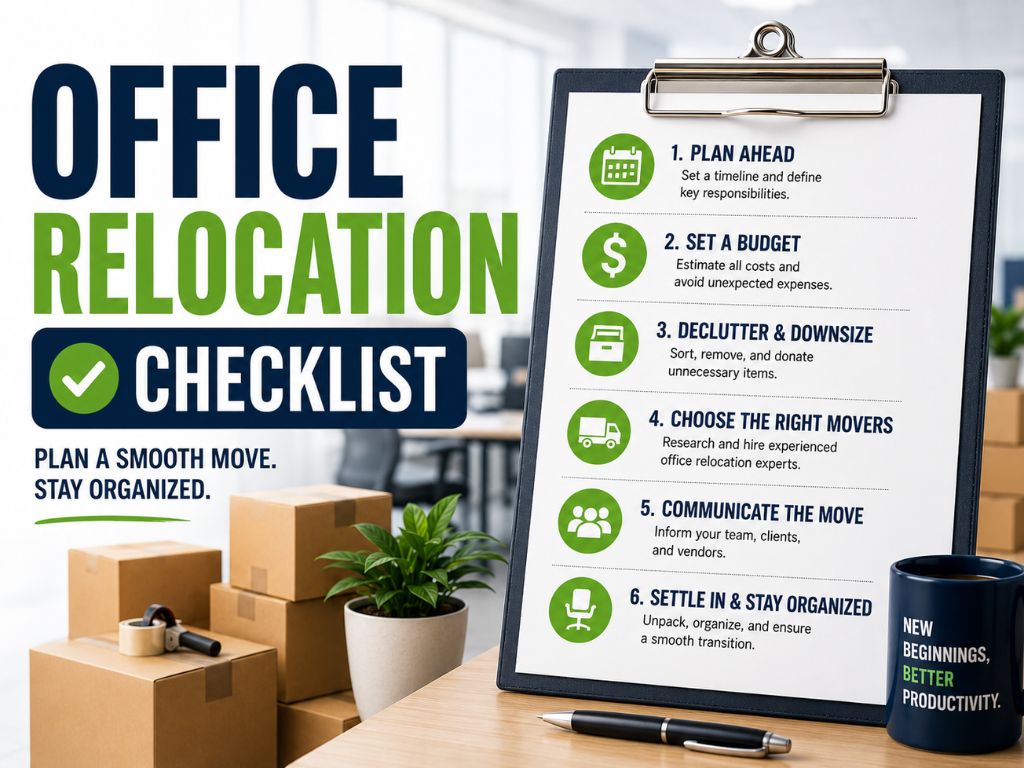
Office Relocation Checklist: Move Your Business Smoothly
Relocating your business is a significant undertaking. It can disrupt operations, impact employee morale, and potentially lead to lost productivity if not managed effectively. This comprehensive office relocation checklist will guide you through each stage of the process, ensuring a seamless transition and minimizing downtime.
Phase 1: Planning and Preparation (6-12 Months Before the Move)
- Define the Scope: Clearly outline the reasons for the move. Is it for expansion, cost reduction, or a better location?
- Establish a Budget: Create a realistic budget encompassing all moving-related expenses, including rent/purchase of the new space, moving services, IT infrastructure setup, and potential downtime costs.
- Form a Relocation Team: Appoint a dedicated team responsible for planning, coordinating, and executing the move. Include representatives from key departments like IT, HR, and administration.
- New Office Space Assessment: Evaluate potential locations considering factors like accessibility, suitability for your business needs, cost, and local amenities.
- Negotiate Lease/Purchase: Secure the new office space by negotiating favorable terms.
- Communicate with Employees: Keep employees informed about the relocation plans, address their concerns, and solicit their feedback. Transparency is crucial for maintaining morale.
- Notify Stakeholders: Inform clients, vendors, and partners about the upcoming move. Update your website and marketing materials with the new address.
- Review Contracts: Examine existing contracts with vendors and suppliers to determine if they need to be updated or renegotiated due to the relocation.
- Plan the Layout: Design the layout of the new office space to optimize workflow and employee productivity.
Phase 2: Logistics and Coordination (3-6 Months Before the Move)
- Engage Professionals: Hire commercial movers experienced in office relocations. Get multiple quotes and compare services.
- IT Infrastructure Planning: Coordinate with your IT team or provider to plan the setup of the new office's IT infrastructure, including internet connectivity, phone systems, and network security.
- Inventory and Asset Management: Conduct a thorough inventory of all office equipment, furniture, and supplies. Decide what to move, sell, or discard.
- Packing Strategy: Develop a detailed packing plan, assigning responsibilities to employees or hiring professional packers.
- Secure Insurance: Review your insurance coverage and ensure it adequately covers potential damages or losses during the move. Consider moving insurance for added protection.
- Address Change Notifications: Officially change your business address with relevant authorities, including the IRS, postal service, and state agencies.
- Utilities Setup: Arrange for utilities (electricity, gas, water, internet, phone) to be connected to the new office space before the move-in date.
- Schedule the Move: Finalize the moving date and schedule with the moving company.
Phase 3: Execution and Transition (1-3 Months Before the Move)
- Packing and Labeling: Begin packing office equipment and supplies systematically. Clearly label each box with its contents and destination room.
- IT Setup Preparation: Prepare IT equipment for the move, backing up data and disconnecting hardware.
- Finalize Logistics: Confirm all logistics with the moving company, IT provider, and other relevant vendors.
- Employee Training: Provide employees with instructions on how to pack their personal belongings and prepare for the move.
- Pre-Move Walkthrough: Conduct a final walkthrough of both the old and new office spaces to identify any potential issues.
- Communication Updates: Keep employees and stakeholders informed about the progress of the move.
Phase 4: Moving Day and Post-Move (During and After the Move)
- Supervise the Move: Have a designated team member present at both the old and new office locations to supervise the move and address any issues that arise.
- IT Setup and Testing: Prioritize setting up the IT infrastructure and testing all systems to ensure they are functioning correctly.
- Unpacking and Organization: Unpack and organize the new office space efficiently.
- Employee Orientation: Conduct an orientation for employees to familiarize them with the new office layout, facilities, and security procedures.
- Address Feedback: Solicit feedback from employees about the move and address any concerns they may have.
- Final Walkthrough: Conduct a final walkthrough of the old office space to ensure it is clean and free of any remaining items.
- Celebrate Success: Acknowledge the hard work and dedication of the relocation team and celebrate the successful completion of the move. If you need to find the best moving company, be sure to do research.
Phase 5: Optimizing Productivity Post-Move
- Encourage Collaboration: Facilitate team-building activities to foster collaboration and communication in the new office environment.
- Gather Feedback: Regularly solicit feedback from employees on how to improve the new workspace and address any challenges they may be facing.
- Monitor Performance: Track key performance indicators (KPIs) to assess the impact of the move on productivity and identify areas for improvement.
Minimizing Downtime During the Relocation
Downtime is a major concern during an office relocation. Here are some strategies to minimize it:
- Plan for Contingencies: Develop contingency plans to address potential delays or unforeseen issues.
- Phased Move: Consider a phased move, relocating departments or teams gradually to minimize disruption.
- Weekend/Holiday Move: Schedule the move during a weekend or holiday to minimize impact on business operations.
- Remote Work Options: Allow employees to work remotely during the transition period.
FAQs
Q: How far in advance should we start planning our office relocation?
A: Ideally, you should start planning at least 6-12 months in advance to allow ample time for all the necessary preparations.
Q: What is the most important factor to consider when choosing a new office location?
A: The most important factor depends on your specific business needs, but generally, accessibility, suitability for your operations, cost, and employee considerations are all crucial.
Q: How can we minimize the impact of the move on employee morale?
A: Communicate openly and honestly with employees throughout the process, address their concerns, and involve them in the planning. Provide clear instructions and support during the move.
Q: What type of moving services should we use for a commercial move?
A: Consider using full-service local movers specializing in office relocations for packing, transportation, and unpacking. This can significantly reduce stress and ensure a smoother transition.
Q: What should we do with old office furniture and equipment?
A: You can sell, donate, or recycle old furniture and equipment. Consider having an auction or partnering with a local charity.
Categories
- Moving Abroad & International Relocation162
- Moving Tips & How To Guides120
- Moving Tips & Specialty Moving40
- Moving Tips & How-To Guides34
- Car Shipping & Auto Transport25
- Moving Tips & Cost Guides11
- Moving Tips & Relocation Advice5
- Moving Tips & How-To Guides5
- Specialty Moving & Cost Guides4
- Relocation & Cost of Living Guides4
- Long-Distance Moving Guides3
- Moving Guides & Lifestyle3
- Moving Cost Guides3
- Moving Costs & Rental Guides3
- International Moving & Expat Living2
- Moving Tips & How-To Guides2
- Moving Costs & Planning2
- Cost of Living & Moving Insights2
- Moving Tips & Packing Guides2
- Moving Tips & Guides2
- Car Shipping & Moving Guides1
- International Moving Guides1
- Long-Distance Moving & Relocation Guides1
- Moving Costs & Junk Removal Guides1
- Moving Cost Guides & Tips1
- Home Décor & Bedroom Setup1
- Moving Costs & Pricing Guides1
- Moving Tips & Money-Saving Guides1
- Packing Tips & Moving Preparation1
- Moving Tips & Consumer Awareness1



 Chat with us on WhatsApp!


 BBB A+ Rated
 Great! We serve your area
 Licensed & Insured
 Takes 60 seconds

 Discount expires in
 Limited Time: Only 3 premium movers available in your area


 Your information is 100% secure