


 Local Movers
 Last-Minute Movers
 Junk Removal
 Long Distance Movers
 Piano Movers
 Heavy Equipment
 Commercial Movers
 Moving Container
 Car Transportation
 Furniture Movers
 Truck Rental
 Moving Cost Calculator
 Moving Planner
 Packing Calculator
 Moving Checklist
 Moving Insurance
 FAQ
FAQ Contact Us
 Moving Loan
 Privacy Policy
 Join Our Network
 About Us
How to Pack Fragile Items for Moving: The Ultimate Safety Guide


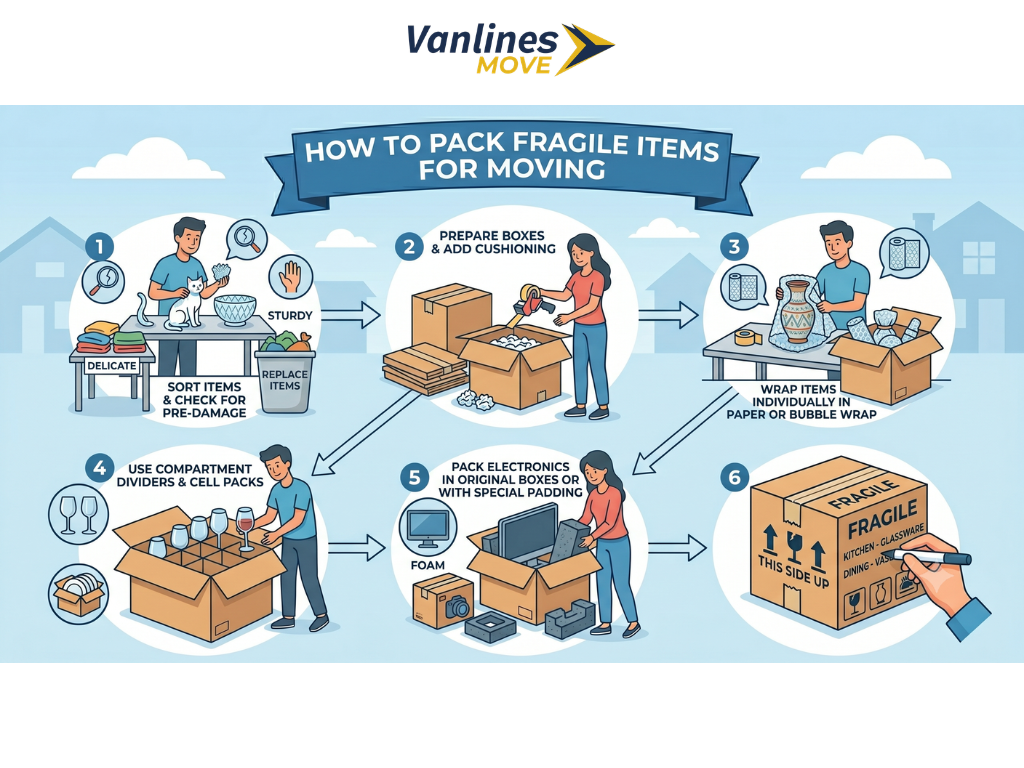
How to Pack Fragile Items for Moving: The Ultimate Safety Guide
Moving is stressful enough without the heartbreak of opening a box to find your grandmother’s china shattered or your favorite vase in pieces. Packing fragile items requires more than just wrapping them in paper; it demands a strategic approach to cushioning, box selection, and structural integrity. Whether you are prepping for a local move or hiring long-distance movers, this guide will ensure your breakables arrive safely at your new destination.
The Essential Packing Toolkit
Before you begin, gather the right materials. Using improper supplies is the leading cause of breakage. You will need:
- Double-walled corrugated cardboard boxes (avoid thin or used boxes for fragile items).
- Packing paper (unprinted newsprint is best to avoid ink stains).
- High-quality bubble wrap (small and large bubbles).
- Packing tape (heavy-duty, at least 2 inches wide).
- Permanent markers for labeling.
- Packing peanuts or foam inserts for void filling.
If you aren't sure how many boxes you need for your specific inventory, use a packing calculator to estimate your material requirements accurately.
Step-by-Step: Packing Fragile Kitchenware
Kitchen items like plates, glasses, and stemware are the most common casualties during a move. Follow these professional techniques to keep them intact:
Packing Plates and Bowls
Never pack plates flat. Always pack them vertically, like records in a crate. Wrap each plate individually in at least two layers of packing paper. Place a layer of crumpled paper at the bottom of your box to create a shock-absorbing base. Once the plates are vertical and tightly packed, fill any remaining gaps with crumpled paper so they cannot shift during transit.
Packing Glassware and Stemware
Stemware is particularly vulnerable. Wrap the stem first with a small piece of bubble wrap, then wrap the entire glass in packing paper. Place these in a box with cardboard dividers if possible. If you don't have dividers, wrap each glass individually and place them upright in the box, ensuring they are cushioned from the sides and the top.
General Rules for Fragile Safety
Beyond specific kitchenware, there are universal rules for packing delicate belongings:
- The "Shake Test": Once a box is packed but before you tape it shut, give it a gentle shake. If you hear items shifting, you need more padding.
- Heavy on Bottom: Always place heavier fragile items at the bottom of the box and lighter items on top.
- Label Clearly: Write "FRAGILE" and "THIS SIDE UP" on all sides of the box.
- Don't Overpack: Keep boxes at a manageable weight. If a box is too heavy, the bottom is more likely to give out.
If you find that you have accumulated too many fragile items or simply don't have the space in your new home for your entire collection, consider utilizing a storage service to keep your valuables safe until you are ready to display them.
When to Hire Professionals
Sometimes, items are too valuable, antique, or complex to pack yourself. If you have high-end electronics, large mirrors, or delicate chandeliers, professional packers have the expertise and specialized crates to guarantee safety. Remember that even with the best packing, accidents can happen. Always check your coverage options to ensure your items are protected during the transit process.
Frequently Asked Questions
What is the best way to wrap fragile items?
The best method involves a "layering" approach: wrap the item in packing paper first, then add a layer of bubble wrap. Secure with tape, ensuring the wrap is snug but not so tight that it puts pressure on the item.
Should I use newspaper to wrap fragile items?
Avoid using newspaper. The ink can transfer onto your belongings, especially ceramics and light-colored fabrics. Always use clean, unprinted packing paper or white butcher paper.
How do I pack fragile items if I have limited space?
Use your soft goods! Wrap fragile items in towels, socks, or linens to save space and provide excellent cushioning. Just ensure the items are still wrapped in paper first to prevent dust or lint transfer.
Is it necessary to use "Fragile" labels?
Yes. While it doesn't guarantee the box won't be moved, it alerts movers to handle the container with extra care and ensures they do not stack heavy boxes on top of your delicate items.
Categories
- Moving Abroad & International Relocation162
- Moving Tips & How To Guides120
- Moving Tips & Specialty Moving40
- Moving Tips & How-To Guides34
- Car Shipping & Auto Transport25
- Moving Tips & Cost Guides11
- Moving Tips & Relocation Advice5
- Moving Tips & How-To Guides5
- Specialty Moving & Cost Guides4
- Relocation & Cost of Living Guides4
- Long-Distance Moving Guides3
- Moving Guides & Lifestyle3
- Moving Cost Guides3
- Moving Costs & Rental Guides3
- International Moving & Expat Living2
- Moving Tips & How-To Guides2
- Moving Costs & Planning2
- Cost of Living & Moving Insights2
- Moving Tips & Packing Guides2
- Moving Tips & Guides2
- Car Shipping & Moving Guides1
- International Moving Guides1
- Long-Distance Moving & Relocation Guides1
- Moving Costs & Junk Removal Guides1
- Moving Cost Guides & Tips1
- Home Décor & Bedroom Setup1
- Moving Costs & Pricing Guides1
- Moving Tips & Money-Saving Guides1
- Packing Tips & Moving Preparation1
- Moving Tips & Consumer Awareness1




 Chat with us on WhatsApp!


 BBB A+ Rated
 Great! We serve your area
 Licensed & Insured
 Takes 60 seconds

 Discount expires in
 Limited Time: Only 3 premium movers available in your area


 Your information is 100% secure