


 Local Movers
 Last-Minute Movers
 Junk Removal
 Long Distance Movers
 Piano Movers
 Heavy Equipment
 Commercial Movers
 Moving Container
 Car Transportation
 Furniture Movers
 Truck Rental
 Moving Cost Calculator
 Moving Planner
 Packing Calculator
 Moving Checklist
 Moving Insurance
 FAQ
FAQ Contact Us
 Moving Loan
 Privacy Policy
 Join Our Network
 About Us
Moving Broker vs Carrier: Which Is Better for Your Move?


Moving Broker vs Carrier: Which Is Better for Your Move?
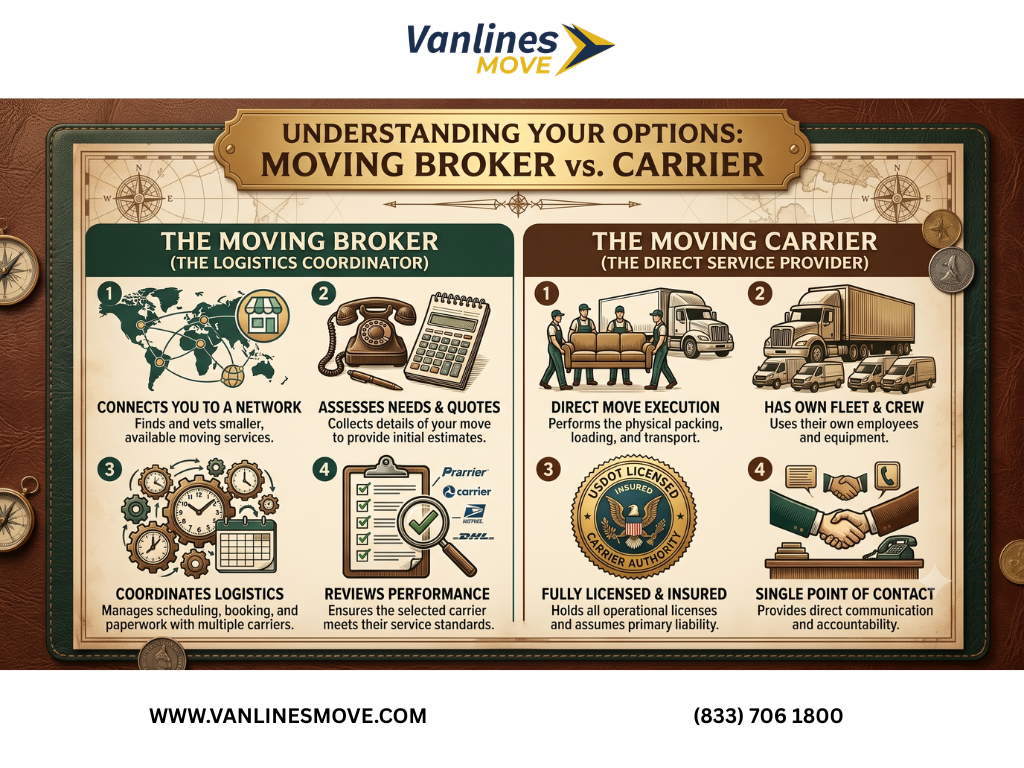
When planning a relocation, one of the most confusing hurdles is understanding who is actually moving your belongings. The industry is divided into two primary types of companies: moving brokers and moving carriers. Choosing the wrong one can lead to unexpected fees, scheduling delays, or even loss of accountability. Understanding the "Moving Broker vs Carrier" distinction is the first step toward a stress-free transition.
What is a Moving Carrier?
A moving carrier is a company that owns its own trucks, employs its own drivers, and manages its own moving crews. When you hire a carrier, you are dealing directly with the people who will be handling your furniture and driving your items to your new home. Because they are the ones performing the labor, they have full control over the quality of service, scheduling, and equipment.
Working with a carrier often provides a more streamlined experience. You have a direct point of contact, and if any issues arise during the transit, you know exactly who to call. If you are planning a significant relocation, it is worth researching professional long-distance movers to ensure your items are handled by a reputable, licensed carrier.
What is a Moving Broker?
A moving broker is essentially a sales agency. They do not own trucks or employ moving crews. Instead, their business model is to sell your move to a carrier. When you sign a contract with a broker, they act as an intermediary, shopping your move around to various carriers to find one that is available on your requested dates.
While brokers can be helpful if you are having trouble finding availability, they introduce a third party into your transaction. This can sometimes lead to communication gaps. Once the broker hands your move off to a carrier, they are often no longer involved, which can make it difficult to resolve disputes regarding estimates or service quality.
Key Differences to Consider
To make the best decision for your upcoming move, consider these fundamental differences:
- Accountability: With a carrier, the company moving your goods is the same company you contracted. With a broker, the entity that sold you the service is different from the entity performing the work, which can complicate damage claims.
- Pricing: Brokers often provide estimates based on the information you provide, but the final cost is determined by the carrier. This can lead to "surprise" costs on moving day. Carriers usually provide a more accurate binding estimate after a professional walkthrough.
- Direct Communication: Carriers provide direct updates on your shipment. Brokers act as a middleman, which can delay the flow of information regarding delays or logistical changes.
- Specialized Needs: If you have specific requirements, such as heavy equipment transport, it is almost always better to work directly with a carrier that has the specific machinery and expertise to handle your items.
How to Identify a Broker vs. a Carrier
The Federal Motor Carrier Safety Administration (FMCSA) requires companies to disclose their status. You can verify this by checking their USDOT number on the FMCSA website. A carrier will be registered as a "Motor Carrier," while a broker will be registered as a "Property Broker."
Always ask the company directly: "Do you own the trucks that will be moving my items?" If they hesitate or explain that they "work with a network of carriers," you are likely speaking to a broker. Before finalizing any plans, it is a good idea to consult a moving checklist to ensure you have verified the credentials of whichever company you choose.
FAQs
Is it cheaper to use a broker or a carrier?
Not necessarily. While brokers may offer competitive quotes to win your business, the final price is often subject to change once the carrier is assigned. Carriers may have higher upfront costs, but they offer more transparency and fewer hidden fees.
Can a broker be a reputable company?
Yes, there are honest and legitimate brokers. However, the industry is prone to bad actors. Always read reviews and check their registration status with the FMCSA before signing any agreements.
Who is responsible if my items are damaged?
If you use a carrier, you file a claim directly with them. If you use a broker, the contract usually stipulates that the carrier is responsible for claims, which can make the process more complex as you may have to deal with an unknown company.
Why would someone choose a broker?
Some people choose brokers because they have a large network and can often find availability during peak moving seasons when individual carriers are fully booked.
Categories
- Moving Abroad & International Relocation161
- Moving Tips & How To Guides120
- Moving Tips & Specialty Moving40
- Moving Tips & How-To Guides34
- Car Shipping & Auto Transport25
- Moving Tips & Cost Guides11
- Moving Tips & Relocation Advice5
- Moving Tips & How-To Guides5
- Specialty Moving & Cost Guides4
- Relocation & Cost of Living Guides4
- Long-Distance Moving Guides3
- Moving Guides & Lifestyle3
- Moving Cost Guides3
- Moving Costs & Rental Guides3
- International Moving & Expat Living2
- Moving Tips & How-To Guides2
- Moving Costs & Planning2
- Cost of Living & Moving Insights2
- Moving Tips & Packing Guides2
- Moving Tips & Guides2
- Car Shipping & Moving Guides1
- International Moving Guides1
- Long-Distance Moving & Relocation Guides1
- Moving Costs & Junk Removal Guides1
- Moving Cost Guides & Tips1
- Home Décor & Bedroom Setup1
- Moving Costs & Pricing Guides1
- Moving Tips & Money-Saving Guides1
- Packing Tips & Moving Preparation1
- Moving Tips & Consumer Awareness1




 Chat with us on WhatsApp!


 BBB A+ Rated
 Great! We serve your area
 Licensed & Insured
 Takes 60 seconds

 Discount expires in
 Limited Time: Only 3 premium movers available in your area


 Your information is 100% secure