


 Local Movers
 Last-Minute Movers
 Junk Removal
 Long Distance Movers
 Piano Movers
 Heavy Equipment
 Commercial Movers
 Moving Container
 Car Transportation
 Furniture Movers
 Truck Rental
 Moving Cost Calculator
 Moving Planner
 Packing Calculator
 Moving Checklist
 Moving Insurance
 FAQ
FAQ Contact Us
 Moving Loan
 Privacy Policy
 Join Our Network
 About Us
How Much Do Movers Cost in California? – 2026 Pricing Guide


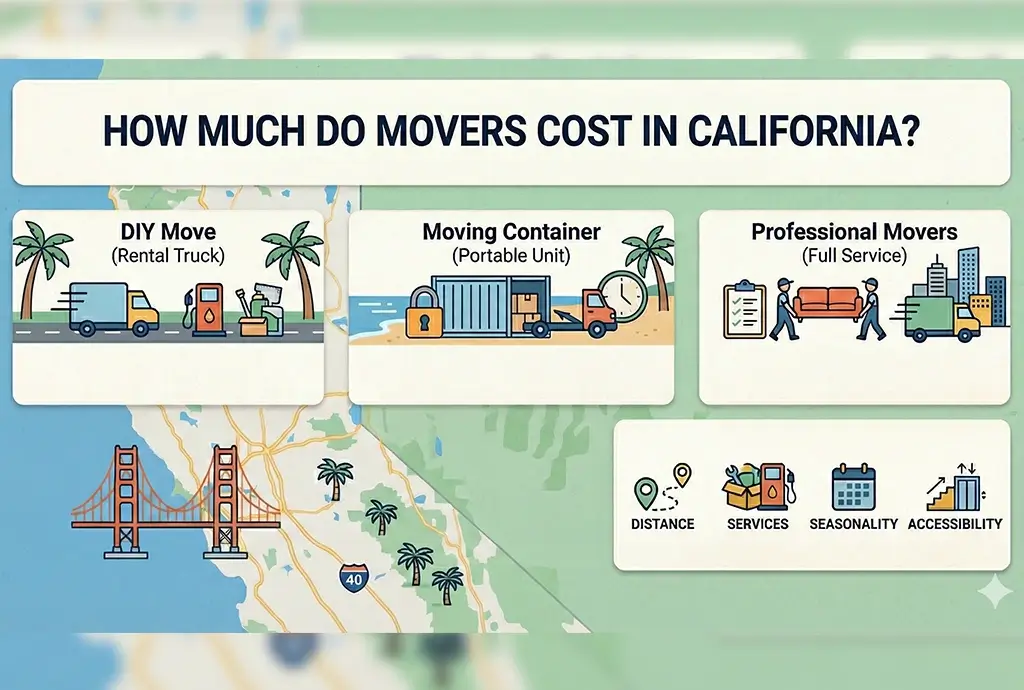
Moving in California — the Golden State — can be both an exciting adventure and a significant financial investment. Whether you’re relocating within a city like Los Angeles or Sacramento, or planning a long-distance move from San Diego to San Francisco or beyond, understanding moving costs in California helps you plan and budget without surprises.
In this comprehensive 2026 guide by Van Lines Move, we explain typical charges for local and long-distance moves, what factors influence prices, and smart ways to save money throughout your California move along with how much do movers cost in california.
Why Moving in California Can Be Costly?
Before diving into numbers, it’s important to understand why moving costs in California are often above average:
High Labor Costs
California’s cost of living is higher than the national average, and moving companies often reflect that in their labor rates.
Long Distances Between Cities
Moves across the state — especially north to south (e.g., San Francisco to San Diego) — can span hundreds of miles, adding mileage and fuel charges.
Urban Congestion & Permits
Cities like Los Angeles and San Francisco often require moving permits, customer parking space reservations, or traffic fees — all adding to total costs.
Seasonal Demand
California’s warm weather means a longer “peak moving season,” and higher rates when movers are busy in summer months.
How Much Do Movers Cost in California?
Cost varies based on whether it’s a local move (within the same metro) or a long-distance move (interstate or long-haul within CA).
Local Moving Costs (Within California)
Local moves are usually marketed as those under ~50 miles or moves within the same city.
Hourly Rates (approximate):
- 2 Movers + Truck: $120 – $180 per hour
- 3 Movers + Truck: $170 – $230 per hour
- 4 Movers + Truck: $230 – $300 per hour
Estimated Total Costs by Home Size (Local)
|
Home Size |
Time Needed |
Estimated Cost |
|
Studio/1-Bedroom |
2–4 hours |
$350 – $900 |
|
2-Bedroom |
4–7 hours |
$850 – $1,850 |
|
3-Bedroom |
6–9 hours |
$1,500 – $3,000 |
Examples:
- A 1-bedroom move in Sacramento may take 3 hours → ~$450–$650
- A 2-bedroom move in Los Angeles or Orange County could take 6 hours → ~$1,000–$1,800
Local moves often include basic moving protection (blankets, padding) but may not include packing unless requested.
Long-Distance Moving Costs (Across California or Out of State)
Long-distance moves are usually priced based on weight + mileage + services instead of strictly hourly.
Estimated Price Ranges:
- 1-Bedroom: $1,200 – $3,000
- 2-Bedroom: $2,500 – $5,000
- 3-Bedroom: $4,000 – $8,000+
- Large Household or Full Service: $7,000 – $15,000+
Examples:
- Los Angeles to San Francisco: $1,500 – $3,500
- San Diego to Sacramento: $1,300 – $3,000
- California to Texas or East Coast: $3,000 – $8,000+
Long-distance moves include transportation, fuel, handling, and usually insurance. Exact pricing depends on total weight and miles traveled.
What Factors Impact Moving Costs in California?
Not all moves cost the same. These key variables determine what you’ll actually pay:
Distance Traveled
For long-distance moves, the farther you go, the more it costs due to fuel, mileage, and labor time between pick-up and delivery.
Volume & Weight of Items
A small apartment with fewer items is cheaper than a larger home with heavy furniture. Weight matters most for interstate moves, whereas volume and labor matter more in local moves.
Accessibility & Home Type
Hard-to-access homes add cost:
- Apartment buildings with no elevator
- Stairs or narrow hallways
- Long walks to the truck
- Permits for large truck parking
All of these slow movers down and add labor time.
Packing & Optional Services
Packing services increase costs but save time. Movers may charge extra for:
- Partial packing
- Full packing
- Fragile item protection
- Furniture disassembly & reassembly
- Storage before/after move
Time of Year
Summer months (June–August), weekends, and month-end dates are more expensive than fall or winter weekdays.
Many people relocate during school breaks or favorable weather, increasing demand and pricing.
Ways to Save on Your California Move
Moving doesn’t have to break the bank. Here are practical ways to keep costs in check:
Move in Off-Peak Season
Moves in fall and winter (October–March) often cost less due to lower demand.
Pack Yourself
Professional packing services can double overall moving time — and costs. Handle boxes yourself to save.
Declutter First
The fewer items you have, the less time movers need and the lower your cost.
Book Early
Last-minute movers often charge premiums. Reserve 4–6 weeks ahead of your move date.
Compare Quotes
Get several quotes from reputable moving companies to compare pricing, services, and availability.
What to Expect on Moving Day in California?
To avoid surprises:
✔ Confirm arrival time with movers
✔ Clear pathways and parking spaces ahead of time
✔ Label rooms and boxes
✔ Have essentials ready in a “day-of” box
✔ Review inventory list before and after move
Good communication with your mover keeps the process smooth and helps avoid extra charges.
Final Cost Expectations (Quick Summary)
Local Moves
- Studio/1BR: $350–$900
- 2BR: $850–$1,850
- 3BR: $1,500–$3,000
Long-Distance Moves
- Small (1BR): $1,200–$3,000
- Medium (2BR): $2,500–$5,000
- Large (3BR+): $4,000–$8,000+
Keep a 10–20% contingency in your moving budget for unexpected charges.
Categories
- Moving Abroad & International Relocation162
- Moving Tips & How To Guides120
- Moving Tips & Specialty Moving40
- Moving Tips & How-To Guides34
- Car Shipping & Auto Transport25
- Moving Tips & Cost Guides11
- Moving Tips & Relocation Advice5
- Moving Tips & How-To Guides5
- Specialty Moving & Cost Guides4
- Relocation & Cost of Living Guides4
- Long-Distance Moving Guides3
- Moving Guides & Lifestyle3
- Moving Cost Guides3
- Moving Costs & Rental Guides3
- International Moving & Expat Living2
- Moving Tips & How-To Guides2
- Moving Costs & Planning2
- Cost of Living & Moving Insights2
- Moving Tips & Packing Guides2
- Moving Tips & Guides2
- Car Shipping & Moving Guides1
- International Moving Guides1
- Long-Distance Moving & Relocation Guides1
- Moving Costs & Junk Removal Guides1
- Moving Cost Guides & Tips1
- Home Décor & Bedroom Setup1
- Moving Costs & Pricing Guides1
- Moving Tips & Money-Saving Guides1
- Packing Tips & Moving Preparation1
- Moving Tips & Consumer Awareness1


 Chat with us on WhatsApp!


 BBB A+ Rated
 Great! We serve your area
 Licensed & Insured
 Takes 60 seconds

 Discount expires in
 Limited Time: Only 3 premium movers available in your area


 Your information is 100% secure