


 Local Movers
 Last-Minute Movers
 Junk Removal
 Long Distance Movers
 Piano Movers
 Heavy Equipment
 Commercial Movers
 Moving Container
 Car Transportation
 Furniture Movers
 Truck Rental
 Moving Cost Calculator
 Moving Planner
 Packing Calculator
 Moving Checklist
 Moving Insurance
 FAQ
FAQ Contact Us
 Moving Loan
 Privacy Policy
 Join Our Network
 About Us
How to Protect Your Move: Essential Tips for a Safe and Stress-Free Relocation


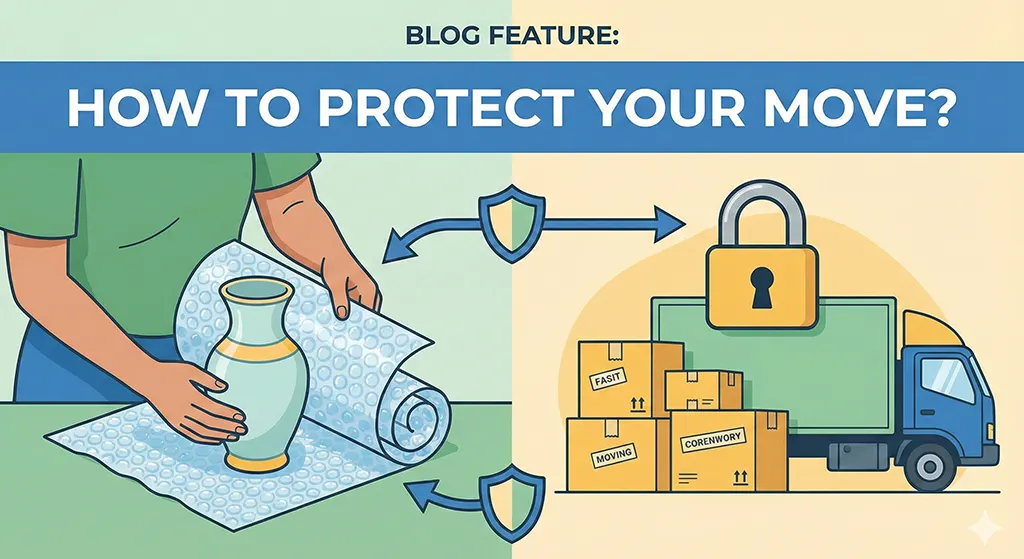
Moving is one of life’s biggest transitions, and while it’s exciting, it also comes with risks. Damaged furniture, broken valuables, lost boxes, or unexpected delays can turn a smooth move into a stressful experience. That’s why knowing how to protect your move is essential.
Protecting your move means safeguarding your belongings, your home, your time, and even yourself from unnecessary stress or injury. Whether you’re moving locally or long-distance, proper preparation makes all the difference.
This guide walks you through step-by-step strategies to protect your move from start to finish.
11 Steps on How to Protect Your Move!
Plan Early to Protect Your Move
The biggest mistake people make is waiting until the last minute. Early planning reduces risk.
Why planning matters:
- Prevents rushed packing
- Reduces accidental damage
- Helps avoid moving day chaos
- Gives time to address special items
Create a moving checklist at least 6–8 weeks before moving day. This allows you to organize packing, schedule help, and identify fragile or high-value items that need extra care.
Use the Right Packing Materials
Using improper materials is one of the leading causes of moving damage.
Essential packing supplies:
- Sturdy cardboard boxes
- Heavy-duty packing tape
- Bubble wrap and packing paper
- Furniture blankets
- Plastic wrap for drawers and upholstery
Avoid reused boxes that are weak or damaged. Strong boxes protect contents and stack safely during transport.
Pack Smart, Not Fast
Packing correctly is one of the most important ways to protect your move.
Smart packing tips:
- Never overfill boxes
- Keep heavy items in small boxes
- Cushion fragile items generously
- Fill empty spaces to prevent shifting
- Seal boxes securely on all seams
Label each box clearly with its contents and destination room. Mark fragile boxes boldly so they receive proper handling.
Protect Furniture and Large Items
Furniture is often the most expensive and hardest-to-replace part of your move.
How to protect furniture:
- Disassemble when possible
- Wrap with moving blankets
- Secure loose parts in labeled bags
- Use corner protectors for sharp edges
- Cover upholstery with plastic wrap
Mattresses should be placed in protective covers to prevent dirt, moisture, and tearing during transit.
Safeguard Fragile and Valuable Items
Items like glassware, electronics, artwork, and antiques require special attention.
Protection strategies:
- Use specialty boxes for dishes and TVs
- Wrap items individually
- Pack fragile items vertically
- Avoid stacking heavy items on top
- Keep valuables with you if possible
For irreplaceable items such as documents, jewelry, or sentimental belongings, transporting them personally adds an extra layer of security.
Protect Your Old and New Home
Protecting your move also means protecting the properties involved.
Prevent property damage by:
- Using floor runners or cardboard paths
- Padding door frames and railings
- Removing doors if necessary
- Covering stair railings
- Protecting walls in tight hallways
Taking these steps prevents scratches, dents, and costly repairs after the move.
Protect Yourself and Helpers
Moving injuries are common, especially when lifting improperly.
Safety tips:
- Lift with your legs, not your back
- Wear closed-toe shoes with grip
- Use gloves for better handling
- Don’t rush or overload yourself
- Use dollies for heavy items
If an item feels too heavy, get help. Injuries can delay your move and create long-term issues.
Understand Moving Coverage and Liability
Even with perfect planning, accidents can happen. Knowing your coverage options is key.
Common protection options:
- Basic moving liability
- Declared value coverage
- Full value protection
Understanding what level of protection you have helps you avoid surprises if damage occurs.
Create an Inventory List
An inventory is a simple but powerful way to protect your move.
Benefits of an inventory:
- Tracks every item being moved
- Helps confirm delivery accuracy
- Supports damage or loss claims
- Keeps packing organized
Number your boxes and record what’s inside each one for quick reference during unpacking.
Protect Your Schedule
Delays cost time and money. Protect your timeline by planning buffer time.
Time-saving tips:
- Confirm moving dates early
- Pack essentials separately
- Prepare an overnight bag
- Keep tools and paperwork accessible
- Avoid scheduling conflicts
Having essentials on hand ensures comfort even if unpacking takes longer than expected.
Pack an Essentials Box
An essentials box protects your comfort during the first 24–48 hours.
Include:
- Toiletries
- Medications
- Phone chargers
- Important documents
- Basic kitchen items
- Change of clothes
This box should travel with you, not in the moving truck.
Final Thoughts
Protecting your move is about preparation, awareness, and smart choices. By planning ahead, packing properly, protecting your furniture and homes, and prioritizing safety, you greatly reduce the risk of damage, stress, and unexpected costs.
A protected move isn’t just safer — it’s smoother, faster, and far more enjoyable. With the right approach, your belongings arrive safely, your home stays intact, and you can focus on settling into your new space with peace of mind.
Categories
- Moving Abroad & International Relocation162
- Moving Tips & How To Guides120
- Moving Tips & Specialty Moving40
- Moving Tips & How-To Guides34
- Car Shipping & Auto Transport25
- Moving Tips & Cost Guides11
- Moving Tips & Relocation Advice5
- Moving Tips & How-To Guides5
- Specialty Moving & Cost Guides4
- Relocation & Cost of Living Guides4
- Long-Distance Moving Guides3
- Moving Guides & Lifestyle3
- Moving Cost Guides3
- Moving Costs & Rental Guides3
- International Moving & Expat Living2
- Moving Tips & How-To Guides2
- Moving Costs & Planning2
- Cost of Living & Moving Insights2
- Moving Tips & Packing Guides2
- Moving Tips & Guides2
- Car Shipping & Moving Guides1
- International Moving Guides1
- Long-Distance Moving & Relocation Guides1
- Moving Costs & Junk Removal Guides1
- Moving Cost Guides & Tips1
- Home Décor & Bedroom Setup1
- Moving Costs & Pricing Guides1
- Moving Tips & Money-Saving Guides1
- Packing Tips & Moving Preparation1
- Moving Tips & Consumer Awareness1


 Chat with us on WhatsApp!


 BBB A+ Rated
 Great! We serve your area
 Licensed & Insured
 Takes 60 seconds

 Discount expires in
 Limited Time: Only 3 premium movers available in your area


 Your information is 100% secure