


 Local Movers
 Last-Minute Movers
 Junk Removal
 Long Distance Movers
 Piano Movers
 Heavy Equipment
 Commercial Movers
 Moving Container
 Car Transportation
 Furniture Movers
 Truck Rental
 Moving Cost Calculator
 Moving Planner
 Packing Calculator
 Moving Checklist
 Moving Insurance
 FAQ
FAQ Contact Us
 Moving Loan
 Privacy Policy
 Join Our Network
 About Us
How to Fold a Box for Moving? Step-by-Step Packing Guide


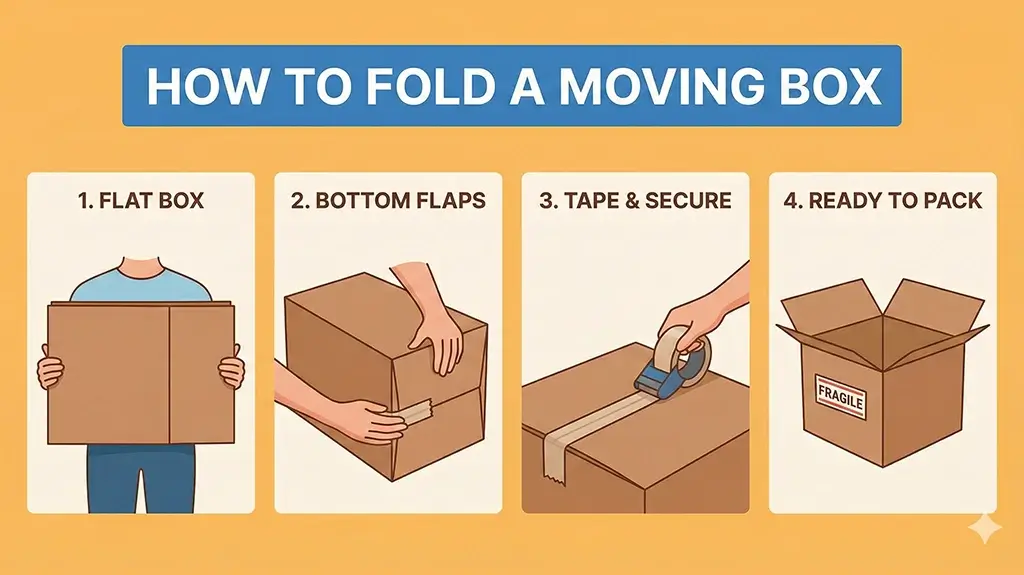
Properly folding a moving box may seem simple, but doing it incorrectly can lead to broken boxes, damaged items, and wasted time on moving day. A well-assembled box provides stability, keeps items secure, and makes stacking much easier during transport.
Whether you’re packing books, kitchenware, or household items, following the correct folding process ensures your boxes hold up throughout the move.
Lets go with a quick guide on how to fold a box for moving.
What You Need Before Folding a Box?
Before you begin, gather the following:
- Flat cardboard moving box
- Strong packing tape
- Tape dispenser
- Flat surface (floor or table)
Using high-quality boxes and tape makes a noticeable difference in durability.
Step-by-Step: How to Fold a Moving Box
Step 1: Lay the Box Flat
Place the flattened box on the floor with the printed side facing down. This ensures the cleaner side will be on the inside once folded.
Step 2: Identify the Bottom Flaps
Locate the four flaps on one side of the box. Two will be shorter, and two will be longer.
Step 3: Fold the Small Flaps First
Fold the two smaller flaps inward so they meet in the center. These act as the base support.
Step 4: Fold the Large Flaps Over
Fold the longer flaps over the smaller ones, overlapping them fully to create a flat, strong bottom.
Step 5: Tape the Bottom Securely
Apply tape along the center seam and add two strips across the edges in an “H” pattern. This reinforces the box and prevents splitting.
👉 Pro Tip: Always tape the bottom before placing anything inside, and always check moving box calculator before moving anything.
Correct Way to Fill the Box
Once folded:
- Place heavier items at the bottom
- Fill empty spaces to avoid shifting
- Keep weight under 40–50 lbs
- Avoid bulging sides
Overloading boxes is one of the most common causes of breakage.
Common Box Folding Mistakes to Avoid
- Skipping tape reinforcement
- Folding flaps in the wrong order
- Using damaged or wet boxes
- Overfilling heavy items
- Using weak or old tape
Avoiding these mistakes helps prevent box collapse during lifting or stacking.
Different Box Sizes & Folding Tips
Small Boxes
Best for books and dense items. Reinforce corners well.
Medium Boxes
Ideal for kitchen items and toys. Balance weight evenly.
Large Boxes
Use only for lightweight items like pillows or linens.
Why Proper Box Folding Matters During Moving?
Correctly folded boxes:
- Stack evenly in moving trucks
- Reduce risk of damage
- Make lifting safer for movers
- Save time during loading and unloading
Professional movers rely on sturdy boxes to prevent shifting while in transit.
Final Thoughts
Knowing how to fold a box for moving is a small skill that makes a big difference. Proper folding and taping improve safety, protect your belongings, and make your move more organized and stress-free.
Spending a few extra minutes assembling boxes correctly can save hours of frustration later.
Categories
- Moving Abroad & International Relocation161
- Moving Tips & How To Guides120
- Moving Tips & Specialty Moving40
- Moving Tips & How-To Guides34
- Car Shipping & Auto Transport25
- Moving Tips & Cost Guides11
- Moving Tips & Relocation Advice5
- Moving Tips & How-To Guides5
- Specialty Moving & Cost Guides4
- Relocation & Cost of Living Guides4
- Long-Distance Moving Guides3
- Moving Guides & Lifestyle3
- Moving Cost Guides3
- Moving Costs & Rental Guides3
- International Moving & Expat Living2
- Moving Tips & How-To Guides2
- Moving Costs & Planning2
- Cost of Living & Moving Insights2
- Moving Tips & Packing Guides2
- Moving Tips & Guides2
- Car Shipping & Moving Guides1
- International Moving Guides1
- Long-Distance Moving & Relocation Guides1
- Moving Costs & Junk Removal Guides1
- Moving Cost Guides & Tips1
- Home Décor & Bedroom Setup1
- Moving Costs & Pricing Guides1
- Moving Tips & Money-Saving Guides1
- Packing Tips & Moving Preparation1
- Moving Tips & Consumer Awareness1



 Chat with us on WhatsApp!


 BBB A+ Rated
 Great! We serve your area
 Licensed & Insured
 Takes 60 seconds

 Discount expires in
 Limited Time: Only 3 premium movers available in your area


 Your information is 100% secure