


 Local Movers
 Last-Minute Movers
 Junk Removal
 Long Distance Movers
 Piano Movers
 Heavy Equipment
 Commercial Movers
 Moving Container
 Car Transportation
 Furniture Movers
 Truck Rental
 Moving Cost Calculator
 Moving Planner
 Packing Calculator
 Moving Checklist
 Moving Insurance
 FAQ
FAQ Contact Us
 Moving Loan
 Privacy Policy
 Join Our Network
 About Us
How Much More Is the Average Cost of Utilities for a Home Compared to an Apartment?


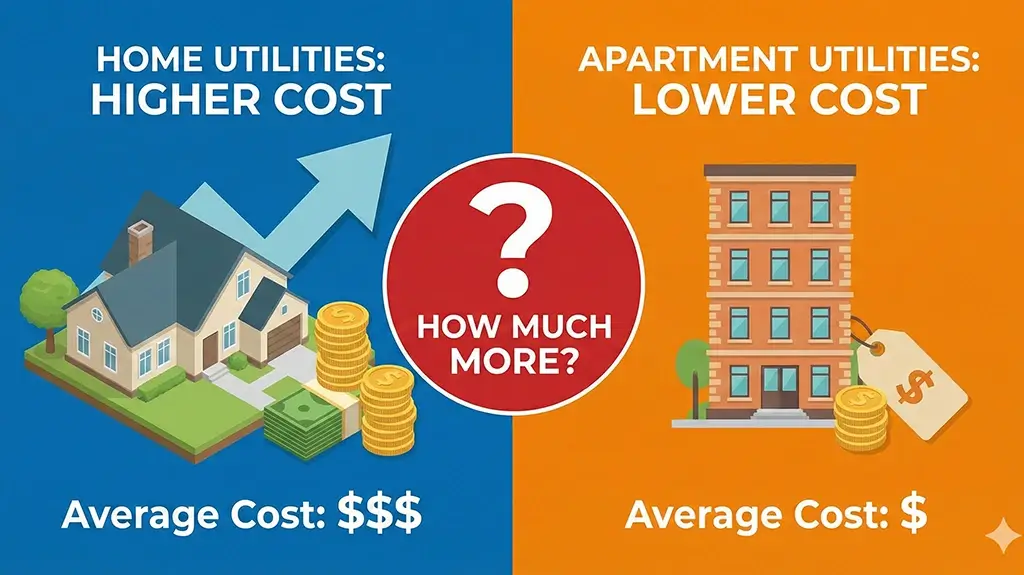
When choosing between renting an apartment or buying a home, utility costs are often overlooked—but they can significantly impact your monthly budget. Homes typically have larger square footage, more rooms to heat or cool, and additional maintenance needs, which naturally increases utility expenses.
Below is a detailed breakdown to help you understand how utility costs differ between apartments and houses.
How Much More Is the Average Cost of Utilities for a Home Compared to an Apartment (Apartment Vs House)
|
Utility Type |
Apartment (Avg/Month) |
House (Avg/Month) |
|
Electricity |
$90 – $140 |
$150 – $250 |
|
Natural Gas |
$30 – $60 |
$60 – $120 |
|
Water & Sewer |
$30 – $50 |
$60 – $100 |
|
Trash |
Often Included |
$20 – $40 |
|
Internet |
$60 – $90 |
$70 – $110 |
|
Total Average |
$210 – $340 |
$360 – $570 |
On average, a house costs $150–$250 more per month in utilities than an apartment.
Why Homes Cost More to Power Than Apartments
1. Larger Square Footage
Houses are usually two to three times larger than apartments, requiring more energy to heat, cool, and light.
2. Less Shared Infrastructure
Apartments benefit from shared walls that help retain heat or cool air. Single-family homes lose more energy.
3. Yard & Exterior Maintenance
Outdoor lighting, irrigation systems, garages, and exterior outlets add extra electricity and water usage.
4. Older Utility Systems
Many houses—especially older ones—have outdated HVAC systems and insulation, leading to higher bills.
Utility Cost Breakdown by Category
Electricity
Air conditioning, heating, and appliance usage drive most electric costs. Homes with multiple floors or poor insulation see the biggest increase.
Water & Sewer
Lawn care, dishwashers, laundry machines, and outdoor hoses raise water usage significantly in houses.
Gas
Used mainly for heating, water heaters, and stoves. Larger homes require more energy to maintain consistent temperatures.
Internet & Cable
Costs are similar, but homeowners often pay for faster plans due to larger spaces and multiple devices.
How to Reduce Utility Costs in a Home
- Upgrade to energy-efficient appliances
- Install a smart thermostat
- Seal windows and doors
- Use LED lighting throughout the home
- Limit outdoor water usage
- Schedule HVAC maintenance yearly
These small steps can reduce utility bills by 10–25%.
Apartment vs Home: Which Is More Cost-Effective?
Apartments are typically more affordable month-to-month, especially for singles or small households. Homes, while more expensive to maintain, offer space, privacy, and long-term value.
Best for apartments:
- Lower upfront costs
- Predictable utility bills
- Minimal maintenance
Best for homes:
- Families or long-term residents
- Customizable living space
- Investment potential
Final Thoughts
If you’re deciding between an apartment and a house, expect to pay $1,800–$3,000 more per year in utilities for a typical single-family home. Understanding these costs helps you plan your budget accurately and avoid surprises after moving.
Categories
- Moving Abroad & International Relocation161
- Moving Tips & How To Guides120
- Moving Tips & Specialty Moving40
- Moving Tips & How-To Guides34
- Car Shipping & Auto Transport25
- Moving Tips & Cost Guides11
- Moving Tips & Relocation Advice5
- Moving Tips & How-To Guides5
- Specialty Moving & Cost Guides4
- Relocation & Cost of Living Guides4
- Long-Distance Moving Guides3
- Moving Guides & Lifestyle3
- Moving Cost Guides3
- Moving Costs & Rental Guides3
- International Moving & Expat Living2
- Moving Tips & How-To Guides2
- Moving Costs & Planning2
- Cost of Living & Moving Insights2
- Moving Tips & Packing Guides2
- Moving Tips & Guides2
- Car Shipping & Moving Guides1
- International Moving Guides1
- Long-Distance Moving & Relocation Guides1
- Moving Costs & Junk Removal Guides1
- Moving Cost Guides & Tips1
- Home Décor & Bedroom Setup1
- Moving Costs & Pricing Guides1
- Moving Tips & Money-Saving Guides1
- Packing Tips & Moving Preparation1
- Moving Tips & Consumer Awareness1




 Chat with us on WhatsApp!


 BBB A+ Rated
 Great! We serve your area
 Licensed & Insured
 Takes 60 seconds

 Discount expires in
 Limited Time: Only 3 premium movers available in your area


 Your information is 100% secure