


 Local Movers
 Last-Minute Movers
 Junk Removal
 Long Distance Movers
 Piano Movers
 Heavy Equipment
 Commercial Movers
 Moving Container
 Car Transportation
 Furniture Movers
 Truck Rental
 Moving Cost Calculator
 Moving Planner
 Packing Calculator
 Moving Checklist
 Moving Insurance
 FAQ
FAQ Contact Us
 Moving Loan
 Privacy Policy
 Join Our Network
 About Us
How Do You Move a Tiny House?


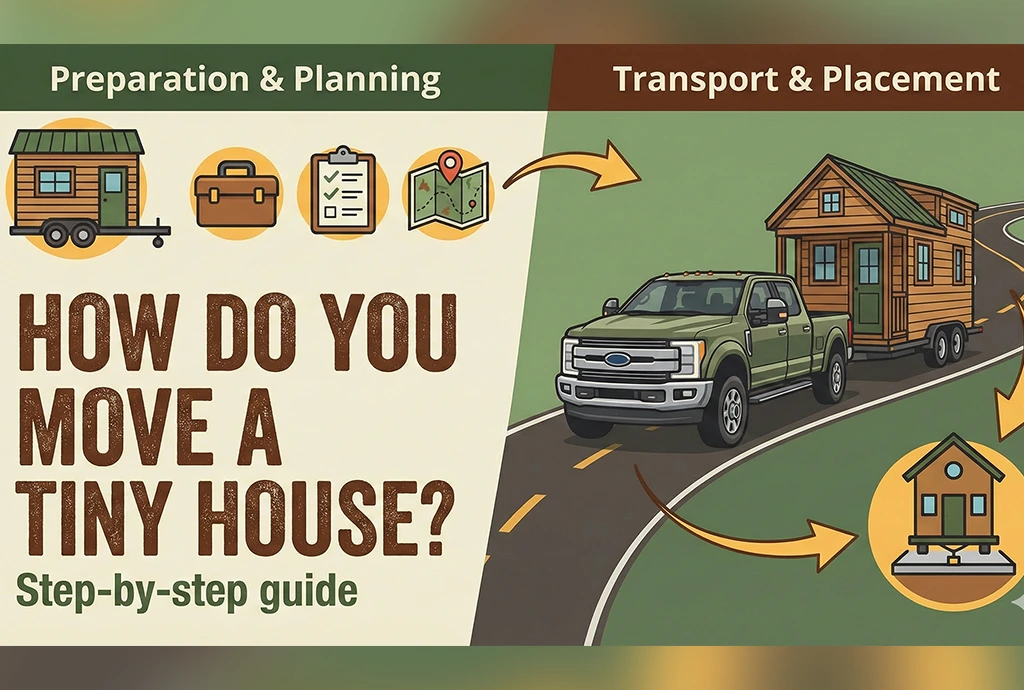
Moving a tiny house is not the same as moving a traditional home. Whether your tiny house is on wheels (THOW), built on a trailer, or stationary and needs lifting, the process requires planning, permits, logistics, and the right equipment. Tiny homes are compact—but extremely heavy—so relocating one safely takes expertise.
This guide explains how do you move a tiny house, including costs, steps, requirements, safety rules, and how professionals help.
What Is Tiny House Moving?
Tiny house moving refers to relocating a small home (typically 10,000–25,000 lbs.) either locally or long-distance using a tow vehicle, heavy-duty trailer, or professional tiny home hauler. It involves:
- Securing permits
- Assessing structural stability
- Preparing utilities
- Loading and transporting the home
- Unloading and leveling it at the new site
Although tiny homes are compact, they require careful planning and skilled transport.
Is It Hard to Move a Tiny House?
Yes—tiny home relocation is complex because of:
- Weight and width restrictions
- State transportation laws
- Risk of structural damage
- Need for professional towing
- Road safety regulations
Attempting a DIY move is dangerous unless you have the right towing experience.
How do You Move a Tiny House: Step-by-Step Guide
1. Conduct a Structural Evaluation
Before anything moves, check:
- Trailer condition
- Tires and axles
- Frame strength
- Roof height compliance
- Attachment screws, bolts, anchors
A structural inspection prevents damage from road vibrations or wind pressure.
2. Measure the Height, Width & Weight
Every state has transport limits. Typically:
- Max height: 13.5 ft
- Max width: 8.5 ft
- Max weight: 16,000–24,000 lbs (varies by trailer)
Oversized tiny homes require escorts and special permits.
3. Get Necessary Moving Permits
For interstate moves, you may need:
- Oversize load permits
- Highway route permits
- Pilot/escort car permits
- Temporary license tags
Skipping permits leads to fines or denied highway access.
4. Disconnect All Utilities
This includes:
- Water lines
- Electrical hookups
- Sewer connections
- Propane tanks
- Solar panels
- AC units
Everything must be safely capped or stabilized.
5. Secure the Interior
Inside the tiny house:
- Remove or secure loose items
- Strap cabinets and drawers
- Take down decor and shelves
- Use foam padding and moving blankets
- Protect windows and glass
- Lock doors and roof hatches
Tiny houses can shake heavily during transport—interiors must be tightly secured.
6. Prepare the Exterior
On the outside:
- Remove exterior accessories
- Retract awnings
- Secure the skirting
- Brace siding if necessary
- Inspect trailer hitch and chains
Wind force during travel can cause damage if unsecured.
7. Choose the Right Transport Method
A. Tow Yourself (Only if Highly Experienced)
You need:
- A heavy-duty truck (20,000+ tow capacity)
- Trailer brakes
- Tow mirrors
- Insurance
- Moving permits
Not recommended for long-distance moves.
B. Hire a Professional Tiny Home Mover (Recommended)
Professional movers provide:
- Route planning
- Permits
- Pilot cars
- Equipment
- Insurance
- Safety inspections
This is the safest option for expensive tiny homes.
8. Load and Transport the Tiny House
Once hitched, the house is slowly driven along the pre-approved route. Pilot cars may lead or follow depending on width.
Long-distance tiny home movers use:
- Lowboy trailers
- Gooseneck trailers
- Hydraulic lift trailers
Transport speed typically stays under 55 mph to avoid wind damage.
9. Offload and Level the Tiny House
At the destination, movers will:
- Park the house in the planned location
- Level it on blocks, jacks, or a foundation
- Reconnect utilities
- Reassemble external features
Leveling is essential to prevent plumbing and structural problems.
How Much Does It Cost to Move a Tiny House?
Local Moves (Under 50 Miles)
$500 – $2,000
Factors: towing equipment, labor, permits
Long-Distance Moves (50–500+ Miles)
$2,000 – $8,000+
Oversized or Heavy Tiny Homes
$6,000 – $15,000+
Additional Fees
- Escort vehicle: $150–$300 per vehicle
- Permits: $50–$600
- Road/bridge tolls: varies
- Utility disconnection: $100–$500
- Site prep: $200–$1,000
Weight and width strongly influence pricing.
Can Any Mover Relocate a Tiny House?
No — not every moving company is qualified to relocate a tiny house. Tiny homes have unique structural and transportation requirements that make them more complex than standard household moves. Specialized tiny home movers understand how to handle structural vulnerabilities, manage weight distribution, and secure the home safely for long-distance travel.
They are also trained in highway regulations related to oversized loads, trailer safety standards, and the insurance requirements needed to legally transport a home on wheels. A regular moving company typically lacks the equipment, permits, and expertise to move a tiny house safely, which is why hiring a certified tiny home mover is essential.
How VanLinesMove Helps with Tiny House Relocation?
VanLinesMove connects customers with professional, certified tiny house movers across the country who specialize in every aspect of tiny home transportation. These experts are equipped to manage heavy-duty towing, secure transport, and complex logistics such as permits, pilot car coordination, and detailed route planning to avoid low bridges or restricted roads. They also provide proper insurance coverage to ensure the home is protected during the move, whether it’s across the state or across the country.
What makes VanLinesMove a trusted choice is the complete, end-to-end support they offer throughout the relocation process. Customers receive free quotes from licensed tiny house movers who are experienced in transporting oversized loads and handling homes weighing up to 25,000 lbs. The service includes help with documentation, affordable long-distance moving solutions, and continuous assistance until the tiny home safely reaches its destination. With VanLinesMove, homeowners get a reliable, safe, and stress-free way to relocate their tiny house.
Whether you're moving across town or across states, we find the right mover for your tiny home.
Conclusion
Tiny houses are small but complex to relocate. Moving one requires the right planning, equipment, permits, and expertise. Whether you're upgrading your lifestyle, relocating for work, or seeking fresh scenery, hiring a professional tiny house mover ensures a safe and stress-free move.
With VanLinesMove, you can connect with trusted tiny home movers offering safe transport, transparent pricing, and nationwide coverage.
FAQs: How Do You Move a Tiny House?
1. Can you move a tiny house by yourself?
Yes, but only if you have the right truck, tow capacity, and permits. Most homeowners hire professionals for safety.
2. How fast can you drive with a tiny house?
Typically 45–55 mph to protect the structure from wind damage.
3. What size truck do you need to tow a tiny house?
A heavy-duty truck (F-350, RAM 3500, Silverado 3500) with a towing capacity of 20,000 lbs or more.
4. Do tiny houses need moving permits?
Yes—oversized homes require state-issued transport permits and often escort vehicles.
5. Can a tiny house be shipped instead of towed?
Yes, movers can load it onto a flatbed or lowboy trailer for long-distance or cross-country moves.
6. How far can you move a tiny house?
Anywhere in the U.S., depending on permits and route approval.
7. How much does it cost to move a tiny house long-distance?
Between $2,000 and $15,000 depending on distance, weight, and oversized requirements.
Categories
- Long Distance Moving159
- Local Moving120
- Commercial Moving40
- Residential Moving34
- Last – Minute Moving25
- Furniture Moving11
- Moving Tips & Lifestyle11
- Moving Tips & How-To Guides8
- Moving services7
- Moving Costs & Budgeting6
- Moving Cost5
- Moving Cost Calculator5
- Moving Tips5
- Moving Guides5
- moving tips4
- Moving companies4
- state to state movers4
- Piano Moving3
- Car Transportation3
- Truck Rental3
- Moving Container3
- Local Move3
- best moving rates3
- cheap moving companies3
- affordable moving companies3
- full-service movers3
- Moving3
- Long distance moving3
- Long-Distance Moving3
- Moving Cost Guides3
- Moving Tips & Planning3
- long distance moving3
- Junk Removal2
- Senior Moving2
- Senior Relocation Moving Companies2
- Moving Tools2
- Moving Estimates2
- interstate moving2
- College Moving2
- Dorm Moving2
- Tips for moving2
- cross-country move2
- International moving2
- Household moving2
- Relocation Guide2
- Moving Tips & State Guides2
- Heavy Equipment1
- Senior Moving Services1
- office moving1
- office relocation1
- employee relocation1
- Car Transport1
- Vehicle Shipping1
- Car Shipping Services1
- Artificial Intelligence1
- Office Moving Services1
- Commercial Moving Companies1
- Corporate Moving Services1
- Corporate Movers1
- full-service moving companies1
- sustainable moving companies1
- green movers1
- Moving in US1
- Best places to move in 20251
- 2025 moving1
- Full-Service Moving Companies1
- College moving services1
- Moving to College1
- Moving Season1
- Spring Moving1
- donate1
- sell1
- Movers in California1
- Movers in Studio City1
- Moving to California1
- Laws about Moving into California1
- Moving Laws1
- House moving1
- packing1
- cheap moving ways1
- Moving guide1
- moving across countries1
- international relocation program1
- move out cleaning1
- right packing supplies1
- pack while moving1
- Apartment moving1
- PODS1
- moving out1
- state to state move1
- California movers1
- Truck Rental1
- US Territory Relocation1
- International Moving1
- Shipping & Moving Tips1
- Moving Budget Guide1
- Moving Tools & Equipment Guides1
- Moving Services & Options1
- Moving Tips & How-To Guides1
- Moving Day & Settling In1
- Mobile Home Moving1
- Moving Guide & Tips1
- Moving Tips & State Comparisons1
- Moving Tips & City Guides1
- Moving Tips & Cost Guides1
- Long-Distance Moving Tips1
- Moving Tips & Financial Planning1
- Moving Tips & Home Preparation1
- Vehicle Shipping & Auto Transport1
- Marketing & Lead Generation1
- International Moving Guides1
- Moving Costs1
- San Francisco Moving Guide1
- NYC Moving1
- Local Movers1
- Budget Moving1
- Student Moving1
- Affordable Moving1
- Specialty Moving Guides1
- Local & Long-Distance Moving1
- Boston Moving Guide1
- Europe Relocation Guide1
- Moving Costs & Specialty Moving1
- Cost of Living1
- Relocation1
- International Moving1
- Lifestyle & Relocation1
- State Guides1
- Home Buying Guide1
- Moving Timeline1
- Real Estate Tips1
- Appliance Moving1
- Packing & Preparation1
- Interstate Relocation1
- City-to-City Moving Guide1
- Technology for Movers1
- Moving Reviews1
- Moving Costs & Storage1
- Moving Tips & Equipment Guides1
- Moving Guides & Cost Insights1
- Moving Supplies1
- Packing Tips1
- Home Moving1
- Relocation Tips1
- State Moving Guides1
- New Home Guide1
- Relocation Advice1



 Chat with us on WhatsApp!


 BBB A+ Rated
 Great! We serve your area
 Licensed & Insured
 Takes 60 seconds

 Discount expires in
 Limited Time: Only 3 premium movers available in your area


 Your information is 100% secure