


 Local Movers
 Last-Minute Movers
 Junk Removal
 Long Distance Movers
 Piano Movers
 Heavy Equipment
 Commercial Movers
 Moving Container
 Car Transportation
 Furniture Movers
 Truck Rental
 Moving Cost Calculator
 Moving Planner
 Packing Calculator
 Moving Checklist
 Moving Insurance
 FAQ
FAQ Contact Us
 Moving Loan
 Privacy Policy
 Join Our Network
 About Us
How to Move a Safe Without Injury or Damage


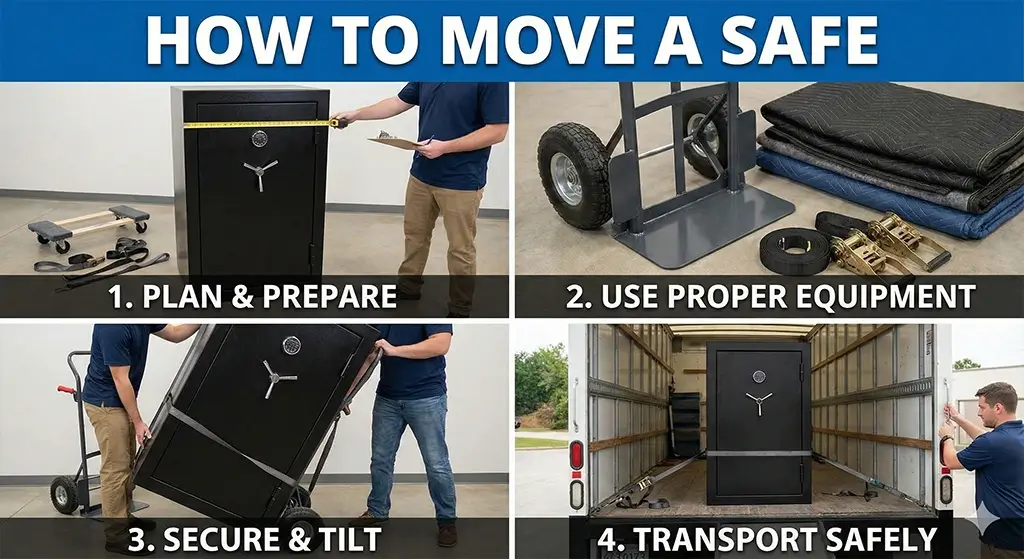
Safes are designed to be heavy, solid, and difficult to move—which is exactly why relocating one can be dangerous without proper planning. Whether it’s a gun safe, fireproof safe, or office vault, improper handling can lead to serious injuries, damaged floors, or broken staircases.
This guide covers everything you need to know about how to move a safe safely and efficiently.
How to Move a Safe Without Injury or Damage?
Understand the Weight and Size of the Safe
Before attempting to move a safe, you must know what you’re dealing with.
Typical safe weights:
- Small home safe: 100–300 lbs
- Medium gun safe: 300–700 lbs
- Large gun or fireproof safe: 700–1,500+ lbs
The larger the safe, the higher the risk. Anything over 300 pounds should be approached with extreme caution.
Decide Whether DIY Is Realistic
Not all safes should be moved without professional help.
DIY may be possible if:
- The safe weighs under 300 lbs
- You have multiple helpers
- There are no stairs
- You have proper equipment
Professional movers are recommended if:
- The safe exceeds 400 lbs
- Stairs or tight hallways are involved
- The safe is upstairs or in a basement
- Floor damage is a concern
Van Lines Move specializes in heavy-item transport and uses equipment designed specifically for safes.
Gather Proper Moving Equipment
Never attempt to move a safe using household tools.
Essential equipment includes:
- Heavy-duty appliance dolly
- Ratchet straps or moving straps
- Furniture blankets or padding
- Plywood sheets for floor protection
- Steel-toe shoes and work gloves
Using the right equipment significantly reduces the risk of injury.
Prepare the Safe for Moving
Before lifting or rolling:
- Empty the safe completely
- Remove shelves and drawers
- Lock the door securely
- Wrap the safe with padding
- Tape padding tightly to prevent slipping
Never move a safe with loose items inside—it increases weight and internal damage risk.
Protect Floors, Walls, and Doorways
Safes can crack tiles, dent hardwood, and damage door frames.
Protection tips:
- Lay plywood over floors
- Use corner guards on walls
- Measure doorways and hallways in advance
- Remove doors if necessary
Planning the exit path ahead of time prevents costly repairs.
Use Correct Lifting and Moving Techniques
Safes should never be lifted manually unless extremely small.
Best practices:
- Tilt the safe slightly to slide the dolly underneath
- Secure it tightly with straps
- Keep the safe upright at all times
- Move slowly and communicate clearly with helpers
Never rush—controlled movement is critical.
Moving a Safe Up or Down Stairs
This is the most dangerous part of the process.
If stairs are involved:
- Use stair-climbing dollies
- Have one person guiding from below
- Never stand downhill from the safe
- Move one step at a time
If the safe weighs over 400 lbs, professional movers are strongly recommended.
Loading the Safe Into a Truck
When loading:
- Use a ramp rated for heavy loads
- Keep the safe against a wall
- Strap it tightly to prevent shifting
- Place weight-bearing items around it
Improper loading can cause the safe to tip during transport.
Positioning the Safe in the New Location
Once delivered:
- Confirm floor weight capacity
- Avoid placing on weak flooring
- Level the safe properly
- Remove padding carefully
Take your time—placing a safe incorrectly can cause long-term structural damage.
Common Mistakes to Avoid
- Underestimating the weight
- Using weak dollies
- Skipping floor protection
- Attempting stairs without equipment
- Relying on too few helpers
Most injuries occur due to overconfidence and poor preparation.
Why Professional Movers Are Often the Best Choice?
Professional movers like Van Lines Move use:
- Industrial-grade dollies
- Stair systems
- Trained crews
- Damage-prevention techniques
Hiring experts often costs less than repairing floors, walls, or medical bills.
Final Thoughts
Moving a safe is not a standard moving task—it requires strength, planning, and specialized tools. For smaller safes, careful DIY methods may work, but larger safes should always be handled by professionals.
With proper preparation and expert assistance from Van Lines Move, your safe can be relocated securely without injury or property damage.
Categories
- Moving Abroad & International Relocation161
- Moving Tips & How To Guides120
- Moving Tips & Specialty Moving40
- Moving Tips & How-To Guides34
- Car Shipping & Auto Transport25
- Moving Tips & Cost Guides11
- Moving Tips & Relocation Advice5
- Moving Tips & How-To Guides5
- Specialty Moving & Cost Guides4
- Relocation & Cost of Living Guides4
- Long-Distance Moving Guides3
- Moving Guides & Lifestyle3
- Moving Cost Guides3
- Moving Costs & Rental Guides3
- International Moving & Expat Living2
- Moving Tips & How-To Guides2
- Moving Costs & Planning2
- Cost of Living & Moving Insights2
- Moving Tips & Packing Guides2
- Moving Tips & Guides2
- Car Shipping & Moving Guides1
- International Moving Guides1
- Long-Distance Moving & Relocation Guides1
- Moving Costs & Junk Removal Guides1
- Moving Cost Guides & Tips1
- Home Décor & Bedroom Setup1
- Moving Costs & Pricing Guides1
- Moving Tips & Money-Saving Guides1
- Packing Tips & Moving Preparation1
- Moving Tips & Consumer Awareness1



 Chat with us on WhatsApp!


 BBB A+ Rated
 Great! We serve your area
 Licensed & Insured
 Takes 60 seconds

 Discount expires in
 Limited Time: Only 3 premium movers available in your area


 Your information is 100% secure