


 Local Movers
 Last-Minute Movers
 Junk Removal
 Long Distance Movers
 Piano Movers
 Heavy Equipment
 Commercial Movers
 Moving Container
 Car Transportation
 Furniture Movers
 Truck Rental
 Moving Cost Calculator
 Moving Planner
 Packing Calculator
 Moving Checklist
 Moving Insurance
 FAQ
FAQ Contact Us
 Moving Loan
 Privacy Policy
 Join Our Network
 About Us
Plastic Wrap for Moving: The Ultimate Guide to Protecting Your Belongings


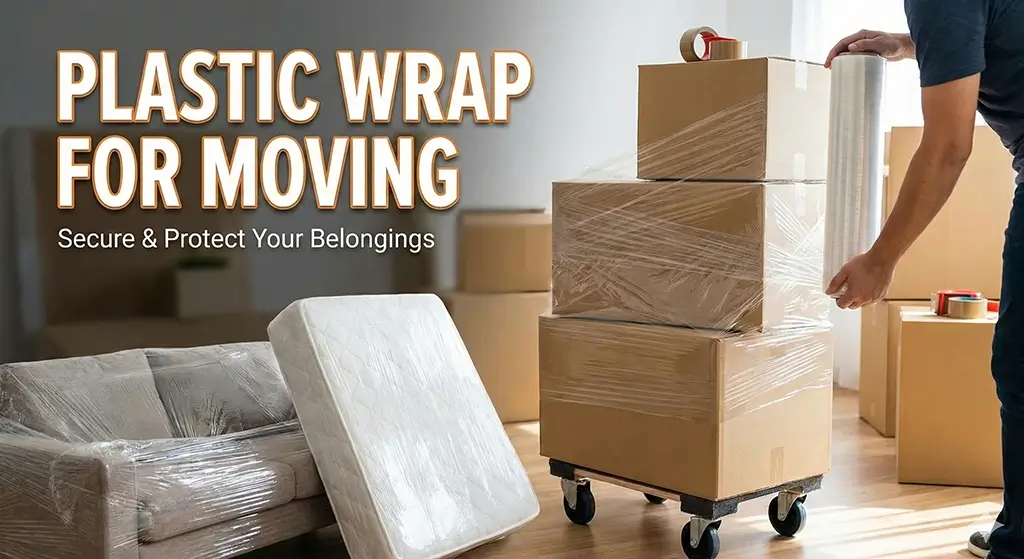
Why Plastic Wrap Is Essential for Moving?
When preparing for a move, most people focus on boxes, tape, and bubble wrap—but plastic wrap, also known as stretch wrap, is one of the most overlooked yet essential packing supplies. Professional movers rely heavily on plastic wrap to secure furniture, protect surfaces, and prevent damage during transport.
Plastic wrap is lightweight, flexible, and incredibly strong. It clings to itself without leaving sticky residue, making it ideal for wrapping furniture, mattresses, drawers, and bundled items. Whether you’re moving locally or long-distance, using plastic wrap correctly can significantly reduce breakage, scratches, and shifting during transit.
In this guide, we’ll explore plastic wrap for moving, what plastic wrap is, how movers use it, what items you should (and shouldn’t) wrap, costs, best practices, and common mistakes to avoid.
What Is Plastic Wrap for Moving?
Plastic wrap for moving is a stretchable polyethylene film designed to tightly secure items without adhesive. Unlike food-grade plastic wrap, moving wrap is thicker, more durable, and designed to withstand tension and movement.
It’s commonly used by professional movers to stabilize loads and protect items from dust, dirt, moisture, and scratches. Because it sticks only to itself, it won’t damage furniture finishes or fabrics when removed.
Moving plastic wrap is available in different widths, thickness levels (measured in gauge), and roll lengths to suit various packing needs.
Types of Plastic Wrap Used for Moving
1. Stretch Wrap (Standard Moving Wrap)
Stretch wrap is the most common type used during moves. It’s flexible, tear-resistant, and ideal for securing furniture, keeping drawers closed, and bundling loose items together.
This type of wrap is widely used by professional movers because it offers strong holding power without damaging surfaces. It works best when combined with moving blankets for added protection.
2. Industrial-Grade Plastic Wrap
Industrial plastic wrap is thicker and stronger than standard stretch wrap. It’s often used for heavy furniture, appliances, and long-distance moves where items face extended transit and vibration.
While more expensive, industrial wrap provides superior durability and is ideal for valuable or bulky items.
3. Shrink Wrap (Less Common for Household Moves)
Shrink wrap requires heat to tighten and is rarely used for residential moves. It’s more common in commercial shipping and palletizing applications.
For household moving, stretch wrap is always preferred.
What Items Can Be Wrapped with Plastic Wrap?
Furniture Protection
Plastic wrap is excellent for wrapping sofas, chairs, tables, and dressers. It prevents scratches, scuffs, and fabric snags during loading and unloading.
Movers often place padding or moving blankets first, then secure everything with plastic wrap to keep the protective layers in place.
Mattresses and Box Springs
Mattresses easily collect dirt and moisture during a move. Plastic wrap creates a barrier that keeps them clean and protected from rain, dust, and accidental spills.
Many movers use mattress bags, but plastic wrap can be a cost-effective alternative for short-distance moves.
Securing Drawers and Doors
Instead of removing drawers from dressers, movers often wrap the entire piece with plastic wrap. This keeps drawers and doors securely closed during transit without using tape that could damage finishes.
Bundling Loose Items
Plastic wrap is perfect for bundling items like brooms, mops, curtain rods, bed slats, and rolled rugs. Bundling reduces clutter and makes items easier to carry and load.
Electronics and Appliances (With Precautions)
Plastic wrap can help secure cords and moving parts on appliances, but electronics should first be wrapped in anti-static materials or padding. Plastic wrap alone should not be used directly on sensitive electronics for long-term storage.
What NOT to Wrap Directly with Plastic Wrap?
Plastic wrap is extremely useful during a move, but it can also cause damage if used incorrectly. One of its biggest drawbacks is that it traps moisture, which can lead to mold, warping, discoloration, or surface damage—especially during long-distance or multi-day moves.
Wrapping certain items directly in plastic wrap without any protective layer can do more harm than good.Wooden furniture should never be wrapped directly with plastic wrap, as trapped moisture can damage finishes, cause swelling, or leave permanent marks.
Artwork, framed pictures, and mirrors are also vulnerable because plastic wrap offers no shock absorption and can press against glass surfaces. Leather furniture is another risky item, as plastic can trap heat and moisture, leading to cracking or discoloration. Electronics should never be wrapped directly in plastic wrap without padding, as condensation can damage internal components.
To avoid damage, always place moving blankets, paper padding, foam sheets, or cardboard between the item and the plastic wrap. The wrap should be used only as a securing layer, not as the first line of protection.
How Professional Movers Use Plastic Wrap?
Professional movers use plastic wrap strategically—as a securing and stabilizing tool, not as a cushioning material. Their goal is to keep protective layers in place and prevent movement during loading, transport, and unloading. This method significantly reduces the risk of scratches, shifting, or accidental damage.
The process usually begins with padding furniture using thick moving blankets or furniture pads. Once the item is fully covered, movers apply plastic wrap around the padded piece to hold everything tightly together. Wrapping is done from the bottom upward to ensure stability and prevent slippage. Movers also pay close attention to corners, edges, and moving parts to make sure nothing is exposed.
By using plastic wrap this way, professionals ensure items stay protected while still allowing for quick, damage-free removal at the destination. The wrap peels off cleanly without leaving residue, making unpacking efficient and safe.
How Much Does Plastic Wrap for Moving Cost?
Plastic wrap for moving is one of the most affordable and cost-effective packing supplies available. It offers excellent value considering how many items it can secure and protect during a move. Prices vary based on thickness, quality, and quantity purchased.
On average, standard stretch wrap costs between $15 and $25 per roll, making it ideal for small to mid-sized moves. Industrial-grade plastic wrap, which is thicker and more durable, typically ranges from $30 to $50 per roll and is often used for heavy furniture or long-distance relocations. For larger moves, bulk packs of 4 to 6 rolls are available and usually cost between $70 and $120, offering better value per roll.
In most cases, one roll is sufficient for a studio or one-bedroom apartment, while larger homes with more furniture may require multiple rolls. Professional movers often include plastic wrap in their packing services, which can save you time and ensure the right amount is used efficiently.
Plastic Wrap vs Bubble Wrap: What’s the Difference?
Bubble wrap provides cushioning and impact protection, while plastic wrap provides stability and containment.
Plastic wrap:
- Secures items
- Prevents shifting
- Protects from dust and moisture
Bubble wrap:
- Cushions fragile items
- Absorbs shock
- Prevents breakage
Professional movers often use both together for maximum protection.
Plastic Wrap for Local vs Long-Distance Moves
Local Moves
For local moves, plastic wrap is often sufficient for furniture protection when combined with blankets. Exposure time is shorter, reducing moisture risks.
Long-Distance Moves
Long-distance moves require extra care. Plastic wrap should always be used over padding, and sensitive items should be fully protected with layered materials to handle vibration and climate changes.
Common Mistakes to Avoid When Using Plastic Wrap
One of the biggest mistakes is wrapping furniture directly without padding. This can trap moisture and damage finishes.
Other mistakes include:
- Using food-grade plastic wrap
- Over-tightening and crushing items
- Leaving wrap on items too long
- Wrapping electronics improperly
Proper technique makes all the difference.
Environmental Considerations
Plastic wrap is single-use and not always recyclable. To reduce waste:
- Use wrap efficiently
- Reuse when possible
- Ask movers about eco-friendly alternatives
- Dispose of plastic responsibly after the move
Some moving companies now offer reusable wrap solutions.
How VanLinesMove Helps with Professional Packing
VanLinesMove connects customers with licensed professional movers who use industry-grade packing materials, including plastic wrap, moving blankets, and custom padding.
Instead of guessing how much wrap you need or risking damage, VanLinesMove ensures your belongings are packed safely and efficiently by trained professionals—saving time, stress, and money.
Conclusion
Plastic wrap is one of the most powerful tools in a successful move when used correctly. It secures furniture, protects surfaces, and keeps belongings organized during transit. While affordable and versatile, it should always be used with proper padding and professional techniques.
Whether you’re moving locally or across the country, understanding how and when to use plastic wrap can make a significant difference in protecting your belongings and reducing moving-day stress.
FAQs: Plastic Wrap for Moving
1. Is plastic wrap good for moving furniture?
Yes, when used with padding, plastic wrap is excellent for securing and protecting furniture during a move.
2. Can plastic wrap damage furniture?
It can if applied directly without padding, as it may trap moisture or cause surface marks.
3. How many rolls of plastic wrap do I need?
Most small moves need 1–2 rolls, while larger homes may need 3–5 rolls depending on furniture volume.
4. Is plastic wrap better than moving blankets?
They serve different purposes. Blankets cushion items, while plastic wrap secures and holds protection in place.
5. Do professional movers bring plastic wrap?
Yes, most professional movers include plastic wrap and padding as part of their packing materials.
Categories
- Long Distance Moving160
- Local Moving120
- Commercial Moving40
- Residential Moving34
- Last – Minute Moving25
- Furniture Moving11
- Moving Tips & Lifestyle11
- Moving Tips & How-To Guides8
- Moving services7
- Moving Costs & Budgeting6
- Moving Cost5
- Moving Cost Calculator5
- Moving Tips5
- Moving Guides5
- Moving Container4
- moving tips4
- Moving companies4
- state to state movers4
- Long distance moving4
- long distance moving4
- Piano Moving3
- Car Transportation3
- Truck Rental3
- Local Move3
- best moving rates3
- cheap moving companies3
- affordable moving companies3
- full-service movers3
- Moving3
- Long-Distance Moving3
- Moving Cost Guides3
- Moving Tips & Planning3
- Junk Removal2
- Senior Moving2
- Senior Relocation Moving Companies2
- Moving Tools2
- Moving Estimates2
- interstate moving2
- College Moving2
- Dorm Moving2
- Tips for moving2
- cross-country move2
- International moving2
- Household moving2
- Relocation Guide2
- Moving Tips & State Guides2
- Heavy Equipment1
- Senior Moving Services1
- office moving1
- office relocation1
- employee relocation1
- Car Transport1
- Vehicle Shipping1
- Car Shipping Services1
- Artificial Intelligence1
- Office Moving Services1
- Commercial Moving Companies1
- Corporate Moving Services1
- Corporate Movers1
- full-service moving companies1
- sustainable moving companies1
- green movers1
- Moving in US1
- Best places to move in 20251
- 2025 moving1
- Full-Service Moving Companies1
- College moving services1
- Moving to College1
- Moving Season1
- Spring Moving1
- donate1
- sell1
- Movers in California1
- Movers in Studio City1
- Moving to California1
- Laws about Moving into California1
- Moving Laws1
- House moving1
- packing1
- cheap moving ways1
- Moving guide1
- moving across countries1
- international relocation program1
- move out cleaning1
- right packing supplies1
- pack while moving1
- Apartment moving1
- PODS1
- moving out1
- state to state move1
- California movers1
- Truck Rental1
- US Territory Relocation1
- International Moving1
- Shipping & Moving Tips1
- Moving Budget Guide1
- Moving Tools & Equipment Guides1
- Moving Services & Options1
- Moving Tips & How-To Guides1
- Moving Day & Settling In1
- Mobile Home Moving1
- Moving Guide & Tips1
- Moving Tips & State Comparisons1
- Moving Tips & City Guides1
- Moving Tips & Cost Guides1
- Long-Distance Moving Tips1
- Moving Tips & Financial Planning1
- Moving Tips & Home Preparation1
- Vehicle Shipping & Auto Transport1
- Marketing & Lead Generation1
- International Moving Guides1
- Moving Costs1
- San Francisco Moving Guide1
- NYC Moving1
- Local Movers1
- Budget Moving1
- Student Moving1
- Affordable Moving1
- Specialty Moving Guides1
- Local & Long-Distance Moving1
- Boston Moving Guide1
- Europe Relocation Guide1
- Moving Costs & Specialty Moving1
- Cost of Living1
- Relocation1
- International Moving1
- Lifestyle & Relocation1
- State Guides1
- Home Buying Guide1
- Moving Timeline1
- Real Estate Tips1
- Appliance Moving1
- Packing & Preparation1
- Interstate Relocation1
- City-to-City Moving Guide1
- Technology for Movers1
- Moving Reviews1
- Moving Costs & Storage1
- Moving Tips & Equipment Guides1
- Moving Guides & Cost Insights1
- Moving Supplies1
- Packing Tips1
- Home Moving1
- Relocation Tips1
- State Moving Guides1
- New Home Guide1
- Relocation Advice1


 Chat with us on WhatsApp!


 BBB A+ Rated
 Great! We serve your area
 Licensed & Insured
 Takes 60 seconds

 Discount expires in
 Limited Time: Only 3 premium movers available in your area


 Your information is 100% secure