


 Local Movers
 Last-Minute Movers
 Junk Removal
 Long Distance Movers
 Piano Movers
 Heavy Equipment
 Commercial Movers
 Moving Container
 Car Transportation
 Furniture Movers
 Truck Rental
 Moving Cost Calculator
 Moving Planner
 Packing Calculator
 Moving Checklist
 Moving Insurance
 FAQ
FAQ Contact Us
 Moving Loan
 Privacy Policy
 Join Our Network
 About Us
What Is an Interstate Move? Everything You Need to Know Before Moving Across State Lines


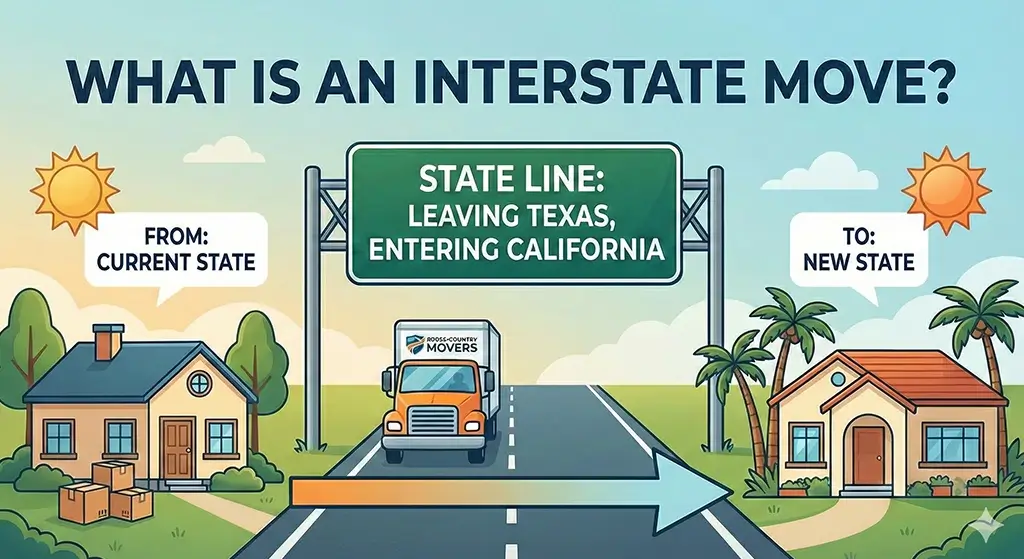
What Is an Interstate Move?
An interstate move is a relocation that crosses state lines, meaning your belongings are transported from one U.S. state to another. Even if the distance is short—such as moving from New Jersey to New York—it is still classified as an interstate move because it crosses a state boundary.
Interstate moves are regulated at the federal level, unlike local or intrastate moves, which are regulated by individual states. Because of this, interstate moving comes with different rules, pricing structures, timelines, and documentation requirements.
Understanding whether your move qualifies as interstate is crucial because it directly affects:
- Pricing models
- Licensing requirements for movers
- Insurance coverage
- Delivery timelines
- Consumer protection rights
What Qualifies as an Interstate Move?
Your move is considered interstate if:
- You are moving from one state to another
- Your shipment crosses state borders, even if pickup and delivery cities are close
- A mover transports your belongings through another state to reach your destination
- You move from the continental U.S. to Alaska or Hawaii
Examples of Interstate Moves
- California → Texas
- Florida → Georgia
- New York → New Jersey
- Illinois → Indiana
Even a 20-mile move can be interstate if it crosses state lines.
Interstate Move vs Intrastate vs Local Move
Understanding the difference helps you choose the right mover and budget correctly.
Local Move
- Typically under 50–100 miles
- Within the same city or nearby cities
- Charged hourly
- Regulated by local or state authorities
Intrastate Move
- Within the same state
- Long distance but no state border crossed
- Regulated by state transportation agencies
- Pricing varies by state rules
Interstate Move
- Crosses state lines
- Regulated by the Federal Motor Carrier Safety Administration (FMCSA)
- Pricing based on weight, distance, and services
- Requires federally licensed movers
Who Regulates Interstate Moving Companies?
All interstate movers must be registered with the FMCSA (Federal Motor Carrier Safety Administration).
What This Means for You
- Movers must have a USDOT number
- Companies must follow federal consumer protection laws
- You receive specific documents outlining your rights
- Dispute resolution options are available if issues arise
Before hiring any interstate mover, always verify their USDOT number through FMCSA records.
How Interstate Moving Costs Are Calculated?
Interstate moving costs are not hourly. Instead, pricing is based on several factors:
1. Distance
The farther the move, the higher the cost.
2. Weight of Your Belongings
Movers charge based on the total shipment weight, usually measured in pounds.
3. Services Required
- Packing and unpacking
- Furniture disassembly/reassembly
- Storage
- Specialty items (pianos, safes, artwork)
4. Time of Year
Peak season (May–September) costs more due to higher demand.
5. Accessibility
Stairs, elevators, long carries, and limited parking can increase costs.
Average Interstate Moving Cost
- 1-bedroom apartment: $1,500 – $3,500
- 2–3 bedroom home: $3,500 – $7,500
- Large home / cross-country: $7,500 – $12,000+
How Long Does an Interstate Move Take?
Unlike local moves, interstate moves typically operate on a delivery window, not a fixed date.
Typical Timelines
- Short interstate moves: 2–7 days
- Cross-country moves: 7–21 days
Delivery depends on:
- Distance
- Route planning
- Number of shipments on the truck
- Weather and road conditions
Federal law allows movers to combine shipments, which can affect delivery speed.
Types of Interstate Moving Services
Interstate moving services are not one-size-fits-all. Depending on your budget, timeline, and level of involvement, you can choose from several state-to-state moving options. Understanding each type helps you pick the most efficient and cost-effective solution for your move.
Full-Service Interstate Moving
Full-service interstate moving is the most comprehensive and stress-free option available. Professional movers handle every stage of your relocation, from packing your belongings to unloading them at your new home.
What’s included:
- Professional packing using industry-grade materials
- Safe loading of household goods onto the moving truck
- Long-distance transportation across state lines
- Careful unloading at your destination
- Optional unpacking and debris removal
Best for:
Homeowners, families, busy professionals, and anyone who wants a hands-off moving experience with minimal physical effort and stress.
While full-service moves cost more than other options, they provide maximum convenience, better protection for your belongings, and peace of mind throughout the entire interstate move.
Partial-Service Interstate Moving
Partial-service interstate moving is a cost-effective alternative for people who are comfortable handling some parts of the move themselves. In this option, you take care of packing, while professional movers manage the transportation and heavy lifting.
What’s included:
- You pack your belongings at your own pace
- Movers load packed items onto the truck
- Interstate transportation to your new location
- Unloading at delivery
Best for:
Budget-conscious movers who want professional transportation without paying for full packing services.
This option allows you to save money while still benefiting from licensed interstate movers and proper handling of large or heavy items.
Interstate Moving Containers
Interstate moving containers offer flexibility and control, making them a popular choice for DIY movers. A portable container is delivered to your home, allowing you to load your belongings on your own schedule.
How it works:
- A moving container is dropped off at your location
- You load your belongings at your own pace
- The container is transported across state lines
- It’s delivered to your new home or placed in storage
Best for:
DIY movers, flexible timelines, temporary storage needs, or those moving smaller households.
While container moves can be more affordable, they require more physical effort and planning compared to traditional interstate moving services.
Brokered Interstate Moves
In a brokered interstate move, a licensed moving broker arranges transportation by connecting you with an authorized interstate carrier. Brokers do not move your belongings themselves but coordinate logistics and pricing.
Key points to know:
- Brokers must be federally licensed
- The actual carrier performs the move
- Pricing and availability may vary
- Always confirm the carrier’s USDOT number
Best for:
Movers looking for competitive pricing or flexible scheduling options.
Brokered moves are legal and common in the industry, but it’s essential to understand who is responsible for your shipment to avoid confusion on moving day.
Important Interstate Moving Documents
When moving interstate, movers must provide:
1. Written Estimate
- Binding
- Non-binding
- Binding not-to-exceed
2. Bill of Lading
Your official moving contract.
3. Inventory List
Records condition of items before transport.
4. “Your Rights and Responsibilities When You Move” Booklet
Mandatory FMCSA consumer protection guide.
Never sign blank or incomplete paperwork.
Interstate Moving Insurance & Valuation Options
Movers are required to offer valuation coverage:
Released Value Protection
- Included at no extra cost
- Minimal coverage (60 cents per pound per item)
Full Value Protection
- Higher coverage
- Movers repair, replace, or reimburse damaged items
For high-value items, third-party insurance may be recommended.
Common Interstate Moving Mistakes to Avoid
- Hiring unlicensed movers
- Choosing based on price alone
- Not reading the estimate carefully
- Ignoring delivery windows
- Skipping insurance coverage
- Not decluttering before the move
Avoiding these mistakes can save thousands of dollars and major stress.
Tips for a Smooth Interstate Move
- Book movers 6–8 weeks in advance
- Downsize before packing
- Label boxes clearly
- Keep essentials with you
- Confirm delivery window in writing
- Take photos of valuable items
Is an Interstate Move Right for You?
An interstate move requires more planning than a local move, but with the right preparation and licensed movers, it can be smooth and stress-free. Understanding regulations, costs, and timelines helps you make informed decisions and avoid surprises.
Why Choose VanLinesMove for Your Interstate Move?
When it comes to moving across state lines, choosing the right moving partner makes all the difference. VanLinesMove connects customers with licensed, FMCSA-registered long distance movers who specialize in safe, efficient, and affordable long-distance relocations. Whether you’re moving a small apartment or an entire household, VanLinesMove helps simplify the process by offering transparent pricing, multiple service options, and professional support from pickup to delivery. With nationwide coverage and experienced interstate moving partners, VanLinesMove ensures your belongings are handled with care and delivered on time—no surprises, no hidden fees
Frequently Asked Questions (FAQs)
1. What is considered an interstate move?
Any move that crosses state lines, regardless of distance, is considered an interstate move.
2. Are interstate movers regulated?
Yes. Interstate movers must be registered with the FMCSA and follow federal regulations.
3. How much does an interstate move cost?
Costs range from $1,500 to over $10,000 depending on distance, weight, and services.
4. Is insurance required for interstate moves?
Movers must provide valuation coverage, but full protection usually costs extra.
5. How far in advance should I book an interstate mover?
Ideally 6–8 weeks before your move date, especially during peak season.
Categories
- Long Distance Moving159
- Local Moving120
- Commercial Moving40
- Residential Moving34
- Last – Minute Moving25
- Furniture Moving11
- Moving Tips & Lifestyle11
- Moving Tips & How-To Guides8
- Moving services7
- Moving Costs & Budgeting6
- Moving Cost5
- Moving Cost Calculator5
- Moving Tips5
- Moving Guides5
- Moving Container4
- moving tips4
- Moving companies4
- state to state movers4
- Piano Moving3
- Car Transportation3
- Truck Rental3
- Local Move3
- best moving rates3
- cheap moving companies3
- affordable moving companies3
- full-service movers3
- Moving3
- Long distance moving3
- Long-Distance Moving3
- Moving Cost Guides3
- Moving Tips & Planning3
- long distance moving3
- Junk Removal2
- Senior Moving2
- Senior Relocation Moving Companies2
- Moving Tools2
- Moving Estimates2
- interstate moving2
- College Moving2
- Dorm Moving2
- Tips for moving2
- cross-country move2
- International moving2
- Household moving2
- Relocation Guide2
- Moving Tips & State Guides2
- Heavy Equipment1
- Senior Moving Services1
- office moving1
- office relocation1
- employee relocation1
- Car Transport1
- Vehicle Shipping1
- Car Shipping Services1
- Artificial Intelligence1
- Office Moving Services1
- Commercial Moving Companies1
- Corporate Moving Services1
- Corporate Movers1
- full-service moving companies1
- sustainable moving companies1
- green movers1
- Moving in US1
- Best places to move in 20251
- 2025 moving1
- Full-Service Moving Companies1
- College moving services1
- Moving to College1
- Moving Season1
- Spring Moving1
- donate1
- sell1
- Movers in California1
- Movers in Studio City1
- Moving to California1
- Laws about Moving into California1
- Moving Laws1
- House moving1
- packing1
- cheap moving ways1
- Moving guide1
- moving across countries1
- international relocation program1
- move out cleaning1
- right packing supplies1
- pack while moving1
- Apartment moving1
- PODS1
- moving out1
- state to state move1
- California movers1
- Truck Rental1
- US Territory Relocation1
- International Moving1
- Shipping & Moving Tips1
- Moving Budget Guide1
- Moving Tools & Equipment Guides1
- Moving Services & Options1
- Moving Tips & How-To Guides1
- Moving Day & Settling In1
- Mobile Home Moving1
- Moving Guide & Tips1
- Moving Tips & State Comparisons1
- Moving Tips & City Guides1
- Moving Tips & Cost Guides1
- Long-Distance Moving Tips1
- Moving Tips & Financial Planning1
- Moving Tips & Home Preparation1
- Vehicle Shipping & Auto Transport1
- Marketing & Lead Generation1
- International Moving Guides1
- Moving Costs1
- San Francisco Moving Guide1
- NYC Moving1
- Local Movers1
- Budget Moving1
- Student Moving1
- Affordable Moving1
- Specialty Moving Guides1
- Local & Long-Distance Moving1
- Boston Moving Guide1
- Europe Relocation Guide1
- Moving Costs & Specialty Moving1
- Cost of Living1
- Relocation1
- International Moving1
- Lifestyle & Relocation1
- State Guides1
- Home Buying Guide1
- Moving Timeline1
- Real Estate Tips1
- Appliance Moving1
- Packing & Preparation1
- Interstate Relocation1
- City-to-City Moving Guide1
- Technology for Movers1
- Moving Reviews1
- Moving Costs & Storage1
- Moving Tips & Equipment Guides1
- Moving Guides & Cost Insights1
- Moving Supplies1
- Packing Tips1
- Home Moving1
- Relocation Tips1
- State Moving Guides1
- New Home Guide1
- Relocation Advice1




 Chat with us on WhatsApp!


 BBB A+ Rated
 Great! We serve your area
 Licensed & Insured
 Takes 60 seconds

 Discount expires in
 Limited Time: Only 3 premium movers available in your area


 Your information is 100% secure