


 Local Movers
 Last-Minute Movers
 Junk Removal
 Long Distance Movers
 Piano Movers
 Heavy Equipment
 Commercial Movers
 Moving Container
 Car Transportation
 Furniture Movers
 Truck Rental
 Moving Cost Calculator
 Moving Planner
 Packing Calculator
 Moving Checklist
 Moving Insurance
 FAQ
FAQ Contact Us
 Moving Loan
 Privacy Policy
 Join Our Network
 About Us
How Much Does a 10×10 Storage Unit Cost Per Month? (2026 Guide)


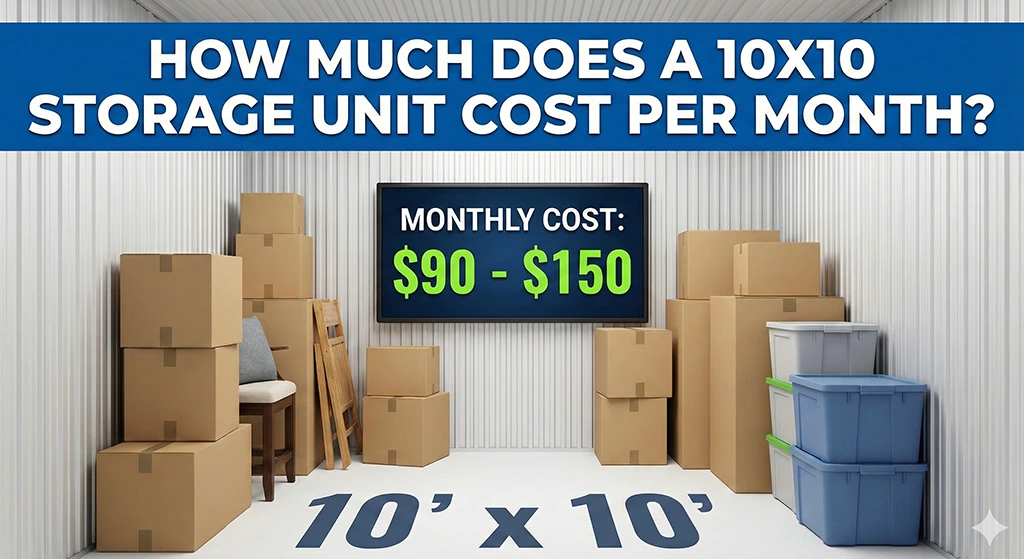
Renting a storage unit has become a common solution for people who are moving, downsizing, renovating, or simply running out of space at home. Among all unit sizes, the 10×10 storage unit is one of the most popular choices because it offers a balance between space and affordability. It provides 100 square feet of storage—roughly the size of a small bedroom—and can accommodate furniture, boxes, appliances, and even business inventory.
However, one of the most common questions people ask is: How much does a 10×10 storage unit cost per month? The answer isn’t always straightforward because storage pricing varies based on multiple factors like location, demand, features, and time of year. Understanding these variables can help you budget better and avoid unexpected expenses.
In this guide, we’ll break down average monthly costs, explain what affects pricing, compare local and long-term storage expenses, and share practical tips to save money when renting a 10×10 storage unit.
What Is a 10×10 Storage Unit?
A 10×10 storage unit measures 10 feet wide by 10 feet long, offering a total of 100 square feet of usable space. In terms of capacity, this unit size can typically hold the contents of a one- to two-bedroom apartment, depending on how efficiently items are packed and stacked. It’s a go-to option for people who need moderate storage without paying for oversized units.
This size is ideal for storing items like sofas, mattresses, dining tables, dressers, bicycles, and multiple boxes. When packed strategically, a 10×10 unit can also accommodate appliances such as washers, dryers, and refrigerators. Because of its versatility, it’s commonly used during relocations, temporary housing transitions, or home renovations.
For businesses, a 10×10 unit works well for storing excess inventory, office furniture, documents, or seasonal equipment. Its popularity also means pricing can fluctuate depending on demand.
How Much Does a 10×10 Storage Unit Cost Per Month?
On average, a 10×10 storage unit costs between $90 and $160 per month in the United States. This range reflects standard, non-climate-controlled units in most suburban or mid-sized city areas. Prices can fall below this range in rural locations or exceed it in high-demand urban markets.
Climate-controlled units usually cost more, often ranging from $120 to $220 per month. These units maintain stable temperature and humidity levels, which is essential for protecting sensitive items like wooden furniture, electronics, artwork, and documents.
It’s also important to remember that promotional rates may apply. Many storage facilities advertise low introductory prices for the first month or two, after which rates increase. Always confirm the long-term monthly cost before signing a rental agreement.
Cost of 10×10 Storage Units by Location
Storage Costs in Major Cities
In large metropolitan areas such as New York City, Los Angeles, San Francisco, or Boston, storage prices are significantly higher. A 10×10 unit in these cities can cost $180 to $300 or more per month, primarily due to limited space and high real estate values.
Urban storage facilities often feature indoor units, advanced security systems, and 24/7 access, which further contributes to higher pricing. Demand is especially high during peak moving seasons, causing rates to rise even more.
Storage Costs in Suburban Areas
Suburban locations typically offer more affordable pricing compared to major cities. In these areas, a 10×10 storage unit usually costs between $100 and $160 per month. These facilities often provide drive-up access and larger properties, which helps keep operational costs lower.
Suburban storage is a popular choice for families relocating between homes or people seeking longer-term storage at a reasonable price.
Storage Costs in Rural Areas
In rural or less populated areas, 10×10 storage units are the most affordable. Monthly rates can range from $70 to $120, depending on availability and facility features. While these facilities may offer fewer amenities, they provide excellent value for basic storage needs.
Climate-Controlled vs Standard 10×10 Storage Units
Standard (Non-Climate-Controlled) Units
Standard storage units are the most budget-friendly option. They are typically exposed to outdoor temperature changes, which means items inside may experience heat, cold, and humidity. These units are best suited for durable items like metal furniture, tools, plastic bins, and outdoor equipment.
Because they require less infrastructure, non-climate-controlled units are cheaper and widely available. However, they may not be suitable for long-term storage of delicate belongings.
Climate-Controlled Units
Climate-controlled units maintain consistent temperature and humidity levels year-round. This makes them ideal for storing wooden furniture, electronics, antiques, musical instruments, and important paperwork.
Expect to pay $20–$50 more per month for climate control. While more expensive, the added protection can prevent costly damage and deterioration over time, especially in areas with extreme weather conditions.
What Can You Fit in a 10×10 Storage Unit?
A 10×10 storage unit offers enough space to store the contents of a medium-sized home. Typically, it can hold:
- One or two sofas
- A queen or king-size mattress
- Dining table and chairs
- Dressers and wardrobes
- Appliances like washers or dryers
- 20–30 medium boxes
With smart packing techniques, vertical stacking, and disassembly of furniture, you can maximize space and reduce the need for a larger (and more expensive) unit.
Factors That Affect 10×10 Storage Unit Pricing
Location and Demand
Location plays the biggest role in determining storage prices. Facilities in densely populated or high-demand areas charge more due to limited space and higher property costs. Seasonal demand—especially during summer moving months—can also drive prices up.
Facility Features and Security
Facilities offering gated access, video surveillance, on-site management, and 24/7 access often charge higher rates. These features improve security and convenience, making them worth the extra cost for many renters.
Access Type
Drive-up units are usually cheaper than indoor units located inside large storage buildings. Indoor units often include elevators, climate control, and enhanced security, which increase pricing.
Rental Duration
Short-term storage may cost more per month, while long-term rentals sometimes come with discounted rates. Some facilities offer lower pricing if you commit to several months upfront.
Additional Fees to Expect When Renting Storage
While the advertised monthly rate is important, renters should also be aware of additional costs. Many storage facilities charge administrative or setup fees, which can range from $15 to $40.
Insurance is another common requirement. Storage facilities typically require renters to carry insurance coverage, either through their own homeowner’s policy or by purchasing insurance from the facility. This can add $10–$25 per month.
Late payment fees, lock replacement fees, and access fees may also apply. Always review the rental agreement carefully to avoid surprises.
Local vs Long-Term Storage Costs
Short-Term Storage
Short-term storage is commonly used during moves, renovations, or temporary relocations. While convenient, short-term rentals often come at a higher monthly rate because discounts usually apply to longer commitments.
Facilities may also raise prices after promotional periods end, making it important to calculate total costs rather than just the first month’s rate.
Long-Term Storage
Long-term storage tends to be more cost-effective. Many facilities offer reduced monthly rates for customers who rent for six months or longer. This option is ideal for people storing seasonal items, business inventory, or belongings during extended travel.
Is a 10×10 Storage Unit Worth the Cost?
For many people, a 10×10 storage unit offers excellent value. It provides enough space to store essential belongings without paying for unnecessary square footage. When compared on a per-square-foot basis, it’s often more economical than smaller units.
However, choosing the right size depends on your specific needs. Renting a unit that’s too small may force you to upgrade later, while renting one that’s too large means paying for unused space.
Tips to Save Money on a 10×10 Storage Unit
Compare Multiple Facilities
Always compare prices from multiple storage facilities in your area. Rates can vary significantly, even within the same neighborhood.
Look for Promotions
Many storage companies offer first-month discounts, free move-in trucks, or reduced rates for new customers. These deals can lower your initial costs.
Choose the Right Location
Facilities located slightly outside city centers often offer lower pricing. If you don’t need daily access, driving a bit farther can save you money.
Pack Efficiently
Efficient packing can help you avoid upgrading to a larger unit. Use uniform box sizes, disassemble furniture, and stack items vertically to maximize space.
How VanLinesMove Helps with Storage Solutions?
VanLinesMove connects customers with trusted moving and storage providers nationwide. Whether you need short-term storage during a move or long-term storage for extra belongings, VanLinesMove helps you compare options and pricing efficiently.
By working with licensed and vetted partners, VanLinesMove ensures secure storage solutions that match your budget and timeline. Customers can request free quotes, explore flexible storage plans, and coordinate moving and storage services seamlessly in one place.
Conclusion
A 10×10 storage unit typically costs between $90 and $160 per month, but prices can rise significantly based on location, climate control, and facility features. Understanding what affects storage pricing allows you to make informed decisions and avoid unnecessary expenses.
Whether you’re storing furniture during a move, decluttering your home, or managing business inventory, a 10×10 unit offers a versatile and cost-effective storage solution. By comparing options, planning ahead, and using services like VanLinesMove, you can secure the right storage unit at the best possible price.
FAQs: 10×10 Storage Unit Cost
1. How much does a 10×10 storage unit cost per month?
A 10×10 storage unit typically costs around $90–$160 per month on average, with costs varying widely based on location, climate control, and facility features.
2. Why do storage unit prices vary so much?
Storage prices vary due to location demand, climate control option, access type (drive-up vs indoor), security features, and seasonal pricing trends. Urban areas tend to be more expensive than rural areas.
3. What’s the difference in cost between climate-controlled and standard units?
Climate-controlled 10×10 units typically cost $20–$50 more per month than standard units because they protect items from extreme heat, cold, and humidity.
4. Are there additional fees when renting a storage unit?
Yes—most facilities charge one-time administrative fees, required insurance, security deposits, and sometimes sales tax. These can add between $15 and $40 or more to your first month’s cost.
5. How much does storage cost in big cities vs smaller towns?
In big cities like New York, Los Angeles, or San Francisco, a 10×10 unit can easily run $150–$300+ per month. In smaller towns, rates often fall toward the $75–$120 range.
6. Is the 10×10 storage unit size a good value?
Yes—a 10×10 unit (100 sq. ft.) generally fits the contents of a 1–3 bedroom home and offers good value, especially when comparing cost per square foot to larger or smaller sizes.
Categories
- Long Distance Moving159
- Local Moving120
- Commercial Moving40
- Residential Moving34
- Last – Minute Moving25
- Furniture Moving11
- Moving Tips & Lifestyle11
- Moving Tips & How-To Guides8
- Moving services7
- Moving Costs & Budgeting6
- Moving Cost5
- Moving Cost Calculator5
- Moving Tips5
- Moving Guides5
- moving tips4
- Moving companies4
- state to state movers4
- Piano Moving3
- Car Transportation3
- Truck Rental3
- Moving Container3
- Local Move3
- best moving rates3
- cheap moving companies3
- affordable moving companies3
- full-service movers3
- Moving3
- Long distance moving3
- Long-Distance Moving3
- Moving Cost Guides3
- Moving Tips & Planning3
- long distance moving3
- Junk Removal2
- Senior Moving2
- Senior Relocation Moving Companies2
- Moving Tools2
- Moving Estimates2
- interstate moving2
- College Moving2
- Dorm Moving2
- Tips for moving2
- cross-country move2
- International moving2
- Household moving2
- Relocation Guide2
- Moving Tips & State Guides2
- Heavy Equipment1
- Senior Moving Services1
- office moving1
- office relocation1
- employee relocation1
- Car Transport1
- Vehicle Shipping1
- Car Shipping Services1
- Artificial Intelligence1
- Office Moving Services1
- Commercial Moving Companies1
- Corporate Moving Services1
- Corporate Movers1
- full-service moving companies1
- sustainable moving companies1
- green movers1
- Moving in US1
- Best places to move in 20251
- 2025 moving1
- Full-Service Moving Companies1
- College moving services1
- Moving to College1
- Moving Season1
- Spring Moving1
- donate1
- sell1
- Movers in California1
- Movers in Studio City1
- Moving to California1
- Laws about Moving into California1
- Moving Laws1
- House moving1
- packing1
- cheap moving ways1
- Moving guide1
- moving across countries1
- international relocation program1
- move out cleaning1
- right packing supplies1
- pack while moving1
- Apartment moving1
- PODS1
- moving out1
- state to state move1
- California movers1
- Truck Rental1
- US Territory Relocation1
- International Moving1
- Shipping & Moving Tips1
- Moving Budget Guide1
- Moving Tools & Equipment Guides1
- Moving Services & Options1
- Moving Tips & How-To Guides1
- Moving Day & Settling In1
- Mobile Home Moving1
- Moving Guide & Tips1
- Moving Tips & State Comparisons1
- Moving Tips & City Guides1
- Moving Tips & Cost Guides1
- Long-Distance Moving Tips1
- Moving Tips & Financial Planning1
- Moving Tips & Home Preparation1
- Vehicle Shipping & Auto Transport1
- Marketing & Lead Generation1
- International Moving Guides1
- Moving Costs1
- San Francisco Moving Guide1
- NYC Moving1
- Local Movers1
- Budget Moving1
- Student Moving1
- Affordable Moving1
- Specialty Moving Guides1
- Local & Long-Distance Moving1
- Boston Moving Guide1
- Europe Relocation Guide1
- Moving Costs & Specialty Moving1
- Cost of Living1
- Relocation1
- International Moving1
- Lifestyle & Relocation1
- State Guides1
- Home Buying Guide1
- Moving Timeline1
- Real Estate Tips1
- Appliance Moving1
- Packing & Preparation1
- Interstate Relocation1
- City-to-City Moving Guide1
- Technology for Movers1
- Moving Reviews1
- Moving Costs & Storage1
- Moving Tips & Equipment Guides1
- Moving Guides & Cost Insights1
- Moving Supplies1
- Packing Tips1
- Home Moving1
- Relocation Tips1
- State Moving Guides1
- New Home Guide1
- Relocation Advice1



 Chat with us on WhatsApp!


 BBB A+ Rated
 Great! We serve your area
 Licensed & Insured
 Takes 60 seconds

 Discount expires in
 Limited Time: Only 3 premium movers available in your area


 Your information is 100% secure