


 Local Movers
 Last-Minute Movers
 Junk Removal
 Long Distance Movers
 Piano Movers
 Heavy Equipment
 Commercial Movers
 Moving Container
 Car Transportation
 Furniture Movers
 Truck Rental
 Moving Cost Calculator
 Moving Planner
 Packing Calculator
 Moving Checklist
 Moving Insurance
 FAQ
FAQ Contact Us
 Moving Loan
 Privacy Policy
 Join Our Network
 About Us
How Long After Closing on a House Can You Move In?


Buying a home is one of the biggest milestones in life, but once the paperwork is signed, many buyers are left asking a very practical question: how long after closing on a house can you move in?
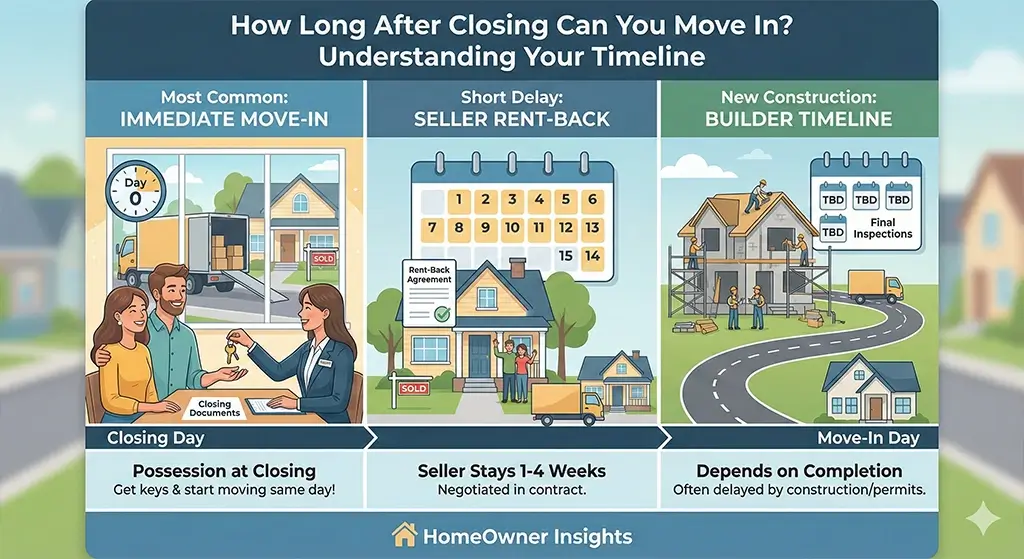
The short answer is: sometimes immediately, sometimes not. The real answer depends on several factors, including possession terms, financing type, seller agreements, and local laws. In this guide, we’ll break down everything you need to know—so you can plan your move confidently and avoid costly surprises.
What Does “Closing on a House” Mean?
Closing is the final step in the home-buying process. It’s when:
- Ownership officially transfers from the seller to the buyer
- Mortgage funds are released (if applicable)
- Legal documents are signed and recorded
- Closing costs are paid
Once closing is complete, you technically own the home—but ownership does not always equal immediate possession.
Can You Move In Immediately After Closing?
Yes—In Many Cases
In a standard real estate transaction, buyers receive possession on the day of closing, meaning you can move in the same day or the next day.
This is common when:
- The seller has already moved out
- The home is vacant
- There is no rent-back agreement
- All funds have cleared
In these cases, you can schedule movers for closing day or the following morning.
When You Cannot Move In Right Away
While many buyers hope to move in immediately after closing, there are several common situations where possession is delayed. These delays are normal in real estate transactions, but they must be anticipated early so you can plan housing, moving dates, and storage without stress.
1. Seller Rent-Back Agreement
A seller rent-back (also called a post-occupancy agreement) allows the seller to remain in the home for a specific period after closing, even though you technically own the property.
Typical rent-back periods include:
- 3–7 days (short-term transition)
- Up to 30 days (very common)
- Longer than 30 days (rare, but possible in competitive markets)
During this time:
- The seller pays you daily or monthly rent
- A security deposit is often held to cover potential damage
- Utilities and maintenance responsibilities are clearly defined in writing
- You cannot move in or store belongings until the rent-back ends
Rent-back agreements are often used when sellers need extra time to close on their next home or coordinate a long-distance move. While they can make your offer more attractive, buyers should ensure the agreement includes firm move-out dates and penalties for overstaying.
2. Delayed Possession Written Into the Contract
In some cases, possession is delayed without a formal rent-back agreement. Instead, the purchase contract specifies a future possession date separate from the closing date.
This is commonly done to:
- Give the seller time to relocate
- Align closing with the seller’s new home purchase
- Allow time for repairs, final cleaning, or renovations
- Accommodate logistical or legal requirements
Even though you may have closed on the home, possession does not legally transfer until the date listed in the contract. This means:
- You cannot move in early
- You may not have access to keys
- Utilities may remain in the seller’s name temporarily
Always review the possession clause carefully and confirm the exact move-in date before scheduling movers or ending your current lease.
3. Financing, Funding, or Recording Delays
Occasionally, moving is delayed due to administrative or financial timing—even after all documents are signed.
Common causes include:
- Bank funding delays, especially with large wire transfers
- Title or county recording delays, often due to weekends or holidays
- Last-minute lender conditions or underwriting issues
- Errors or holds related to escrow documentation
Until the transaction is officially funded and recorded, the home is not legally yours—even if you’ve signed everything. In these situations:
- Keys are not released
- Movers may need to be rescheduled
- Temporary housing may be required
To avoid surprises, buyers should ask their lender and escrow officer for a confirmed funding and recording timeline, especially if planning a same-day move.
Plan Ahead to Avoid Stress
If any of these situations apply, it’s smart to:
- Build flexibility into your moving date
- Arrange short-term housing or storage if needed
- Avoid scheduling movers until possession is guaranteed in writing
- Confirm key release timing with your agent or escrow officer
Understanding these scenarios ahead of time helps you avoid rushed decisions, extra costs, and unnecessary frustration during one of the most important transitions of your life.
How Long After Closing On a House Can You Move In?
Best Practice: 1–3 Days After Closing
Even if you expect same-day possession, professionals recommend scheduling movers 1–3 days after closing to allow for:
- Final walkthrough
- Unexpected delays
- Cleaning or minor repairs
This buffer helps avoid last-minute moving rescheduling fees and stress.
Same-Day Move-In: Is It a Good Idea?
Same-day move-ins are possible—but not always ideal.
Pros
- Saves time
- Avoids temporary housing
- Faster settlement
Cons
- Risky if closing runs late
- Movers may wait (extra fees)
- Stressful if keys are delayed
Tip: If attempting a same-day move, choose movers with flexible scheduling.
What Is a Final Walkthrough and Why It Matters
The final walkthrough usually happens 24 hours before closing and ensures:
- The home is vacant
- Agreed repairs are completed
- No new damage has occurred
If issues are discovered, possession could be delayed until resolved—affecting your move-in date.
How Long After Closing Do Sellers Usually Move Out?
|
Situation |
Typical Move-In Timeline |
|
Vacant home |
Same day |
|
Standard sale |
Same or next day |
|
Rent-back |
3–30 days |
|
New construction |
After certificate of occupancy |
|
Delayed recording |
1–3 business days |
Moving Into a Newly Built Home
For new construction, closing alone does not guarantee move-in.
You must also receive:
- Certificate of Occupancy (CO)
- Final inspections approval
Move-in usually occurs 1–7 days after closing, depending on local regulations.
Legal and Insurance Considerations Before Moving In
Before moving your belongings:
- Activate homeowner’s insurance
- Transfer utilities
- Confirm liability coverage
- Change locks after possession
If the seller is still occupying the home, do not move items inside, even partially.
How VanLinesMove Helps You Time Your Move Perfectly?
Planning a move around closing dates can be tricky—especially with delays, rent-backs, or long-distance relocations.
VanLinesMove helps by:
- Connecting you with flexible movers nationwide
- Offering rescheduling support
- Providing short-term storage options
- Coordinating same-day or delayed move-ins
- Helping with long-distance and interstate moves
Whether you’re moving the same day, next week, or after a rent-back period, VanLinesMove ensures your relocation stays smooth and stress-free.
Tips to Avoid Move-In Day Problems
- Never schedule movers before keys are guaranteed
- Build a 1–2 day buffer when possible
- Confirm possession terms in writing
- Ask about storage-in-transit options
- Keep essentials with you
FAQs: How Long After Closing Can You Move In?
1. Can I move in on closing day?
Yes, if the contract grants immediate possession and the seller has vacated.
2. What if closing is delayed?
Your move-in date may shift. This is why flexible movers or backup plans are important.
3. Can the seller stay after closing?
Yes, with a rent-back agreement. You must wait until it ends.
4. Do I get keys at closing?
Usually yes—but sometimes keys are released only after funds are fully recorded.
Conclusion
So, how long after closing on a house can you move in?
In many cases, immediately—but not always.
The key is understanding your possession terms, planning for delays, and working with experienced movers who can adapt to your timeline. With proper planning and the right moving support, your transition into your new home can be smooth, efficient, and stress-free.
If you’re planning an upcoming move, VanLinesMove is here to help you every step of the way—from timing your move to finding the right movers at the right price.
Categories
- Long Distance Moving162
- Local Moving120
- Commercial Moving40
- Residential Moving34
- Last – Minute Moving25
- Furniture Moving11
- Moving Tips & Lifestyle11
- Moving Tips & How-To Guides8
- Moving services7
- Long distance moving6
- Moving Costs & Budgeting6
- long distance moving6
- Moving Cost5
- Moving Cost Calculator5
- Moving Tips5
- Moving Guides5
- Moving Container4
- moving tips4
- Moving companies4
- state to state movers4
- Piano Moving3
- Car Transportation3
- Truck Rental3
- Local Move3
- best moving rates3
- cheap moving companies3
- affordable moving companies3
- full-service movers3
- Moving3
- Long-Distance Moving3
- Moving Cost Guides3
- Moving Tips & Planning3
- Junk Removal2
- Senior Moving2
- Senior Relocation Moving Companies2
- Moving Tools2
- Moving Estimates2
- interstate moving2
- College Moving2
- Dorm Moving2
- Tips for moving2
- cross-country move2
- International moving2
- Household moving2
- Relocation Guide2
- Moving Tips & State Guides2
- Heavy Equipment1
- Senior Moving Services1
- office moving1
- office relocation1
- employee relocation1
- Car Transport1
- Vehicle Shipping1
- Car Shipping Services1
- Artificial Intelligence1
- Office Moving Services1
- Commercial Moving Companies1
- Corporate Moving Services1
- Corporate Movers1
- full-service moving companies1
- sustainable moving companies1
- green movers1
- Moving in US1
- Best places to move in 20251
- 2025 moving1
- Full-Service Moving Companies1
- College moving services1
- Moving to College1
- Moving Season1
- Spring Moving1
- donate1
- sell1
- Movers in California1
- Movers in Studio City1
- Moving to California1
- Laws about Moving into California1
- Moving Laws1
- House moving1
- packing1
- cheap moving ways1
- Moving guide1
- moving across countries1
- international relocation program1
- move out cleaning1
- right packing supplies1
- pack while moving1
- Apartment moving1
- PODS1
- moving out1
- state to state move1
- California movers1
- Truck Rental1
- US Territory Relocation1
- International Moving1
- Shipping & Moving Tips1
- Moving Budget Guide1
- Moving Tools & Equipment Guides1
- Moving Services & Options1
- Moving Tips & How-To Guides1
- Moving Day & Settling In1
- Mobile Home Moving1
- Moving Guide & Tips1
- Moving Tips & State Comparisons1
- Moving Tips & City Guides1
- Moving Tips & Cost Guides1
- Long-Distance Moving Tips1
- Moving Tips & Financial Planning1
- Moving Tips & Home Preparation1
- Vehicle Shipping & Auto Transport1
- Marketing & Lead Generation1
- International Moving Guides1
- Moving Costs1
- San Francisco Moving Guide1
- NYC Moving1
- Local Movers1
- Budget Moving1
- Student Moving1
- Affordable Moving1
- Specialty Moving Guides1
- Local & Long-Distance Moving1
- Boston Moving Guide1
- Europe Relocation Guide1
- Moving Costs & Specialty Moving1
- Cost of Living1
- Relocation1
- International Moving1
- Lifestyle & Relocation1
- State Guides1
- Home Buying Guide1
- Moving Timeline1
- Real Estate Tips1
- Appliance Moving1
- Packing & Preparation1
- Interstate Relocation1
- City-to-City Moving Guide1
- Technology for Movers1
- Moving Reviews1
- Moving Costs & Storage1
- Moving Tips & Equipment Guides1
- Moving Guides & Cost Insights1
- Moving Supplies1
- Packing Tips1
- Home Moving1
- Relocation Tips1
- State Moving Guides1
- New Home Guide1
- Relocation Advice1




 Chat with us on WhatsApp!


 BBB A+ Rated
 Great! We serve your area
 Licensed & Insured
 Takes 60 seconds

 Discount expires in
 Limited Time: Only 3 premium movers available in your area


 Your information is 100% secure