


 Local Movers
 Last-Minute Movers
 Junk Removal
 Long Distance Movers
 Piano Movers
 Heavy Equipment
 Commercial Movers
 Moving Container
 Car Transportation
 Furniture Movers
 Truck Rental
 Moving Cost Calculator
 Moving Planner
 Packing Calculator
 Moving Checklist
 Moving Insurance
 FAQ
FAQ Contact Us
 Moving Loan
 Privacy Policy
 Join Our Network
 About Us
How to Move a Washing Machine Safely: A Step-by-Step Guide


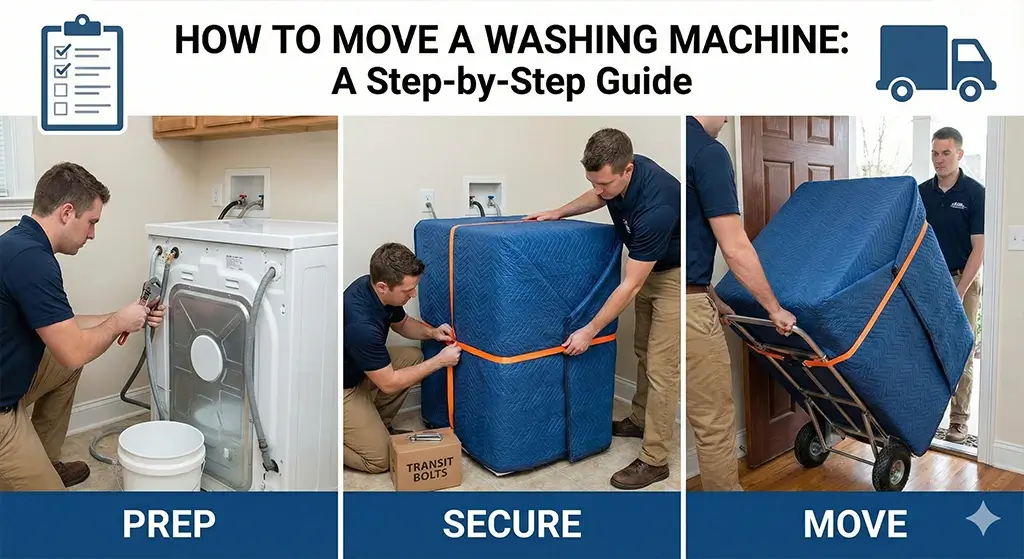
Moving a washing machine is one of the most challenging tasks during a home relocation. Washing machines are heavy, bulky, awkwardly shaped, and contain sensitive internal components that can be easily damaged if handled incorrectly. Whether you’re moving across town or preparing for a long-distance relocation, knowing how to move a washing machine the right way can save you from injuries, costly repairs, or replacing the appliance altogether.
Unlike furniture, washing machines involve water connections, electrical components, and internal drums that must be secured before transport. Improper handling can lead to water leaks, damaged suspension systems, or even complete machine failure.
This comprehensive guide will walk you through everything you need to know about how to move a washing machine along wtih from preparation and tools to lifting techniques, transport tips, and deciding when professional movers are the better option.
Why Moving a Washing Machine Requires Special Care?
A washing machine typically weighs between 150 and 300 pounds, depending on the model and capacity. Beyond its weight, it also has:
- Delicate internal drum suspension
- Electrical wiring and control panels
- Water inlet and drainage systems
- Shock-sensitive internal bearings
If the drum isn’t secured or the machine isn’t kept upright, internal components can shift, leading to expensive repairs or permanent damage.
Tools and Supplies You’ll Need
Before you begin, gather the right tools and supplies to ensure safety and efficiency.
Essential Tools
- Adjustable wrench or pliers
- Screwdriver
- Appliance dolly with straps
- Moving straps or ratchet straps
Protective Supplies
- Moving blankets or thick towels
- Packing tape or stretch wrap
- Plastic bags (for hoses and cords)
- Cardboard sheets (optional for extra protection)
Having everything ready before you start prevents rushing and reduces risk.
How to Move a Washing Machine Safely (Step-by-Step)
Step 1: Turn Off and Disconnect the Washing Machine
Start by completely disconnecting the machine.
Shut Off Power
- Unplug the washing machine from the electrical outlet
- Secure the power cord with tape so it doesn’t drag
Turn Off Water Supply
- Close both hot and cold water valves
- Use a wrench to disconnect inlet hoses
Keep a towel or bucket nearby to catch any remaining water.
Step 2: Drain All Remaining Water
Even after disconnecting hoses, water remains inside the washing machine.
How to Drain It Properly
- Locate the drain hose (usually at the back)
- Lower it into a bucket or floor drain
- Allow all water to empty completely
Some machines also have a drain filter—check your manual and drain it if applicable.
Failing to drain water can cause leaks during transport, damaging floors, trucks, or other belongings.
Step 3: Secure the Washing Machine Drum
This is one of the most critical—and commonly skipped—steps.
Why Drum Securing Matters
During movement, the drum can swing freely, damaging suspension springs and internal bearings.
How to Secure the Drum
- Use manufacturer’s transit bolts if available
- If not, pad the drum area with towels or foam through the door opening
- Tape the door shut to prevent movement
If you’ve lost the transit bolts, contact the manufacturer or appliance store before moving.
Step 4: Wrap and Protect the Washing Machine
Proper wrapping prevents scratches, dents, and internal shifting.
Wrapping Steps
- Cover the entire machine with moving blankets
- Secure blankets with packing tape or stretch wrap
- Protect control panels with extra padding
Avoid taping directly to the machine’s surface to prevent residue or damage.
Step 5: Lift Safely (Never Alone)
Never attempt to lift a washing machine by yourself.
Safe Lifting Tips
- Always use at least two people
- Bend at the knees, not the back
- Keep the machine upright at all times
- Do not lift by hoses, knobs, or doors
If stairs are involved, an appliance dolly is essential.
Step 6: Use an Appliance Dolly for Transport
An appliance dolly makes moving significantly safer and easier.
How to Use a Dolly Correctly
- Tilt the washing machine slightly
- Slide the dolly underneath
- Strap the machine tightly to the dolly
- Move slowly and steadily
When navigating stairs, have one person below supporting weight and another guiding from above.
Step 7: Loading the Washing Machine into the Moving Truck
Proper placement in the truck is crucial.
Best Loading Practices
- Keep the washing machine upright
- Place it against a solid wall inside the truck
- Secure with straps to prevent movement
- Do not stack items on top
If laid on its side, oil and water can leak into internal components, causing damage.
Step 8: Transport and Unloading
During transport, drive carefully and avoid sudden stops.
Once you arrive:
- Move the washing machine inside using the dolly
- Place it near its final location
- Remove wrapping carefully
Do not reconnect immediately—let the machine sit upright for a few hours to allow internal fluids to settle.
Reinstalling the Washing Machine After the Move
Reconnection Checklist
- Reconnect water hoses securely
- Turn on water slowly and check for leaks
- Plug into power outlet
- Run a short test cycle
If the machine vibrates excessively or makes unusual noises, stop immediately and check installation.
Common Mistakes to Avoid When Moving a Washing Machine
Many people damage their machines due to avoidable errors.
Top Mistakes
- Not draining water fully
- Skipping drum securing
- Laying the machine flat
- Moving without a dolly
- Attempting solo lifting
Avoiding these mistakes can extend your appliance’s lifespan.
Can You Move a Washing Machine Without Professional Movers?
Yes—but it depends on several factors.
DIY Moving Is Suitable If
- The move is short-distance
- No stairs are involved
- You have proper equipment
- You have help
Professional Movers Are Better If
- The move involves stairs or tight spaces
- It’s a long-distance move
- You’re moving multiple heavy appliances
- You want insurance coverage
How Much Does It Cost to Move a Washing Machine?
DIY Costs
- Dolly rental: $20 – $50 per day
- Supplies: $20 – $40
Professional Moving Costs
- Local appliance move: $150 – $300
- Included in full-service move packages
Professional movers reduce injury risk and appliance damage.
How VanLinesMove Helps with Appliance Moving?
Moving heavy appliances doesn’t have to be stressful.
Why Choose VanLinesMove
✔ Licensed and insured movers
✔ Appliance-safe equipment
✔ Flexible scheduling
✔ Short-term storage options
✔ Long-distance and local expertise
VanLinesMove connects you with trusted movers who know how to handle washing machines safely from start to finish.
Tips for Long-Distance Washing Machine Moves
- Use original packaging if available
- Secure drum with transit bolts
- Add extra padding
- Purchase full-value insurance
Long-distance moves require additional care due to extended transit time.
Final Checklist Before Moving a Washing Machine
- Power unplugged
- Water shut off and drained
- Drum secured
- Machine wrapped
- Dolly and straps ready
- Help arranged
Conclusion
Moving a washing machine safely requires preparation, the right tools, and careful handling. From draining water and securing the drum to using a dolly and keeping the machine upright, each step plays a vital role in protecting your appliance.
If you’re unsure or dealing with a complex move, professional movers are often the safest and most cost-effective option in the long run.
With expert help from VanLinesMove, you can ensure your washing machine—and the rest of your belongings—arrive safely and ready to use in your new home.
FAQ
1. Can you move a washing machine by yourself?
It is not recommended to move a washing machine alone due to its heavy weight and high risk of injury. At least two people and an appliance dolly are required to move it safely.
2. Do washing machines need to be drained before moving?
Yes, all remaining water must be fully drained from the washing machine before moving. This helps prevent leaks, water damage, and internal component issues during transport.
3. Can you lay a washing machine on its side for transport?
No, washing machines should always be transported in an upright position. Laying a machine on its side can cause oil and water to leak into sensitive internal parts, leading to damage.
4. How much does it cost to move a washing machine?
DIY moving costs usually range from $40 to $90, including dolly rental and supplies. Hiring professional movers typically costs $150 to $300, depending on distance and complexity.
5. Should I hire movers to move a washing machine?
Hiring professional movers is recommended for long-distance moves, homes with stairs, or when moving multiple heavy appliances, as it reduces injury risk and protects the appliance from damage.
Categories
- Long Distance Moving162
- Local Moving120
- Commercial Moving40
- Residential Moving34
- Last – Minute Moving25
- Furniture Moving11
- Moving Tips & Lifestyle11
- Moving Tips & How-To Guides8
- Moving services7
- Long distance moving6
- Moving Costs & Budgeting6
- long distance moving6
- Moving Cost5
- Moving Cost Calculator5
- Moving Tips5
- Moving Guides5
- Moving Container4
- moving tips4
- Moving companies4
- state to state movers4
- Piano Moving3
- Car Transportation3
- Truck Rental3
- Local Move3
- best moving rates3
- cheap moving companies3
- affordable moving companies3
- full-service movers3
- Moving3
- Long-Distance Moving3
- Moving Cost Guides3
- Moving Tips & Planning3
- Junk Removal2
- Senior Moving2
- Senior Relocation Moving Companies2
- Moving Tools2
- Moving Estimates2
- interstate moving2
- College Moving2
- Dorm Moving2
- Tips for moving2
- cross-country move2
- International moving2
- Household moving2
- Relocation Guide2
- Moving Tips & State Guides2
- Heavy Equipment1
- Senior Moving Services1
- office moving1
- office relocation1
- employee relocation1
- Car Transport1
- Vehicle Shipping1
- Car Shipping Services1
- Artificial Intelligence1
- Office Moving Services1
- Commercial Moving Companies1
- Corporate Moving Services1
- Corporate Movers1
- full-service moving companies1
- sustainable moving companies1
- green movers1
- Moving in US1
- Best places to move in 20251
- 2025 moving1
- Full-Service Moving Companies1
- College moving services1
- Moving to College1
- Moving Season1
- Spring Moving1
- donate1
- sell1
- Movers in California1
- Movers in Studio City1
- Moving to California1
- Laws about Moving into California1
- Moving Laws1
- House moving1
- packing1
- cheap moving ways1
- Moving guide1
- moving across countries1
- international relocation program1
- move out cleaning1
- right packing supplies1
- pack while moving1
- Apartment moving1
- PODS1
- moving out1
- state to state move1
- California movers1
- Truck Rental1
- US Territory Relocation1
- International Moving1
- Shipping & Moving Tips1
- Moving Budget Guide1
- Moving Tools & Equipment Guides1
- Moving Services & Options1
- Moving Tips & How-To Guides1
- Moving Day & Settling In1
- Mobile Home Moving1
- Moving Guide & Tips1
- Moving Tips & State Comparisons1
- Moving Tips & City Guides1
- Moving Tips & Cost Guides1
- Long-Distance Moving Tips1
- Moving Tips & Financial Planning1
- Moving Tips & Home Preparation1
- Vehicle Shipping & Auto Transport1
- Marketing & Lead Generation1
- International Moving Guides1
- Moving Costs1
- San Francisco Moving Guide1
- NYC Moving1
- Local Movers1
- Budget Moving1
- Student Moving1
- Affordable Moving1
- Specialty Moving Guides1
- Local & Long-Distance Moving1
- Boston Moving Guide1
- Europe Relocation Guide1
- Moving Costs & Specialty Moving1
- Cost of Living1
- Relocation1
- International Moving1
- Lifestyle & Relocation1
- State Guides1
- Home Buying Guide1
- Moving Timeline1
- Real Estate Tips1
- Appliance Moving1
- Packing & Preparation1
- Interstate Relocation1
- City-to-City Moving Guide1
- Technology for Movers1
- Moving Reviews1
- Moving Costs & Storage1
- Moving Tips & Equipment Guides1
- Moving Guides & Cost Insights1
- Moving Supplies1
- Packing Tips1
- Home Moving1
- Relocation Tips1
- State Moving Guides1
- New Home Guide1
- Relocation Advice1




 Chat with us on WhatsApp!


 BBB A+ Rated
 Great! We serve your area
 Licensed & Insured
 Takes 60 seconds

 Discount expires in
 Limited Time: Only 3 premium movers available in your area


 Your information is 100% secure