


 Local Movers
 Last-Minute Movers
 Junk Removal
 Long Distance Movers
 Piano Movers
 Heavy Equipment
 Commercial Movers
 Moving Container
 Car Transportation
 Furniture Movers
 Truck Rental
 Moving Cost Calculator
 Moving Planner
 Packing Calculator
 Moving Checklist
 Moving Insurance
 FAQ
FAQ Contact Us
 Moving Loan
 Privacy Policy
 Join Our Network
 About Us
How Much Does It Cost to Have a Vehicle Transported?


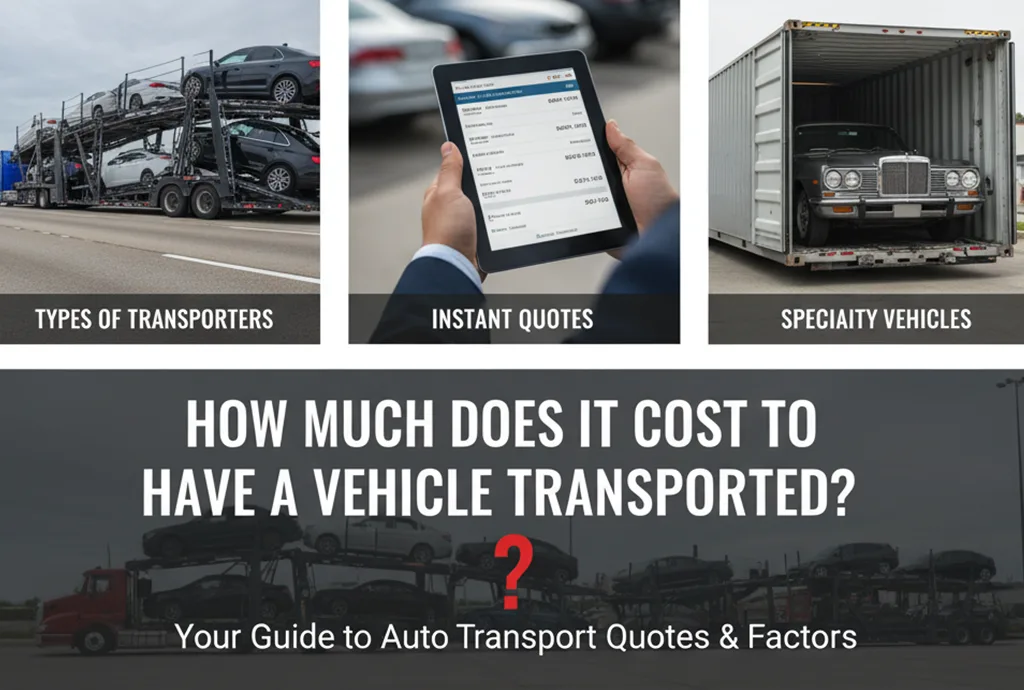
Transporting a vehicle is one of the most common needs during long-distance moves, military relocations, seasonal travel, or online car purchases. But when it comes to cost, most people are unsure what to expect — and that’s because vehicle shipping prices vary widely depending on distance, vehicle type, season, and the transport method you choose.
This guide breaks down average auto transport prices, the factors that affect cost, open vs. enclosed shipping, and how VanLinesMove helps you get the best price without surprise fees.
Lets know everything about How Much Does It Cost to Have a Vehicle Transported?
How Much Does It Cost to Have a Vehicle Transported in 2025?
The cost to transport a car in the U.S. ranges from $600 to $2,200+, depending on distance, shipping method, and vehicle size.
Here’s a breakdown:
- Short-distance (0–500 miles): $600–$900
- Mid-distance (500–1,000 miles): $900–$1,300
- Long-distance (1,000–2,500 miles): $1,200–$1,800
- Cross-country (2,500+ miles): $1,500–$2,200
Luxury vehicles, oversized trucks, classic cars, and enclosed transport can increase the cost significantly.
Main Factors That Influence Vehicle Shipping Cost
Every vehicle transport quote is different because several variables affect pricing. Understanding these helps you estimate your budget more accurately.
1. Distance of the Move
The longer the distance, the higher the cost — but the cost per mile actually decreases with long-distance routes.
Short moves have higher per-mile charges because loading, labor, and fuel costs are spread across fewer miles. This is why moving a car 400 miles is not half the price of moving it 800 miles.
2. Vehicle Size, Type & Weight
Larger and heavier vehicles cost more to transport because they take up more space on the carrier and increase fuel usage.
Sedans are typically the cheapest to ship, while SUVs, extended trucks, vans, and modified vehicles fall into higher pricing categories due to additional space requirements and weight restrictions.
3. Type of Transport: Open vs. Enclosed
Your transport choice has one of the biggest impacts on price.
Open Transport (Most Common & Affordable)
This is the standard method where vehicles are placed on an open carrier.
It is safe, economical, and widely used — and typically 30–50% cheaper than enclosed shipping. Most customers choose this option for daily-use cars.
Enclosed Transport (Premium & Protected)
Enclosed carriers protect your car from weather, debris, and road conditions.
This is ideal for luxury cars, antiques, sports cars, or newly purchased high-value models. Enclosed shipping usually costs 50–100% more due to limited capacity and specialized handling.
4. Pickup & Drop-Off Options
Convenience level also affects cost.
Door-to-Door Delivery
Your car is picked up and delivered to your chosen locations.
It’s the most convenient option and reduces your travel time but increases the price slightly due to additional routing and driver time.
Terminal-to-Terminal Delivery
You drop off and pick up your car at transportation terminals.
This is cheaper but less convenient — and may involve storage fees if you don’t pick up the car on time.
5. Seasonal Demand
Vehicle transport pricing fluctuates throughout the year.
Peak seasons like summer, snowbird season (October–April), and holidays can drive prices up significantly. Winter weather can also slow routes, increasing operational costs for carriers.
6. Vehicle Running Condition
A car that does not run requires special loading equipment such as winches, which increases labor and cost.
Inoperable vehicles may cost $100–$250 more, depending on condition and loading difficulty.
7. Fuel Prices & Market Conditions
Auto transport is heavily affected by fuel costs and economic changes.
When fuel prices rise, so do transport rates, as carriers adjust pricing to match operating expenses.
Additional Costs You May Encounter
These optional or situational fees can affect your total cost:
Expedited Shipping
If you need your car picked up within a specific 1–2 day window, prices increase due to priority scheduling and reduced route flexibility.
Storage Fees
Leaving a vehicle at a terminal longer than the allowed window can result in daily storage charges.
Insurance Add-Ons
Basic liability is included, but some customers choose additional coverage for high-value vehicles. This increases cost but provides extended protection.
How to Calculate Your Car Transport Cost Accurately
Unlike flat-rate moves, auto shipping quotes depend on real-time market pricing.
You can estimate your cost by considering:
- Total distance
- Vehicle type
- Transport method (open/enclosed)
- Pickup timeframe
- Pickup/drop-off locations
- Season of transport
Using a professional auto transport service ensures accurate quoting and transparent pricing.
How to Save Money When Shipping a Car
If you're looking to reduce your transport costs, here are smart strategies:
Be Flexible With Pickup Dates
Avoiding strict deadlines allows carriers to combine your car with other routes, reducing your cost.
Choose Open Transport
Unless you have a luxury or antique car, open transport offers safe, affordable shipping for most vehicles.
Ship During the Off-Season
Avoid peak demand periods such as summer and snowbird migration months.
Avoid Terminal Storage
Picking up your car on time prevents extra daily storage fees.
Book in Advance
The earlier you schedule, the better the rates — last-minute booking usually costs more.
How VanLinesMove Helps with Affordable & Safe Vehicle Transport
VanLinesMove provides reliable, insured, and cost-transparent vehicle shipping, whether you're moving cross-country or relocating for work.
Our professional team helps you compare options, choose the right transport method, and get the best real-time pricing without hidden fees. We handle every detail — from scheduling carriers to coordinating delivery with your moving date — ensuring your relocation is seamless.
Why Choose VanLinesMove for Auto Transport?
- Competitive pricing with no hidden charges
- Secure open and enclosed carrier options
- Door-to-door delivery nationwide
- Licensed, insured, and vetted carriers
- Real-time tracking on eligible routes
- Combined vehicle + household move discounts
Moving a vehicle doesn’t need to be stressful — with VanLinesMove, it’s easy, safe, and budget-friendly.
Conclusion
The cost to transport a vehicle varies depending on distance, type of vehicle, transport method, season, and convenience level.
Whether you’re moving cross-country, buying a new car out of state, or relocating for work, understanding the factors that influence price helps you budget smartly and avoid surprises. With VanLinesMove, you get transparent pricing, flexible options, and expert support to ensure your vehicle arrives safely and on time.
FAQs:
1. What is the average cost to transport a vehicle?
Most vehicle transports cost between $700 and $1,600, depending on distance, vehicle type, and transport method.
2. Is enclosed transport more expensive?
Yes. Enclosed carriers typically cost 30–60% more because they provide added protection against weather and road debris.
3. How long does vehicle transport usually take?
Standard delivery takes 5–10 days, depending on the route and carrier schedule.
4. Can I ship a non-running vehicle?
Yes, but it usually costs $100–$200 extra because special equipment is required to load and unload the vehicle.
5. How do I get the best price for car shipping?
Book early, choose open transport, remain flexible with pickup dates, and compare quotes from trusted shippers like VanLinesMove.
Categories
- Long Distance Moving162
- Local Moving120
- Commercial Moving40
- Residential Moving34
- Last – Minute Moving25
- Furniture Moving11
- Moving Tips & Lifestyle11
- Moving Tips & How-To Guides8
- Moving services7
- Long distance moving6
- Moving Costs & Budgeting6
- long distance moving6
- Moving Cost5
- Moving Cost Calculator5
- Moving Tips5
- Moving Guides5
- Moving Container4
- moving tips4
- Moving companies4
- state to state movers4
- Piano Moving3
- Car Transportation3
- Truck Rental3
- Local Move3
- best moving rates3
- cheap moving companies3
- affordable moving companies3
- full-service movers3
- Moving3
- Long-Distance Moving3
- Moving Cost Guides3
- Moving Tips & Planning3
- Junk Removal2
- Senior Moving2
- Senior Relocation Moving Companies2
- Moving Tools2
- Moving Estimates2
- interstate moving2
- College Moving2
- Dorm Moving2
- Tips for moving2
- cross-country move2
- International moving2
- Household moving2
- Relocation Guide2
- Moving Tips & State Guides2
- Heavy Equipment1
- Senior Moving Services1
- office moving1
- office relocation1
- employee relocation1
- Car Transport1
- Vehicle Shipping1
- Car Shipping Services1
- Artificial Intelligence1
- Office Moving Services1
- Commercial Moving Companies1
- Corporate Moving Services1
- Corporate Movers1
- full-service moving companies1
- sustainable moving companies1
- green movers1
- Moving in US1
- Best places to move in 20251
- 2025 moving1
- Full-Service Moving Companies1
- College moving services1
- Moving to College1
- Moving Season1
- Spring Moving1
- donate1
- sell1
- Movers in California1
- Movers in Studio City1
- Moving to California1
- Laws about Moving into California1
- Moving Laws1
- House moving1
- packing1
- cheap moving ways1
- Moving guide1
- moving across countries1
- international relocation program1
- move out cleaning1
- right packing supplies1
- pack while moving1
- Apartment moving1
- PODS1
- moving out1
- state to state move1
- California movers1
- Truck Rental1
- US Territory Relocation1
- International Moving1
- Shipping & Moving Tips1
- Moving Budget Guide1
- Moving Tools & Equipment Guides1
- Moving Services & Options1
- Moving Tips & How-To Guides1
- Moving Day & Settling In1
- Mobile Home Moving1
- Moving Guide & Tips1
- Moving Tips & State Comparisons1
- Moving Tips & City Guides1
- Moving Tips & Cost Guides1
- Long-Distance Moving Tips1
- Moving Tips & Financial Planning1
- Moving Tips & Home Preparation1
- Vehicle Shipping & Auto Transport1
- Marketing & Lead Generation1
- International Moving Guides1
- Moving Costs1
- San Francisco Moving Guide1
- NYC Moving1
- Local Movers1
- Budget Moving1
- Student Moving1
- Affordable Moving1
- Specialty Moving Guides1
- Local & Long-Distance Moving1
- Boston Moving Guide1
- Europe Relocation Guide1
- Moving Costs & Specialty Moving1
- Cost of Living1
- Relocation1
- International Moving1
- Lifestyle & Relocation1
- State Guides1
- Home Buying Guide1
- Moving Timeline1
- Real Estate Tips1
- Appliance Moving1
- Packing & Preparation1
- Interstate Relocation1
- City-to-City Moving Guide1
- Technology for Movers1
- Moving Reviews1
- Moving Costs & Storage1
- Moving Tips & Equipment Guides1
- Moving Guides & Cost Insights1
- Moving Supplies1
- Packing Tips1
- Home Moving1
- Relocation Tips1
- State Moving Guides1
- New Home Guide1
- Relocation Advice1




 Chat with us on WhatsApp!


 BBB A+ Rated
 Great! We serve your area
 Licensed & Insured
 Takes 60 seconds

 Discount expires in
 Limited Time: Only 3 premium movers available in your area


 Your information is 100% secure