


 Local Movers
 Last-Minute Movers
 Junk Removal
 Long Distance Movers
 Piano Movers
 Heavy Equipment
 Commercial Movers
 Moving Container
 Car Transportation
 Furniture Movers
 Truck Rental
 Moving Cost Calculator
 Moving Planner
 Packing Calculator
 Moving Checklist
 Moving Insurance
 FAQ
FAQ Contact Us
 Moving Loan
 Privacy Policy
 Join Our Network
 About Us
U-Box Dimensions: Sizes, Capacity & How Many You Need


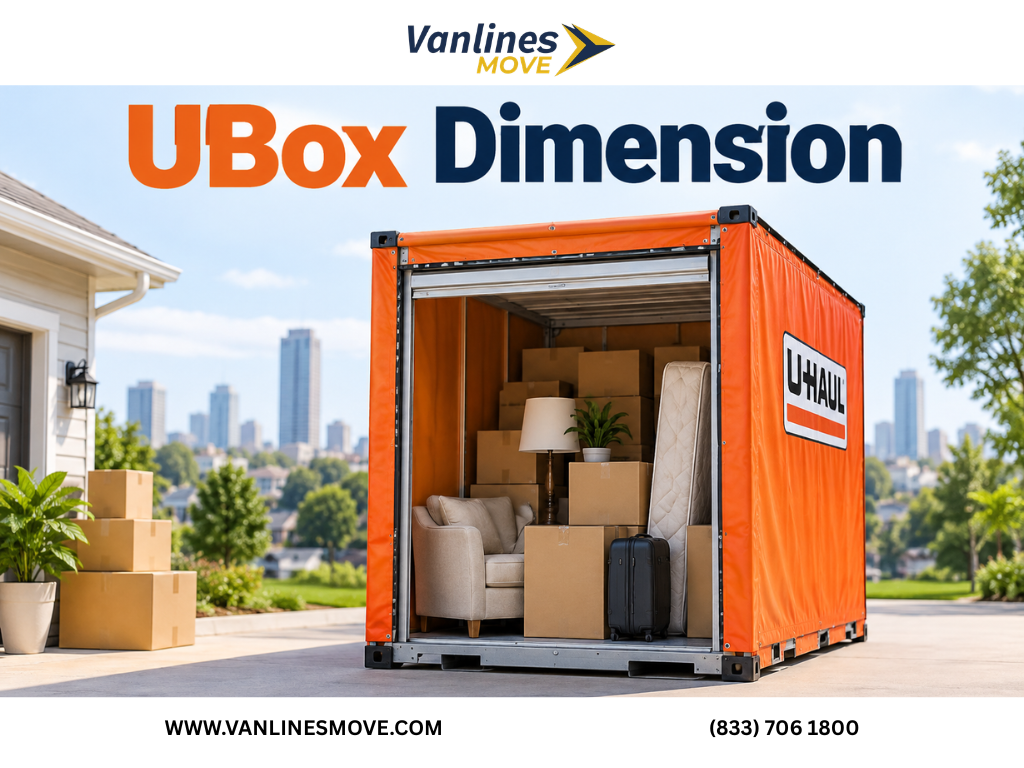
U-Box containers by U-Haul have become a popular choice for individuals and families seeking a flexible, cost-effective, and convenient solution for moving and storage. Whether you're relocating across town or undertaking a long-distance move, understanding the precise dimensions and capacity of these portable moving pods is paramount. Accurate knowledge of U-Box sizes allows for efficient packing, prevents costly miscalculations, and ensures you order exactly what you need.
This comprehensive guide delves into the specifics of U-Box dimensions, explores their true capacity, and provides practical advice on how to determine the optimal number of containers for your unique moving or storage requirements. By the end, you'll be equipped with the information needed to plan your U-Box experience with confidence.
U-Box Dimensions: The Core Specifications
While U-Box containers are often described as "one size fits all," it's crucial to understand both their external and internal measurements, as well as their weight capacity. These details directly impact what you can pack and how easily the container can be placed or transported.
External Dimensions
The external dimensions are important for understanding how much space the container will occupy on your property or in a storage facility. They also dictate transport logistics. A standard U-Box container measures approximately:
- Length: 8 feet (96 inches)
- Width: 5 feet (60 inches)
- Height: 7 feet 6 inches (90 inches)
It's worth noting that the actual footprint on the ground is slightly smaller due to the pallet base, but these are the overall dimensions to consider for clearance and placement.
Internal Dimensions and Usable Volume
The internal dimensions are the most critical for packing. These measurements define the actual usable space for your belongings.
- Internal Length: 7 feet 11 inches (95 inches)
- Internal Width: 4 feet 8 inches (56 inches)
- Internal Height: 6 feet 11.5 inches (83.5 inches)
From these internal measurements, we can calculate the usable volume:
- Total Usable Volume: Approximately 257 cubic feet.
To put this into perspective, 257 cubic feet is roughly equivalent to the contents of a 10-foot rental truck. However, a key advantage of U-Box containers is their rectangular, wheel-well-free interior, which often allows for more efficient packing of furniture and boxes compared to a truck with intrusive wheel wells.
Weight Capacity
Each U-Box container is designed to hold a significant amount of weight, but there's a limit to ensure safe transport.
- Maximum Weight Capacity: 2,000 pounds (907 kg)
This weight limit is substantial enough for most household goods, including appliances like refrigerators (if they fit through the door) and heavy furniture. However, it's essential to distribute weight evenly and avoid overpacking with extremely dense items like books in every box.
Understanding U-Box Capacity: What Fits Inside?
Knowing the cubic footage is one thing, but visualizing what actually fits inside a U-Box is another. A single U-Box container is generally designed to hold the contents of:
- A studio apartment
- 1 to 1.5 rooms of household goods
This typically translates to items such as:
- A disassembled queen-size bed, a dresser, two nightstands, and several moving boxes.
- A standard sofa, an armchair, a coffee table, and a collection of boxes.
- Major appliances like a washing machine and dryer (if they fit through the opening, which is about 4'8" wide and 6'11.5" high), along with some smaller items.
- A motorcycle (check specific dimensions and tie-down requirements).
The key to maximizing U-Box capacity isn't just about filling every inch; it's about strategic packing. Disassembling furniture, stacking boxes efficiently, and utilizing all vertical space will allow you to fit more than you might initially anticipate.
How Many U-Boxes Do You Need? A Practical Guide
Estimating the number of U-Box containers required is often the most challenging part of the planning process. Several factors influence this decision, and it's always better to slightly overestimate than underestimate.
Factors Influencing Your U-Box Needs
- Size of Your Current Home: This is the primary indicator. More rooms generally mean more belongings.
- Amount of Belongings: Are you a minimalist or do you have a lot of accumulated possessions? Decluttering before you move can significantly reduce the number of boxes needed.
- Packing Efficiency: How well you pack and utilize space directly impacts how much you can fit into each container.
- Special Items: Large, awkwardly shaped items (e.g., pianos, large sculptures, very long sofas) might require more space or even a different moving solution entirely.
General Estimation Guide
Here’s a general guideline for estimating the number of U-Box containers based on typical home sizes:
- Studio Apartment: 1 to 2 U-Boxes
- 1-Bedroom Apartment: 2 to 3 U-Boxes
- 2-Bedroom Apartment/Small House: 3 to 4 U-Boxes
- 3-Bedroom House: 4 to 5 U-Boxes
- 4+ Bedroom House: 5 or more U-Boxes
These are estimates, and your specific situation may vary. For instance, if you're moving from Connecticut to Virginia and have accumulated many items over the years, you might lean towards the higher end of the estimate. U-Haul offers a convenient feature: you can order extra U-Boxes and return any unused ones for a full refund, making it a low-risk strategy to ensure you have enough space.
Maximizing Space and Safe Packing Strategies
Once you have your U-Box containers, efficient packing becomes key. Here are strategies to make the most of the available space and ensure your belongings arrive safely:
- Disassemble Furniture: Beds, tables, desks, and shelves should be taken apart. This reduces their footprint and makes them easier to load.
- Load Heavy Items First: Place the heaviest items (appliances, large furniture, boxes of books) on the floor of the U-Box, distributing their weight evenly. This creates a stable base and prevents shifting.
- Utilize Vertical Space: Stack boxes and lighter items vertically. Think of your U-Box like a giant Tetris game, filling all gaps from floor to ceiling.
- Fill Gaps: Use blankets, towels, pillows, or crumpled packing paper to fill any voids between items. This prevents items from shifting and reduces the risk of damage during transit. Protecting your items in transit is crucial, and understanding your moving insurance options can provide additional peace of mind.
- Protect Fragile Items: Wrap delicate items thoroughly and place them strategically where they won't be crushed. Mark boxes containing fragile items clearly.
- Create an Inventory: Keep a detailed list of what's in each box and which U-Box container it's in. This is invaluable for unpacking and for insurance purposes.
- Leave a Path (Optional): If you anticipate needing to access items during a long-term storage period, consider creating a narrow path to allow limited access. For moves, however, maximizing space is usually the priority.
Calculating Your Moving Costs and U-Box Needs
Beyond the physical dimensions, the number of U-Box containers you require directly impacts your overall moving budget. Each U-Box comes with a rental fee, a shipping fee (if applicable for long-distance moves), and potentially monthly storage fees. Understanding the estimated volume of your belongings helps you predict how many boxes you'll need, which in turn allows you to accurately estimate your moving expenses.
It's important to factor in not just the U-Box costs, but also packing supplies, potential labor for loading/unloading, and any temporary storage needs. A detailed moving budget will help you manage your finances effectively.
U-Box Advantages for Specific Scenarios
U-Box containers offer distinct advantages that make them suitable for various moving and storage needs:
- Long-Distance Moves: They provide a convenient, self-service alternative to traditional moving companies, allowing you to pack at your own pace and have the container shipped to your new destination.
- Temporary Storage: Ideal for home staging, renovations, or bridging the gap between homes. You can store the U-Box at a U-Haul facility or even on your property (where permitted).
- Flexible Scheduling: Unlike strict moving truck rental windows, U-Box containers offer flexibility in loading and unloading times.
- Cost-Effective: Often more affordable than full-service movers, especially for smaller moves or those where you prefer to do the packing yourself.
Conclusion
Navigating a move or a storage project successfully hinges on meticulous planning, and a thorough understanding of U-Box dimensions and capacity is a fundamental component of that plan. By familiarizing yourself with the internal and external measurements, weight limits, and practical packing strategies, you can accurately determine the number of U-Box containers you'll need. This knowledge not only helps you maximize space and protect your belongings but also contributes to a smoother, more efficient, and ultimately less stressful moving experience. Plan smart, pack efficiently, and make your next relocation a breeze with U-Box.
Frequently Asked Questions (FAQs)
What are the exact internal dimensions of a U-Box?
The internal dimensions of a U-Box container are approximately 7 feet 11 inches long, 4 feet 8 inches wide, and 6 feet 11.5 inches high. This translates to about 257 cubic feet of usable packing space.
How much weight can a U-Box hold?
Each U-Box container has a maximum weight capacity of 2,000 pounds (907 kg). It's important to distribute the weight evenly to ensure stability during transport.
Is one U-Box enough for a studio apartment?
For most studio apartments, one U-Box container is often sufficient. However, if you have a lot of furniture, numerous boxes, or larger appliances, you might consider two to be safe. It's better to have extra space than not enough.
Can I store a U-Box at my home?
Yes, U-Haul offers "U-Box at Your Door" service, where they deliver the container to your home for you to load. You can keep it on your property for as long as needed, provided local regulations allow it.
What if I order too many U-Boxes?
U-Haul has a flexible policy for U-Box orders. You can order more containers than you think you'll need, and if you don't use them, you can return the unused U-Boxes for a full refund.
Are U-Box containers weather-proof?
U-Box containers are constructed from heavy-duty plywood and come with a weather-resistant cover that protects your belongings from the elements, including rain, snow, and dust.
Can I put a motorcycle in a U-Box?
Yes, a motorcycle can typically fit inside a U-Box container. You'll need to ensure its dimensions fit through the door opening (4'8" wide x 6'11.5" high) and secure it properly with tie-downs to prevent movement during transit.
Do U-Box containers have tie-downs?
Yes, U-Box containers are equipped with tie-down rings or rails inside to help you secure your belongings and prevent shifting during transit. Using your own moving blankets and straps is highly recommended.
Categories
- Long Distance Moving159
- Local Moving120
- Commercial Moving40
- Residential Moving34
- Last – Minute Moving25
- Furniture Moving11
- Moving Tips & Lifestyle11
- Moving Tips & How-To Guides8
- Moving services7
- Moving Costs & Budgeting6
- Moving Cost5
- Moving Cost Calculator5
- Moving Tips5
- Moving Guides5
- Moving Container4
- moving tips4
- Moving companies4
- state to state movers4
- Piano Moving3
- Car Transportation3
- Truck Rental3
- Local Move3
- best moving rates3
- cheap moving companies3
- affordable moving companies3
- full-service movers3
- Moving3
- Long distance moving3
- Long-Distance Moving3
- Moving Cost Guides3
- Moving Tips & Planning3
- long distance moving3
- Junk Removal2
- Senior Moving2
- Senior Relocation Moving Companies2
- Moving Tools2
- Moving Estimates2
- interstate moving2
- College Moving2
- Dorm Moving2
- Tips for moving2
- cross-country move2
- International moving2
- Household moving2
- Relocation Guide2
- Moving Tips & State Guides2
- Heavy Equipment1
- Senior Moving Services1
- office moving1
- office relocation1
- employee relocation1
- Car Transport1
- Vehicle Shipping1
- Car Shipping Services1
- Artificial Intelligence1
- Office Moving Services1
- Commercial Moving Companies1
- Corporate Moving Services1
- Corporate Movers1
- full-service moving companies1
- sustainable moving companies1
- green movers1
- Moving in US1
- Best places to move in 20251
- 2025 moving1
- Full-Service Moving Companies1
- College moving services1
- Moving to College1
- Moving Season1
- Spring Moving1
- donate1
- sell1
- Movers in California1
- Movers in Studio City1
- Moving to California1
- Laws about Moving into California1
- Moving Laws1
- House moving1
- packing1
- cheap moving ways1
- Moving guide1
- moving across countries1
- international relocation program1
- move out cleaning1
- right packing supplies1
- pack while moving1
- Apartment moving1
- PODS1
- moving out1
- state to state move1
- California movers1
- Truck Rental1
- US Territory Relocation1
- International Moving1
- Shipping & Moving Tips1
- Moving Budget Guide1
- Moving Tools & Equipment Guides1
- Moving Services & Options1
- Moving Tips & How-To Guides1
- Moving Day & Settling In1
- Mobile Home Moving1
- Moving Guide & Tips1
- Moving Tips & State Comparisons1
- Moving Tips & City Guides1
- Moving Tips & Cost Guides1
- Long-Distance Moving Tips1
- Moving Tips & Financial Planning1
- Moving Tips & Home Preparation1
- Vehicle Shipping & Auto Transport1
- Marketing & Lead Generation1
- International Moving Guides1
- Moving Costs1
- San Francisco Moving Guide1
- NYC Moving1
- Local Movers1
- Budget Moving1
- Student Moving1
- Affordable Moving1
- Specialty Moving Guides1
- Local & Long-Distance Moving1
- Boston Moving Guide1
- Europe Relocation Guide1
- Moving Costs & Specialty Moving1
- Cost of Living1
- Relocation1
- International Moving1
- Lifestyle & Relocation1
- State Guides1
- Home Buying Guide1
- Moving Timeline1
- Real Estate Tips1
- Appliance Moving1
- Packing & Preparation1
- Interstate Relocation1
- City-to-City Moving Guide1
- Technology for Movers1
- Moving Reviews1
- Moving Costs & Storage1
- Moving Tips & Equipment Guides1
- Moving Guides & Cost Insights1
- Moving Supplies1
- Packing Tips1
- Home Moving1
- Relocation Tips1
- State Moving Guides1
- New Home Guide1
- Relocation Advice1


 Chat with us on WhatsApp!


 BBB A+ Rated
 Great! We serve your area
 Licensed & Insured
 Takes 60 seconds

 Discount expires in
 Limited Time: Only 3 premium movers available in your area


 Your information is 100% secure