


 Local Movers
 Last-Minute Movers
 Junk Removal
 Long Distance Movers
 Piano Movers
 Heavy Equipment
 Commercial Movers
 Moving Container
 Car Transportation
 Furniture Movers
 Truck Rental
 Moving Cost Calculator
 Moving Planner
 Packing Calculator
 Moving Checklist
 Moving Insurance
 FAQ
FAQ Contact Us
 Moving Loan
 Privacy Policy
 Join Our Network
 About Us
How to Move Furniture Up Stairs Safely With Easy Techniques


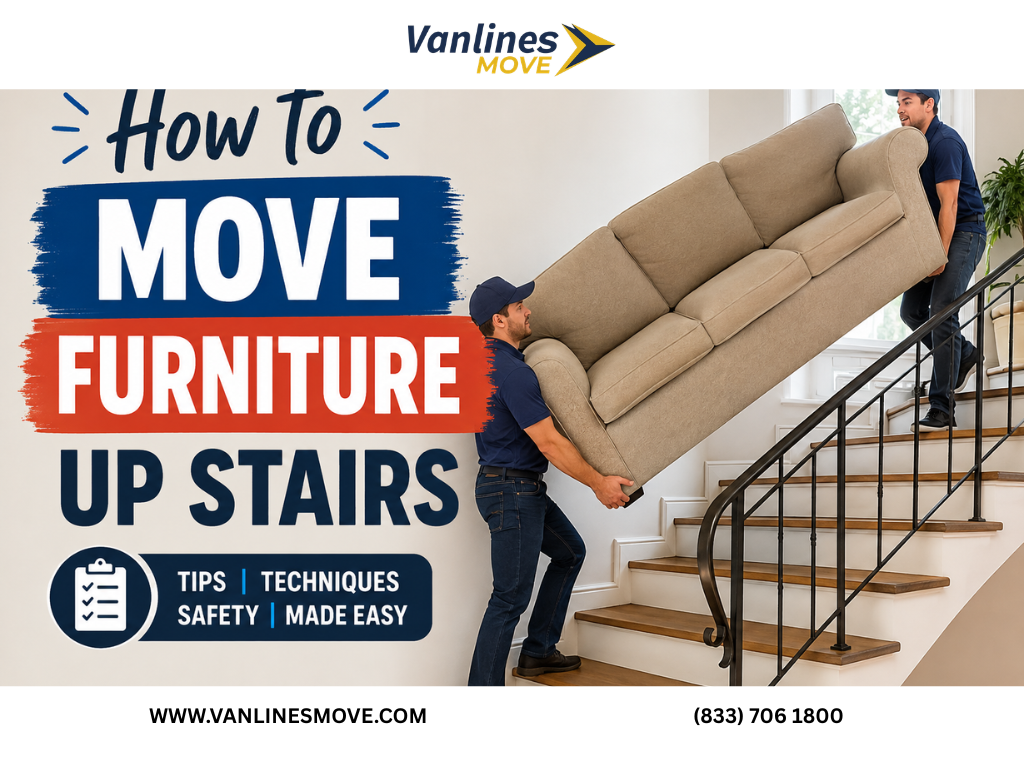
Moving furniture upstairs is one of the most physically demanding and technically challenging parts of any relocation. Whether you're moving into a multi-story home, an apartment building, or simply rearranging heavy items, stairs introduce a whole new level of difficulty compared to flat surfaces.
The combination of gravity, awkward angles, tight spaces, and heavy loads makes this task risky if not handled correctly. Many people underestimate the complexity involved, leading to injuries, damaged furniture, and scratched walls or floors.
This in-depth guide by VanLinesMove is designed to help you master the process with professional-level techniques. here we’ll cover preparation, planning, equipment, and how to move furniture upstair safely.
Why Moving Furniture Upstairs Is So Difficult
Before jumping into the steps, it’s important to understand why stairs make moving furniture significantly harder.
Uneven Weight Distribution
When carrying furniture upstairs, the person at the bottom bears most of the weight due to gravity. This creates imbalance and requires strong coordination between movers.
Limited Space and Tight Angles
Staircases are often narrow, with limited turning space. Large items like sofas, mattresses, and dressers can easily get stuck if not maneuvered properly.
Increased Risk of Injury
Back strain, slips, and dropped furniture are common risks. Without proper technique, even a simple lift can lead to serious injury.
Damage to Property
Walls, railings, and stairs are highly vulnerable during furniture moves. One wrong move can cause scratches, dents, or even structural damage.
9 Steps on How to Move Furniture Upstairs Safely
Step 1: Plan Before You Lift
Proper planning is the foundation of a safe and successful move.
Measure Everything Carefully
Start by measuring:
- Height, width, and depth of the furniture
- Staircase width and ceiling clearance
- Doorways, hallways, and landings
- Diagonal measurements for large items
These measurements help you determine whether the furniture will fit and what angles you’ll need during the move.
Visualize the Entire Path
Walk through the entire route from start to finish. Identify tight corners, low ceilings, and narrow sections that may require special handling.
Decide the Best Strategy
Not all furniture should be carried the same way. Some items are easier to move vertically, while others need to stay horizontal. Planning this in advance saves time and effort.
Step 2: Clear and Prepare the Path
A clutter-free environment is essential for safety.
Remove Obstacles
Clear out anything that could get in the way, including:
- Rugs and mats
- Shoes and personal items
- Decorative objects
- Small furniture pieces
Even a small object on the stairs can cause a dangerous slip.
Ensure Proper Lighting
Make sure the staircase and surrounding areas are well-lit. Poor visibility increases the risk of missteps and accidents.
Keep Pets and Kids Away
Moving furniture upstairs requires full attention. Keep children and pets away from the moving path to avoid distractions and accidents.
Step 3: Protect Walls, Railings, and Stairs
Protecting your home is just as important as protecting your furniture.
Use Protective Materials
Cover vulnerable areas with:
- Moving blankets
- Cardboard sheets
- Foam padding
- Corner protectors
Secure the Protection
Use painter’s tape or stretch wrap to keep protective materials in place without damaging surfaces.
Focus on High-Impact Areas
Pay extra attention to:
- Stair edges
- Wall corners
- Railings and banisters
These areas are most likely to get damaged during the move.
Step 4: Disassemble Furniture When Possible
Breaking furniture into smaller parts makes it easier to handle and reduces weight.
Remove Detachable Parts
Take off:
- Legs from sofas and tables
- Drawers from dressers
- Cushions and shelves
- Headboards and frames
Label and Store Components
Keep screws and small parts in labeled bags so reassembly is easy later.
Why Disassembly Matters
Disassembling reduces bulk, improves maneuverability, and minimizes the risk of damage during tight turns.
Step 5: Use the Right Moving Equipment
Using proper tools can make a huge difference in both safety and efficiency.
Essential Tools for Moving Upstairs
- Moving straps: Help distribute weight evenly
- Gloves: Improve grip and protect hands
- Non-slip shoes: Prevent slipping on stairs
- Stair-climbing dolly: Ideal for heavy or bulky items
Benefits of Using Equipment
- Reduces physical strain
- Improves control
- Enhances safety
- Speeds up the moving process
Skipping tools may seem easier, but it often leads to more effort and higher risk.
Step 6: Use Proper Lifting Techniques
Incorrect lifting is one of the leading causes of moving-related injuries.
Lift with Your Legs, Not Your Back
Always bend your knees and keep your back straight. Your legs should do most of the work.
Keep the Load Close
Holding furniture close to your body improves balance and reduces strain on your arms and back.
Avoid Twisting Movements
Turning your body while carrying weight can cause serious injury. Instead, move your feet to change direction.
Maintain a Firm Grip
Ensure your hands are securely positioned before lifting. Gloves can help improve grip and reduce slipping.
Step 7: Move Slowly with a Partner
Coordination is key when moving furniture upstairs.
Assign Roles Clearly
The person at the bottom should typically be stronger, as they carry more weight. The top person helps guide and stabilize the item.
Communicate Constantly
Use clear and simple commands such as:
- “Step”
- “Stop”
- “Tilt”
- “Hold”
This ensures both movers stay in sync throughout the process.
Take Breaks When Needed
Moving upstairs can be exhausting. Use landings as rest points to regain strength and adjust your grip.
Step 8: Navigate Corners and Landings Carefully
This is where most problems occur during a move.
Use the Pivot Technique
Instead of forcing furniture through tight spaces, rotate it gradually. Adjust angles slowly to find the best fit.
Tilt When Necessary
Standing furniture vertically can help it pass through narrow areas or sharp turns.
Never Force the Movement
If something doesn’t fit, stop immediately. Forcing it can damage both the furniture and your home.
Step 9: Secure and Place Furniture Safely
Once you reach the top, the job isn’t over yet.
Place Furniture Gently
Avoid dropping or dragging items, as this can damage floors and the furniture itself.
Reassemble Carefully
Put back all removed parts and ensure everything is stable and secure.
Inspect for Damage
Check both your furniture and your home for any scratches or issues that may need fixing.
Advanced Techniques for Moving Furniture Upstairs
Moving furniture isn’t just about strength—it’s about technique, control, and strategy.
Use the High-Low Carry Method
This is one of the most effective techniques used by professional movers.
- The person at the bottom carries the heavier portion
- The top person stabilizes and guides
- Keep the item tilted at a slight angle
This method allows better weight distribution and reduces strain on both movers.
The Shoulder Carry Technique
For long or bulky items like couches or mattresses:
- Rest one end of the furniture on your shoulder
- Use your free hand to stabilize
- Walk slowly and maintain balance
This technique is helpful for navigating narrow staircases.
Sliding Method (For Certain Surfaces)
If your stairs are carpeted and the item is not fragile:
- Place a moving blanket under the furniture
- Gently slide it upward step by step
⚠️ Use this method carefully and only with controlled movement.
Leverage Gravity Smartly
When going upstairs, gravity works against you. Use pauses strategically:
- Stop at each step if needed
- Use landings to reset grip
- Never rush the movement
How to Move Different Types of Furniture Upstairs
Every piece of furniture requires a slightly different approach.
Moving a Sofa Upstairs
Sofas are bulky and often difficult to maneuver.
Best Approach
- Remove cushions and legs
- Wrap the sofa with moving blankets
- Carry it vertically (“end-on”) for tight spaces
- Rotate slowly at corners
Pro Tip
Use the “hook method” where one mover guides the top corner while the other lifts from below.
Moving a Bed Frame and Mattress
Bed Frame
- Disassemble completely
- Bundle parts together
- Carry lightweight sections individually
Mattress
- Use a mattress bag for protection
- Carry from the sides
- Bend slightly if flexible to fit tight spaces
Moving a Dresser Upstairs
Dressers are heavy due to their structure.
Best Practice
- Remove all drawers
- Carry drawers separately
- Keep the frame upright
- Use straps for better grip
Moving Appliances Upstairs
Appliances are extremely heavy and require extra caution.
Steps to Follow
- Always use a stair-climbing dolly
- Secure tightly with straps
- Keep the appliance upright
- Have at least two people assisting
⚠️ Never attempt to carry appliances manually without equipment.
Moving Tables and Desks
- Remove legs if possible
- Carry the tabletop separately
- Keep the surface protected with padding
Safety Tips to Prevent Injuries
Safety should always be your top priority during any move.
Wear Proper Gear
- Non-slip shoes for stability
- Gloves for grip and protection
- Comfortable clothing for flexibility
Know Your Limits
If an item feels too heavy or unstable:
- Stop immediately
- Reassess your approach
- Ask for help or use equipment
Ignoring your limits can lead to serious injuries.
Maintain Clear Communication
Miscommunication is one of the leading causes of accidents.
- Use simple commands
- Confirm before each movement
- Move in sync with your partner
Keep Your Center of Gravity Stable
- Stay balanced at all times
- Avoid leaning too far forward or backward
- Adjust your stance on each step
Take Breaks
Fatigue leads to mistakes.
- Rest at landings
- Hydrate regularly
- Avoid rushing to finish quickly
Common Mistakes to Avoid When Moving Furniture Upstairs
Avoiding these mistakes can save you from costly damage and injuries.
Trying to Do It Alone
Moving upstairs always requires at least one helper for safety and control.
Skipping Measurements
Many people assume furniture will fit—only to get stuck halfway.
Using Incorrect Techniques
Poor posture or lifting methods can cause serious back injuries.
Rushing the Process
Speed increases the risk of dropping furniture or losing balance.
Not Using Protective Materials
Skipping padding can result in damaged walls, stairs, and furniture.
Forcing Furniture Through Tight Spaces
If it doesn’t fit, forcing it will only make things worse. Always reposition or disassemble.
When Should You Hire Professional Movers?
Sometimes, the safest decision is to leave the job to experts.
Situations Where Professionals Are Recommended
- Extremely heavy furniture (250+ lbs)
- Narrow or spiral staircases
- High-value or fragile items
- Limited manpower
- Lack of proper equipment
Benefits of Hiring Professionals
Expertise and Experience
Professional movers are trained to handle complex situations with ease.
Specialized Equipment
They use tools like stair dollies, lifting straps, and protective gear.
Reduced Risk
Hiring experts minimizes the chances of injury and damage.
Time Efficiency
What may take you hours can be done quickly and safely by professionals.
Pro Tips from Moving Experts
- Always test the weight before fully lifting
- Use furniture sliders for positioning before stairs
- Keep a first-aid kit nearby
- Plan your move during daylight hours
- Double-check grip before each step
Final Thoughts
Moving furniture upstairs is not just about strength—it’s about preparation, strategy, and safety. By following the 9-step method from and applying the advanced techniques in this guide, you can handle even the most challenging moves with confidence.
However, if the task feels too complex or risky, hiring professionals is always the smartest choice. Your safety and your belongings are worth it.
FAQs
What is the safest way to carry furniture upstairs?
Using proper lifting techniques with a partner or a stair-climbing dolly is the safest method.
Can you move heavy furniture upstairs without tools?
It is possible for smaller items, but heavy furniture should always be moved using proper equipment.
How many people are needed to move furniture upstairs?
At least two people are recommended, but larger or heavier items may require more.
What should I do if furniture gets stuck on stairs?
Stop immediately, adjust the angle, or disassemble the item instead of forcing it.
Categories
- Long Distance Moving162
- Local Moving120
- Commercial Moving40
- Residential Moving34
- Last – Minute Moving25
- Furniture Moving11
- Moving Tips & Lifestyle11
- Moving Tips & How-To Guides8
- Moving services7
- Long distance moving6
- Moving Costs & Budgeting6
- long distance moving6
- Moving Cost5
- Moving Cost Calculator5
- Moving Tips5
- Moving Guides5
- Moving Container4
- moving tips4
- Moving companies4
- state to state movers4
- Piano Moving3
- Car Transportation3
- Truck Rental3
- Local Move3
- best moving rates3
- cheap moving companies3
- affordable moving companies3
- full-service movers3
- Moving3
- Long-Distance Moving3
- Moving Cost Guides3
- Moving Tips & Planning3
- Junk Removal2
- Senior Moving2
- Senior Relocation Moving Companies2
- Moving Tools2
- Moving Estimates2
- interstate moving2
- College Moving2
- Dorm Moving2
- Tips for moving2
- cross-country move2
- International moving2
- Household moving2
- Relocation Guide2
- Moving Tips & State Guides2
- Heavy Equipment1
- Senior Moving Services1
- office moving1
- office relocation1
- employee relocation1
- Car Transport1
- Vehicle Shipping1
- Car Shipping Services1
- Artificial Intelligence1
- Office Moving Services1
- Commercial Moving Companies1
- Corporate Moving Services1
- Corporate Movers1
- full-service moving companies1
- sustainable moving companies1
- green movers1
- Moving in US1
- Best places to move in 20251
- 2025 moving1
- Full-Service Moving Companies1
- College moving services1
- Moving to College1
- Moving Season1
- Spring Moving1
- donate1
- sell1
- Movers in California1
- Movers in Studio City1
- Moving to California1
- Laws about Moving into California1
- Moving Laws1
- House moving1
- packing1
- cheap moving ways1
- Moving guide1
- moving across countries1
- international relocation program1
- move out cleaning1
- right packing supplies1
- pack while moving1
- Apartment moving1
- PODS1
- moving out1
- state to state move1
- California movers1
- Truck Rental1
- US Territory Relocation1
- International Moving1
- Shipping & Moving Tips1
- Moving Budget Guide1
- Moving Tools & Equipment Guides1
- Moving Services & Options1
- Moving Tips & How-To Guides1
- Moving Day & Settling In1
- Mobile Home Moving1
- Moving Guide & Tips1
- Moving Tips & State Comparisons1
- Moving Tips & City Guides1
- Moving Tips & Cost Guides1
- Long-Distance Moving Tips1
- Moving Tips & Financial Planning1
- Moving Tips & Home Preparation1
- Vehicle Shipping & Auto Transport1
- Marketing & Lead Generation1
- International Moving Guides1
- Moving Costs1
- San Francisco Moving Guide1
- NYC Moving1
- Local Movers1
- Budget Moving1
- Student Moving1
- Affordable Moving1
- Specialty Moving Guides1
- Local & Long-Distance Moving1
- Boston Moving Guide1
- Europe Relocation Guide1
- Moving Costs & Specialty Moving1
- Cost of Living1
- Relocation1
- International Moving1
- Lifestyle & Relocation1
- State Guides1
- Home Buying Guide1
- Moving Timeline1
- Real Estate Tips1
- Appliance Moving1
- Packing & Preparation1
- Interstate Relocation1
- City-to-City Moving Guide1
- Technology for Movers1
- Moving Reviews1
- Moving Costs & Storage1
- Moving Tips & Equipment Guides1
- Moving Guides & Cost Insights1
- Moving Supplies1
- Packing Tips1
- Home Moving1
- Relocation Tips1
- State Moving Guides1
- New Home Guide1
- Relocation Advice1




 Chat with us on WhatsApp!


 BBB A+ Rated
 Great! We serve your area
 Licensed & Insured
 Takes 60 seconds

 Discount expires in
 Limited Time: Only 3 premium movers available in your area


 Your information is 100% secure